
What is Cookieless Tracking?
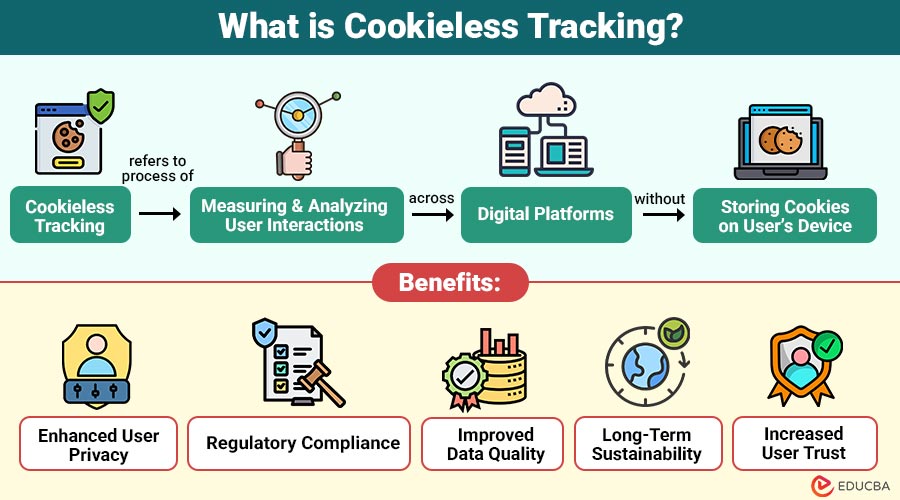
Cookieless tracking refers to the process of measuring and analyzing user interactions across digital platforms without storing cookies on a user’s device.
Instead of browser-based identifiers, cookieless tracking relies on alternative signals such as:
- First-party data
- Server-side events
- Contextual information
- Privacy-safe identifiers
- Aggregated and modeled data
This approach ensures user anonymity while still enabling meaningful insights for businesses.
Table of Contents:
- Meaning
- Why Does Cookieless Tracking Matter?
- Working
- Key Techniques
- Difference
- Benefits
- Limitations
- Real-World Examples
Key Takeaways:
- Cookieless tracking adapts to privacy regulations, protecting user data while maintaining meaningful analytics across digital platforms.
- By leveraging first-party data and contextual signals, businesses gain actionable insights without relying on traditional cookies.
- Transitioning to cookieless methods builds consumer trust and supports ethical, transparent, and legally compliant marketing practices.
- While promising, cookieless tracking requires robust technical infrastructure and careful consent management for effective implementation.
Why Does Cookieless Tracking Matter?
Cookieless tracking matters because the digital ecosystem is rapidly shifting toward privacy-first, regulation-compliant, and future-ready measurement models. Key reasons include:
1. Browser Changes
Major browsers such as Chrome and Safari are deprecating third-party cookies, which limits traditional tracking methods.
2. Privacy Regulations
Laws such as GDPR, CCPA, and the DPDP Act demand stricter data handling and user consent practices.
3. Consumer Trust
Users increasingly expect transparency, control, and ethical use of their personal data.
4. Measurement Accuracy
Cookie-based attribution is becoming less reliable across devices, browsers, and platforms.
5. Business continuity
Cookieless solutions ensure marketing insights and personalization continue without dependency on cookies.
How Does Cookieless Tracking Work?
Cookieless tracking replaces cookies with privacy-friendly signals and architectures. Instead of identifying users directly, it focuses on understanding behavior patterns and aggregated insights.
1. Minimal Personal Data Collection
Limits collected user information strictly to essentials, reducing privacy risks while maintaining meaningful analytics insights.
2. Anonymized or Pseudonymized Identifiers
Uses masked identifiers that prevent direct user identification while enabling secure, compliant behavioral analysis.
3. Consent-based Data Usage
Processes user data only after explicit permission, aligning tracking practices with global privacy regulations.
4. Server-side Processing
Modern analytics platforms such as Conversios enable server-side, cookieless event tracking by securely capturing conversion data on the server rather than relying on browser cookies. This approach improves accuracy, privacy compliance, and resilience against browser restrictions.
5. Context-driven Analysis
Analyzes content, device, and session context instead of individuals to infer intent and engagement patterns.
Key Techniques Used in Cookieless Tracking
Here are the key techniques commonly used to enable privacy-first, compliant user measurement.
1. First-Party Data Collection
Collects user data directly through owned channels, ensuring higher accuracy, transparency, compliance, and stronger customer relationships.
2. Server-Side Tracking
Processes track events on secure servers, improving data reliability, control, compliance, and resistance to browser restrictions.
3. Contextual Tracking
Analyzes content, device, time, and environment signals to deliver insights without identifying individual users.
4. Fingerprinting
Uses limited, short-lived identifiers cautiously, emphasizing anonymization, consent, and regulatory compliance in modern strategies.
5. Consent-Based Identifiers
Employs hashed or temporary identifiers only after user consent, enabling compliant tracking and secure data collaboration.
Difference Between Cookieless Tracking and Cookie-Based Tracking
Here are the key differences between cookieless tracking and cookie-based tracking across important aspects.
| Aspect | Cookieless Tracking | Cookie-Based Tracking |
| Dependency | First-party & server-side | Third-party cookies |
| Privacy | High | Low |
| Compliance | Regulation-friendly | Increasingly risky |
| Accuracy | More stable | Declining |
| User Trust | High | Low |
| Future Viability | Long-term | Limited |
Benefits of Cookieless Tracking
Here are the key benefits of cookieless tracking that support privacy-first, compliant, and future-ready data strategies.
1. Enhanced User Privacy
Cookieless tracking limits personal data collection, reduces the risk of misuse, improves security, and respects user privacy.
2. Regulatory Compliance
It supports compliance with global privacy regulations, minimizing legal risks and ensuring responsible data handling.
3. Improved Data Quality
First-party and server-side data remain accurate, reliable, and unaffected by ad blockers or browser limitations.
4. Long-Term Sustainability
Cookieless strategies adapt easily to evolving browser policies, ensuring consistent tracking performance over time.
5. Increased User Trust
Transparent data practices build credibility, strengthen brand reputation, and encourage long-term user loyalty.
Limitations of Cookieless Tracking
Despite its advantages, cookieless tracking has challenges:
1. Reduced Cross-Site User Visibility
Cookieless tracking limits the ability to follow users across multiple websites, reducing comprehensive audience insights.
2. Less Granular Attribution
Measuring the effectiveness of specific marketing channels becomes more difficult as conversion attribution becomes less accurate.
3. Increased Technical Complexity
Implementing cookieless solutions requires advanced technical skills, backend infrastructure, and integration with existing systems.
4. Dependence on Modeling and Aggregation
Tracking relies more on statistical models and aggregated data, which can reduce individual-level accuracy and insights.
5. Requires Strong Data Governance
Effective cookieless tracking demands rigorous policies, user consent processes, and proper handling of first-party data.
Real-World Examples
Here are practical examples showing how organizations apply cookieless tracking in real business scenarios.
1. E-Commerce Platform
An online retailer replaces third-party cookies with:
- Server-side event tracking
- Logged-in user data
- Contextual campaign analysis
Improved conversion tracking with higher compliance.
2. SaaS Company
A SaaS provider uses cookieless tracking to analyze:
- Feature adoption
- Trial-to-paid conversion
- User engagement trends
Data is processed anonymously and linked only after login.
Final Thoughts
Cookieless tracking is not just a response to cookie deprecation—it is a fundamental shift toward ethical, privacy-first digital analytics. By focusing on first-party data, contextual signals, and server-side processing, organizations can maintain meaningful insights while respecting user rights. As privacy expectations continue to rise, cookieless tracking will become a standard practice rather than an alternative. Companies that adopt this shift now will be better positioned to grow sustainably in the rapidly changing digital market.
Frequently Asked Questions (FAQs)
Q1. Is cookieless tracking completely anonymous?
Answer: Not always. It can involve pseudonymized or consent-based identifiers, but personal data is minimized.
Q2. Can cookieless tracking replace cookies entirely?
Answer: For many use cases, yes. However, some advanced personalization may still rely on first-party cookies.
Q3. Is cookieless tracking GDPR compliant?
Answer: When implemented correctly with consent and transparency, it aligns well with GDPR and similar regulations.
Q4. Does cookieless tracking reduce marketing performance?
Answer: Initially, it may require adjustment, but it often yields more reliable, trust-based insights over the long term.
Recommended Articles
We hope that this EDUCBA information on “Cookieless Tracking” was beneficial to you. You can view EDUCBA’s recommended articles for more information.


