
What is Content Repurposing?
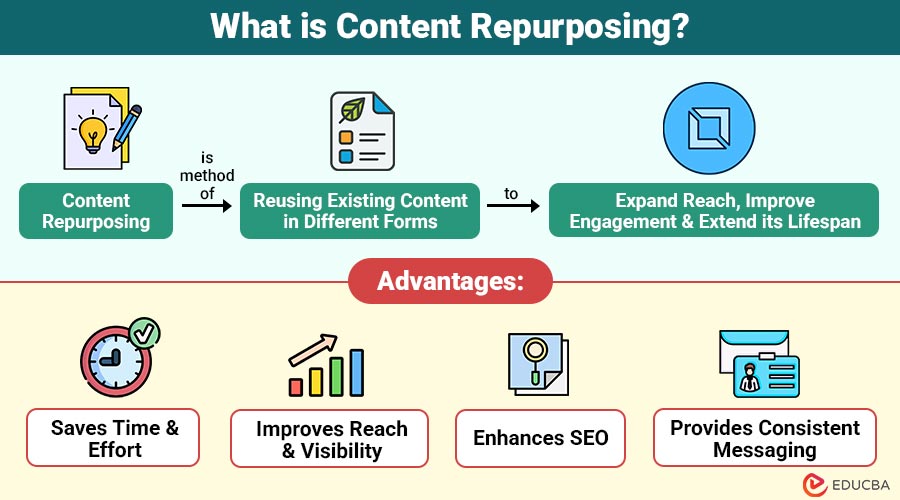
Content repurposing is the method of reusing existing content in different forms to expand reach, improve engagement, and extend its lifespan. It is not about copying or duplicating but reshaping content so it fits new platforms or aligns with updated audience needs.
For instance:
- Transforming a webinar into multiple bite-sized video snippets
- Converting a research report into a blog series.
- Updating an old blog post with fresh statistics and publishing it again.
Table of Contents:
- Meaning
- Importance
- Popular Methods
- Tools
- Advantages
- Disadvantages
- Real World Examples
- Best Practices
Key Takeaways:
- Content Repurposing maximizes content value by adapting existing material into multiple formats for diverse platforms.
- It strengthens brand presence through consistent messaging while appealing to audiences with varied content preferences.
- Strategic repurposing ensures older content remains relevant, discoverable, and continuously useful over extended periods.
- Using dedicated tools and creativity, businesses streamline repurposing while maintaining quality and audience engagement.
Why is Content Repurposing Important?
Here are the key reasons that make content repurposing an important strategy for creators and businesses:
1. Saves Time and Resources
Repurposing allows creators to save valuable time and effort by transforming existing content instead of generating entirely new material.
2. Extends Content Lifespan
Repurposing breathes new life into older posts and videos, keeping them relevant, discoverable, and useful to audiences for longer durations.
3. Reaches Wider Audiences
Different people consume content differently—blogs, videos, or podcasts. Repurposing ensures your message reaches varied audiences across multiple platforms effectively.
4. Boosts SEO
Refreshing and republishing content with new insights improves search engine rankings by signaling freshness, increasing visibility, and attracting organic traffic.
5. Reinforces Key Messages
Delivering the same ideas across formats repeatedly strengthens brand identity, builds recognition, and ensures audiences remember your core business values.
Popular Content Repurposing Methods
Here are practical ways to repurpose content effectively:
1. Transform Blogs into Engaging Social Content
- Break down a blog into bite-sized posts for LinkedIn, X (Twitter), Instagram, or Facebook.
- Use quotes, statistics, or highlights from the article as standalone posts.
2. Convert Blogs into Videos
- Create explainer videos based on blog content.
- Use tools like Canva or InVideo to design short, engaging clips.
3. Repurpose Webinars or Podcasts
- Chop them into short clips for TikTok, Instagram Reels, or YouTube Shorts.
- Convert transcripts into blog posts.
4. Create Infographics
- Visualize a long article or report into a single infographic.
- Share it on Pinterest or LinkedIn to grab attention.
5. Build an E-book from Multiple Posts
- Combine a series of related blogs into a downloadable guide or e-book.
- This can also work as a lead magnet for email marketing.
6. Update and Republish Old Content
- Add new statistics, examples, and visuals.
- Reshare it with a fresh date and optimized SEO.
7. Email Newsletters
- Use content from your blogs, podcasts, or videos to create weekly newsletters.
- Summarize key points and provide links for deeper reading.
Tools for Content Repurposing
Here are some tools that make the process easier:
1. Canva
Canva helps transform blogs, data, or text into engaging visuals like infographics, carousels, and short videos, making repurposed content more appealing and shareable.
2. Lumen5 / InVideo
These tools convert written blog content into professional-looking videos by automatically generating visuals, text overlays, and animations, simplifying repurposing for YouTube, LinkedIn, or Instagram.
3. Otter.ai
Otter.ai transcribes audio from podcasts or webinars into accurate text, enabling creators to repurpose spoken content into articles, blogs, guides, or captions.
4. Grammarly
Grammarly ensures repurposed content remains polished, error-free, and professional by improving grammar, style, and clarity before publishing refreshed or reformatted content online.
5. Hootsuite / Buffer
These scheduling tools streamline the process of distributing repurposed content across multiple social media platforms, ensuring consistent posting, broader reach, and efficient management.
Advantages of Content Repurposing
Content repurposing offers several pros that make it a powerful strategy for creators, marketers, and businesses. Here are the major advantages:
1. Saves Time and Effort
Repurposing allows creators to reduce workload by reusing existing content, minimizing repeated brainstorming, and efficiently maximizing previous efforts.
2. Improves Reach and Visibility
Repurposed content spreads across multiple platforms, reaching wider audiences, increasing visibility, and boosting chances of engagement through diverse content formats.
3. Enhances SEO
Updating and reformatting content signals freshness to search engines, improves rankings, drives organic traffic, and strengthens long-term digital presence consistently.
4. Provides Consistent Messaging
Repurposing allows repeating key brand ideas across formats, reinforcing recognition, ensuring consistency, and strengthening core messages within target audiences.
Disadvantages of Content Repurposing
While content repurposing brings many advantages, it also comes with challenges that must be addressed carefully. Here are the key drawbacks:
1. Can Appear Repetitive if not Customized
When poorly executed, repurposed content may feel repetitive, risking audience fatigue and diminishing engagement due to a lack of originality.
2. Requires Planning and Creativity
Repurposing demands structured planning, thoughtful adaptation, and creativity to ensure the final product remains unique, engaging, and valuable consistently.
3. Risk of Outdated Information if not Refreshed
Old content reused without updates can mislead audiences, harm credibility, and reduce effectiveness, highlighting the importance of regular refreshing.
4. May Dilute Original Impact
Excessive repurposing without strategic focus can dilute the original message, reducing the uniqueness and overall effectiveness of content delivery.
Real World Examples
Many successful brands and creators actively repurpose content to maximize reach, improve visibility, and extend content value. Here are some notable examples:
1. HubSpot
HubSpot maximizes research reports by transforming them into detailed blogs, eye-catching infographics, and engaging social media snippets for wider audience engagement.
2. Gary Vaynerchuk
Gary Vaynerchuk’s “content pyramid” strategy repurposes one long video into podcasts, quotes, and short clips, ensuring massive content distribution everywhere.
3. TED Talks
TED Talks repurpose full presentations into YouTube videos, blog articles, podcasts, and engaging social posts, extending inspirational ideas across multiple platforms.
Best Practices for Content Repurposing
To make repurposing effective, follow these best practices:
1. Start with Evergreen Content
Focus on timeless topics like tutorials, strategies, or tips that remain valuable and relevant long-term, ensuring repurposed content consistently drives engagement.
2. Adjust for Each Platform
Avoid copying content directly; adapt tone, visuals, structure, and length to suit the preferences and expectations of each platform’s audience.
3. Keep it Updated
Refresh repurposed material regularly with new statistics, tools, and examples, ensuring accuracy, maintaining relevance, and improving credibility with changing audience needs.
4. Track Performance
Monitor engagement, shares, and conversions across platforms to determine which repurposed formats work best, enabling continuous optimization for future strategies.
5. Maintain Quality
Repurposing must never compromise quality—ensure each version of content remains polished, valuable, and provides genuine insight to targeted audiences consistently.
Final Thoughts
Content repurposing is a strong digital marketing strategy that saves resources, boosts SEO, and expands audience reach. By adapting existing material into different formats, you extend its lifespan and impact. Start small with a successful blog or video, repurpose it creatively, and gradually build a content ecosystem where a single idea generates endless opportunities across platforms.
Frequently Asked Questions (FAQs)
Q1. Is repurposing the same as reposting?
Answer: No. Reposting is sharing the same content again. Repurposing means adapting or reshaping it into new formats.
Q2. Can repurposing affect SEO negatively?
Answer: Not if done correctly. Avoid duplicate content. Always add new value, updates, or insights.
Q3. How often should content be repurposed?
Answer: There is no fixed rule. Ideally, repurpose high-performing or evergreen content every 6–12 months.
Q4. What type of content is best for repurposing?
Answer: Evergreen blogs, research reports, tutorials, webinars, and podcasts.
Recommended Articles
We hope that this EDUCBA information on “Content Repurposing” was beneficial to you. You can view EDUCBA’s recommended articles for more information.

