
What is Content Promotion?
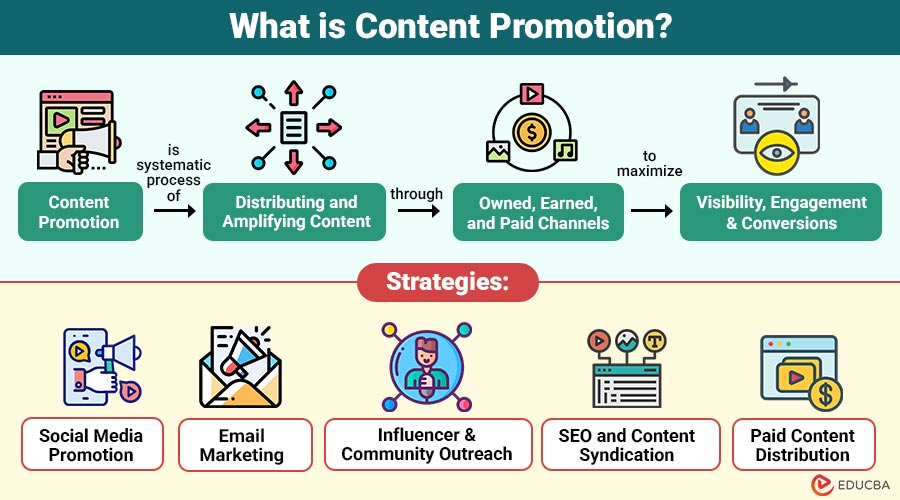
Content promotion is the systematic process of distributing and amplifying content through owned, earned, and paid channels to maximize visibility, engagement, and conversions. It guarantees that the appropriate audience is reached by the appropriate media at the appropriate moment.
Unlike content creation, which focuses on producing valuable information, content promotion focuses on distribution, amplification, and performance optimization. It bridges the gap between content development and audience consumption.
Table of Contents:
- Meaning
- Importance
- Types
- Strategies
- Difference
- Common Mistakes
- Real-World Examples
- Tools
- Best Practices
Key Takeaways:
- Content promotion ensures valuable content reaches the right audience, maximizing visibility, engagement, and measurable marketing results.
- Effective promotion uses owned, earned, and paid channels strategically, balancing organic reach with paid amplification.
- Monitoring analytics and performance metrics allows continuous optimization, improving ROI, audience targeting, and long-term brand authority.
- Consistently repurposing and tailoring content to each platform consistently increases reach, relevance, engagement, and audience satisfaction.
Why is Content Promotion Important?
Content promotion plays an important role in digital marketing success for several reasons:
1. Increases Content Visibility
Content promotion boosts initial reach by surfacing content across search engines and social platforms that reward engagement and relevance.
2. Maximizes ROI on Content Creation
Promotion ensures that the time, effort, and budget invested in content creation yield measurable outcomes, such as traffic, leads, and conversions.
3. Drives Targeted Traffic
Strategic promotion delivers content to relevant audiences, increasing the likelihood of meaningful engagement, subscriptions, and qualified conversions.
4. Builds Brand Authority
Consistent promotion of valuable content establishes credibility, trust, and thought leadership, strengthening long-term brand perception in competitive markets.
5. Supports SEO Performance
Promoted content attracts backlinks, shares, and engagement signals, indirectly improving search engine visibility, rankings, and organic traffic growth.
Types of Content Promotion Channels
Content promotion typically falls into three main categories:
1. Owned Media
Owned media refers to content distribution channels fully controlled by a brand, enabling direct audience engagement, consistent messaging, long-term value creation, and independence from third-party platform policy changes.
Examples:
- Company website or blog
- Email newsletters
- Mobile apps
- Social media profiles
2. Earned Media
Earned media is unpaid content exposure gained organically when audiences, publishers, or influencers share, mention, or link to a brand, enhancing credibility, reach, trust, and authority through advocacy.
Examples:
- Social media shares
- Backlinks from other websites
- Press coverage
- Influencer mentions
3. Paid Media
Paid media involves distributing content through paid advertising, sponsorships, or promotions, enabling precise targeting, scalable reach, predictable visibility, performance tracking, and faster results across digital platforms and channels.
Examples:
- Social media ads
- Native advertising
- Sponsored posts
- Search engine marketing (SEM)
Content Promotion Strategies
A successful content promotion plan combines multiple strategies rather than relying on a single channel.
1. Social Media Promotion
Promotes content across social platforms to increase visibility, engagement, sharing, and traffic by effectively targeting specific audiences.
2. Email Marketing
Delivers content directly to subscribers, building relationships, driving repeat visits, increasing conversions, and generating high returns on investment.
3. Influencer and Community Outreach
Expands content reach by collaborating with influencers and communities, boosting credibility, trust, engagement, and organic audience growth.
4. SEO and Content Syndication
Improves long-term visibility by optimizing content for search engines and syndicating across platforms to attract consistent organic traffic.
5. Paid Content Distribution
Uses paid advertising channels to rapidly amplify content reach, target audiences precisely, measure performance, and accelerate campaign results.
Difference Between Content Promotion and Content Marketing
Here’s a comparison table highlighting the key differences between content promotion and content marketing:
| Aspect | Content Promotion | Content Marketing |
| Focus | Distributing and amplifying content | Creating valuable content |
| Timeline | Short- and long-term | Long-term |
| Activities | Sharing, advertising, outreach | Writing, designing, producing |
| Goal | Increase reach and engagement | Build trust and authority |
Common Content Promotion Mistakes
Here are some common mistakes to avoid when promoting your content:
1. Single Promotion
Sharing content only once limits visibility and engagement, reducing its potential reach and long-term impact on audiences.
2. Only Organic
Depending solely on organic reach can slow growth, limit audience exposure, and miss opportunities for broader promotion.
3. Ignoring Analytics
Neglecting analytics prevents understanding content effectiveness, audience behavior, and areas for improvement, thereby reducing the efficiency of the marketing strategy.
4. Uniform Messaging
Posting identical content across platforms fails to account for audience preferences and platform-specific engagement patterns, thereby lowering effectiveness.
5. Over-Promotion
Excessive promotion without valuable content annoys audiences, erodes trust, and diminishes engagement, ultimately harming brand reputation.
Real-World Examples of Content Promotion
Here are some examples showing how brands effectively promote their content:
1. SaaS Blog Promotion
A SaaS company publishes a long-form guide and promotes it through:
- LinkedIn posts from leadership
- Email campaigns
- Paid LinkedIn ads
- Guest posts linking back to the guide
2. E-commerce Content Promotion
An e-commerce brand promotes buying guides using:
- Pinterest pins
- Instagram Reels
- Influencer collaborations
- Retargeting ads
Tools for Content Promotion
Some popular tools include:
1. Social Media Tools
Tools like Buffer and Hootsuite schedule, manage, and analyze social media posts, improving engagement, consistency, audience targeting, and performance tracking.
2. Email Marketing Tools
Platforms such as Mailchimp and HubSpot automate email campaigns, segment audiences, personalize content, increase open rates, and measure subscriber engagement effectively.
3. SEO Tools
SEO tools like Ahrefs and SEMrush help optimize content, track keywords, analyze competitors, build backlinks, and improve organic search visibility.
4. Analytics Tools
Google Analytics and Hotjar track website performance, user behavior, conversions, and engagement, providing insights to optimize content and marketing strategies.
5. Paid Ads Tools
Tools like Google Ads and Meta Ads Manager manage, target, and optimize paid campaigns, increasing reach, conversions, and return on advertising investment.
Best Practices for Effective Content Promotion
Here are some best practices to promote your content effectively:
1. Promote Before You Publish
Create anticipation by sharing teasers, countdowns, sneak peeks, or email announcements to encourage your audience to wait for your content release.
2. Match Content to Platform
Adapt content style, format, and tone to each platform, recognizing that LinkedIn, Instagram, and TikTok audiences respond differently.
3. Use a Promotion Calendar
Plan and schedule all promotion activities in advance, aligning with your content publishing schedule to maintain consistent visibility and engagement.
4. Repurpose Content Strategically
Transform a single blog or article into multiple formats like videos, infographics, slides, social posts, quotes, or podcasts for wider reach.
5. Measure and Optimize
To consistently enhance promotion efforts, keep an eye on key performance measures like traffic, engagement, click-through rates, conversions, and backlinks.
Final Thoughts
Content promotion is no longer optional—it is essential. Promotion makes ensuring that important content reaches the right audience at the right time in an information-rich digital age. By combining owned, earned, and paid channels with data-driven strategies, businesses can amplify their content’s impact, improve ROI, and build lasting brand authority. Successful content promotion is not about shouting louder—it’s about distributing smarter.
Frequently Asked Questions (FAQs)
Q1. How often should content be promoted?
Answer: Content should be promoted multiple times across different channels, especially evergreen content.
Q2. Is paid promotion necessary?
Answer: Not always, but paid promotion accelerates reach and is highly effective for competitive niches.
Q3. Can small businesses benefit from content promotion?
Answer: Yes. Even low-budget promotion using owned and earned media can deliver strong results.
Q4. What metrics matter most?
Answer: Engagement, conversions, traffic quality, and ROI are more important than vanity metrics.
Recommended Articles
We hope that this EDUCBA information on “Content Promotion” was beneficial to you. You can view EDUCBA’s recommended articles for more information.

