
What is Content Mapping?
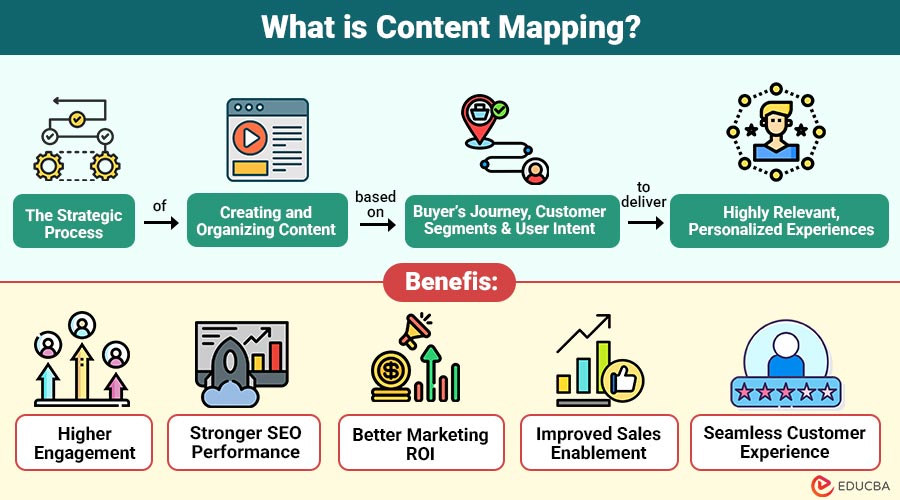
Content mapping is the strategic process of creating and organizing content based on the buyer’s journey, customer segments, and user intent to deliver highly relevant, personalized experiences. It ensures that every content piece—blog, landing page, email, video, or social post—matches what the user needs at each stage (Awareness, Consideration, Decision).
Example:
- A user searching “Why is my website traffic low?” needs educational content (Awareness).
- The same user, later searching “Best SEO tools 2025” needs comparison content (Consideration).
- Finally, searching “Buy SEO audit service in India” indicates readiness for a solution (Decision).
Content mapping ensures your content supports the user at every step.
Table of Contents:
Key Takeaways:
- Content mapping creates a strategic direction so every content asset supports buyer intent and strengthens marketing alignment.
- It ensures each persona receives purposeful, stage-specific information that accelerates movement through the buying journey.
- Mapping highlights weak funnel stages, helping prioritize new content that effectively improves conversions and audience engagement.
- It connects marketing, sales, and customer insights, enabling consistent messaging across channels for stronger brand communication.
Why is Content Mapping Important?
Below are the core factors that make content mapping important for every high-performing marketing strategy.
1. Delivers Personalized Experiences
Users receive content aligned with their interests, challenges, and lifecycle stage—boosting relevance and engagement.
2. Improves Lead Nurturing
Guides prospects from curiosity to purchase through well-timed educational, comparative, and sales-driven content.
3. Boosts Conversion Rates
When the content matches user intent, conversions naturally increase because customers feel understood.
4. Strengthens Brand Authority
Consistent, targeted content positions your brand as a trusted expert across the entire journey.
5. Eliminates Content Gaps
Helps teams avoid random content creation by identifying missing pieces and priority areas.
Key Components of Content Mapping
Here are the essential components that underpin an effective, well-structured content mapping strategy.
1. Buyer Personas
Profiles representing your ideal customers. Includes demographics, goals, motivations, pain points, preferred channels, and buying behaviors.
Example Personas:
- Budget-Focused Buyer
- Tech-Researcher
- Business Decision-Maker
2. Buyer’s Journey Stages
i. Awareness Stage: The customer identifies a problem or curiosity.
- Content type: Educational blogs, guides, podcasts, and infographics.
ii. Consideration Stage: The customer evaluates options and solutions.
- Content type: Comparison articles, webinars, and case studies.
iii. Decision Stage: The customer is ready to buy.
- Content type: Demos, testimonials, pricing pages, and free trials.
3. Content Inventory
Analyze existing content to identify:
- What do you already have?
- What needs updating?
- What is missing?
- What performs well?
4. Content Alignment Matrix
A structured table that maps each persona, stage, and content type to ensure full coverage.
Example Matrix (Simplified):
| Persona | Awareness | Consideration | Decision |
| Tech-Researcher | Blog: “Why Sites Lose Traffic” | Webinar: “SEO Tools Comparison” | Demo + Pricing Page |
| Business Owner | Guide: “What is Content Mapping?” | Case Study: “How X Increased Leads” | Consultation Call |
How Content Mapping Works (Step-by-Step Framework)
Here are the step-by-step actions you must follow to build an effective content mapping strategy.
Step 1: Identify Buyer Personas
Interview customers, analyze behavior patterns, and segment them by goals, challenges, and demographics.
Step 2: Define the Buyer’s Journey
Create detailed descriptions of what customers search, feel, and expect at each stage.
Step 3: Conduct a Content Audit
Review your blog posts, videos, emails, and social content. Tag each according to persona and journey stage.
Step 4: Map Content to Each Stage
Assign:
- Awareness → Educational
- Consideration → Comparative
- Decision → Conversion-focused
Step 5: Identify Content Gaps
If the Awareness stage has 20 blogs but the Decision stage has 2, you must balance the funnel.
Step 6: Create a Content Planning Calendar
Plan content publication dates, formats, writers, keywords, and target persona.
Step 7: Optimize & Personalize Across Channels
Use segmentation, dynamic content, automation tools, and intent signals.
Step 8: Measure Performance
Track KPIs such as:
- Organic traffic
- Engagement rate
- Lead quality
- Conversions
- Customer retention
Examples of Content Mapping
Here are the examples showing how different industries apply content mapping across the buyer’s journey.
1. E-Commerce Brand (Skincare Product Line)
A skincare brand wants to guide users from identifying skin issues to selecting and purchasing the right product.
| Buyer Stage | User Intent | Best-Suited Content |
| Awareness |
|
|
| Consideration |
|
|
| Decision |
|
|
2. Travel Agency / Tour Operator
A travel company wants to convert casual vacation researchers into booked customers.
| Buyer Stage | User Intent | Best-Suited Content |
| Awareness |
|
|
| Consideration |
|
|
| Decision |
|
|
Benefits of Content Mapping
Here are the benefits businesses gain by aligning content with buyer personas and journey stages.
1. Higher Engagement
Content tailored to each audience segment increases relevance, boosts interaction, and encourages deeper user engagement throughout.
2. Stronger SEO Performance
Targeted, intent-aligned topics enhance keyword relevance, improve search rankings, and significantly strengthen overall organic visibility.
3. Better Marketing ROI
Eliminates unnecessary content production, improves lead quality, maximizes resource utilization, and delivers substantially higher marketing returns.
4. Improved Sales Enablement
Sales teams receive tailored, stage-specific content that supports conversations, accelerates conversions, and strengthens customer decision confidence.
5. Seamless Customer Experience
Well-mapped content gently guides users across journey stages, reducing friction, increasing satisfaction, and improving overall conversion outcomes.
Best Practices for Effective Content Mapping
Here are the best practices to ensure your content mapping strategy remains accurate, effective, and conversion-focused.
1. Create Persona-Specific Content (Not Generic)
Craft each content piece for a defined persona and journey stage to maintain maximum relevance.
2. Conduct Regular Content Audits
Review all content periodically to update outdated pieces, remove low performers, and strengthen overall effectiveness.
3. Focus on Search Intent
Match each content asset to user intent by carefully analyzing keywords, behaviors, queries, and contextual search patterns.
4. Use Visual and Interactive Formats
Incorporate videos, infographics, quizzes, calculators, and interactive tools to enhance engagement and user experience significantly.
5. Include Clear CTAs for Each Stage
Design journey-specific CTAs guiding users appropriately from learning and comparing options to purchasing or booking demos confidently.
6. Personalize With Automation Tools
Use segmentation, automated workflows, retargeting, and CRM-driven personalization to deliver timely, customized content experiences continuously.
Common Mistakes to Avoid
These are the most common mistakes that weaken content mapping strategies and reduce overall marketing impact.
1. Writing Content for All Personas at Once
Creating content that targets multiple personas simultaneously weakens your message and significantly reduces audience engagement.
2. Over-investing in Awareness Content
Focusing too heavily on awareness materials creates an imbalance in the funnel and limits conversions later in the funnel.
3. Not Updating Buyer Personas
Failing to refresh personas regularly ignores evolving customer behaviors, drastically reducing accuracy and content relevance.
4. Poor Internal Collaboration
Lack of coordination among marketing, sales, and product teams creates inconsistent messaging and missed opportunities.
5. Neglecting Content Repurposing
Not repurposing existing content wastes valuable resources and limits reach across diverse audience preferences and formats.
Frequently Asked Questions (FAQs)
Q1. What is main purpose of content mapping?
Answer: To deliver relevant content to users based on their stage in the buyer journey.
Q2. How often should I update my content map?
Answer: Every 3–6 months or after major product/customer changes.
Q3. What tools help with content mapping?
Answer: HubSpot, Semrush, Trello, Notion, Airtable, and Google Analytics.
Q4. How long does content mapping take?
Answer: Typically 1–3 weeks, depending on your content volume.
Recommended Articles
We hope that this EDUCBA information on “Content Mapping” was beneficial to you. You can view EDUCBA’s recommended articles for more information.

