


What Is a Cold Wallet?
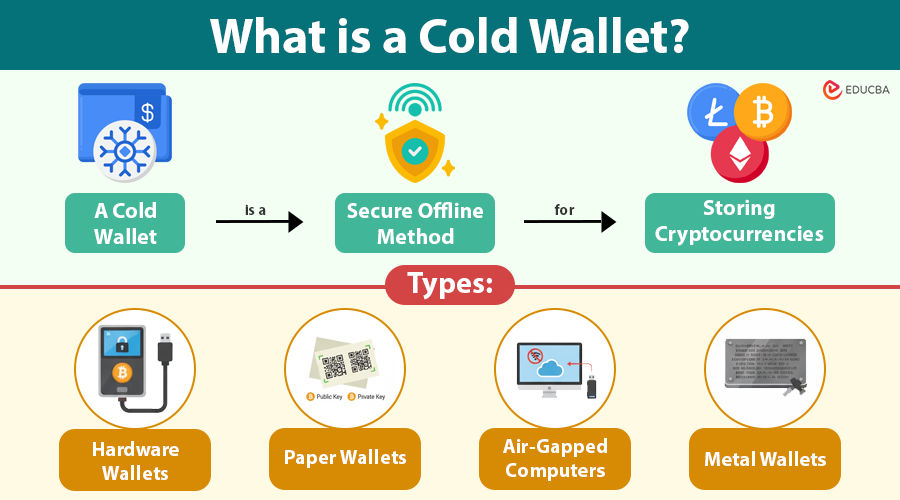
A cold wallet (or cold storage wallet) is a secure offline method for storing cryptocurrencies, such as Bitcoin, Ethereum, or stablecoins. Unlike hot wallets, which stay online, cold wallets remain completely offline, significantly reducing the risk of hacking, phishing, or malware attacks.
In cryptocurrency transactions, a private key, a unique cryptographic code, determines access to funds. Anyone who gets your private key can take control of your coins. A cold wallet keeps these keys offline, making it one of the most secure storage options for both individuals and institutions.
Suppose you buy $10,000 worth of Bitcoin as a long-term investment. Instead of using an exchange wallet that hackers could potentially attack, you keep it safe in a hardware wallet, such as the Ledger Nano X. Even if your computer gets hacked, your private keys stay safe because they never leave the device.
Table of Contents
- Meaning
- How Does it Work?
- Why Are They Essential for Crypto Security?
- Types
- Cold Wallet vs Hot Wallet
- Advantages
- Disadvantages
- How to Set Up?
- Best Practices
- Who Should Use?
- Top Cold Wallets
- Security Tips
How Does a Cold Wallet Work?
The core idea of a cold wallet is isolation, keeping your private keys away from internet-connected devices. Let us break down the process of how it works:
- Private key generation: Cold wallets generate private and public keys offline. The private key lets you access and control your crypto, while the public key acts as your wallet address to receive funds.
- Offline storage: Once generated, the private keys are stored on a hardware device or even written on paper, depending on the wallet type.
- Transaction creation: When you want to send crypto, you create a transaction on an internet-connected device (unsigned).
- Offline signing: The unsigned transaction is transferred to the cold wallet (usually via USB or QR code). The cold wallet signs the transaction using the private key without requiring an internet connection.
- Transaction broadcasting: The online device receives the signed transaction and broadcasts it on the blockchain network.
This process ensures that your private keys never come into contact with the internet, providing strong protection against online threats.
Why Cold Wallets Are Essential for Crypto Security?
While crypto exchanges and online wallets offer convenience, they are prime targets for hackers. Over the years, several major crypto hacks (like Mt. Gox, Coincheck, and FTX) have led to billions in losses.
A cold wallet provides maximum control and security, reducing exposure to these vulnerabilities. Investors use them to store “HODL” assets, which are cryptocurrencies they do not plan to trade frequently but intend to hold in the long term.
For example, institutional investors, crypto funds, and high-net-worth individuals often use multi-signature cold storage systems to ensure that even if one keyholder is compromised, unauthorized transactions cannot occur.
Types of Cold Wallets
Cold wallets come in several forms, each offering different levels of security, convenience, and cost. Below are the most common types:
1. Hardware Wallets
A hardware wallet is a physical electronic device that keeps your private keys offline and encrypted. It resembles a USB drive or a small handheld device with a secure chipset designed to prevent unauthorized key access or extraction.
How It Works:
The device generates and stores your private keys within its secure environment. When you initiate a transaction, the hardware wallet signs it internally without exposing the private key to the internet. A connected device sends the signed transaction to the blockchain.
Popular.
Examples:
- Ledger Nano X / Ledger Nano S Plus
- Trezor Model T / Trezor One
- SafePal S1
- Ellipal Titan.
Key Features:
- Encrypted private key storage
- PIN and passphrase protection
- Multi-cryptocurrency support (Bitcoin, Ethereum, Solana, etc.)
- Compatibility with desktop and mobile apps
- Backup and recovery using seed phrases.
Pros:
- Extremely secure and user-friendly
- Easy to back up and restore
- Regular firmware updates for added protection and new coins.
Cons:
- Costs between $60–$180, depending on the model
- Physical loss or damage can result in risk if the recovery phrase is lost.
Best For:
Long-term investors, institutions, and users holding large crypto portfolios who value top-tier security.
2. Paper Wallets
A paper wallet is a printed sheet containing your public and private keys, often displayed as QR codes for easy scanning and verification. It is a simple, cost-free form of cold storage that remains completely offline.
How It Works:
You generate a key pair using an offline computer or a trusted generator (such as BitAddress.org in offline mode). The keys are then printed on paper, which you can safely store. Anyone with the private key can access the funds, so secure handling is essential.
Popular Examples:
- org (for Bitcoin)
- net (for multiple cryptocurrencies).
Key Features:
- 100% offline storage
- Free to create
- Easy to generate using open-source tools.
Pros:
- Immune to online hacks and malware
- Ideal for long-term cold storage
- No purchase or setup cost.
Cons:
- Vulnerable to fire, water, or physical damage
- Cannot be recovered if lost or destroyed
- Manual errors during creation can lead to permanent loss.
Best For:
Experienced users are comfortable managing private keys manually and storing physical copies securely.
3. Air-Gapped Computers
Users create an air-gapped wallet on a dedicated computer or device that stays completely disconnected from all networks, including Wi-Fi, Bluetooth, USB, and cellular connections. This provides maximum isolation for sensitive crypto data.
How It Works:
The air-gapped device generates and stores private keys offline. Users create and sign transactions on the isolated device, then transfer only the signed transaction data (not the private key) to an internet-connected device for broadcasting.
Popular Examples:
- Specter DIY Wallet
- Coldcard Mk4
- Cobo Vault.
Key Features:
- Total offline operation (no connectivity)
- High-level encryption
- Suitable for custom or institutional setups.
Pros:
- Offers the highest level of security and isolation
- Ideal for safeguarding large, institutional holdings
- Immune to most online attack vectors.
Cons:
- Complex setup and requires technical knowledge
- High maintenance and cost
- Not suitable for beginners or casual users.
Best For:
Institutions, cybersecurity experts, and crypto custodians are managing multiple high-value assets.
4. Metal Wallets (Backup Cold Wallets)
A metal wallet is not a wallet for holding crypto directly, but a durable backup tool used to store recovery seed phrases or private keys. These metal plates are resistant to fire, corrosion, and water damage, protecting against physical risks that can destroy paper backups.
How It Works:
You engrave or imprint your seed phrase or private key onto the metal plate. This backup provides a permanent, tamper-proof record that lets you recover your funds if your main wallet device is lost or damaged.
Popular Examples:
- Cryptosteel Capsule
- Billfodl
- Keystone Tablet.
Key Features:
- Made from stainless steel or titanium
- Fireproof, waterproof, and corrosion-resistant
- Compatible with most seed phrase formats (12, 18, or 24 words).
Pros:
- Extremely durable and long-lasting
- Protects critical information from physical damage
- Simple to use and maintain.
Cons:
- Requires manual engraving or setup
- Can be lost or stolen if not stored securely.
Best For:
Users seeking a permanent, tamper-proof backup of recovery phrases alongside their hardware or paper wallets.
Cold Wallet vs Hot Wallet
| Feature | Cold Wallet | Hot Wallet |
| Internet Connection | Offline | Always online |
| Security Level | Very high | Moderate |
| Accessibility | Low (manual setup) | Instant access |
| Cost | Usually paid | Mostly free |
| Use Case | Long-term storage | Active trading |
| Examples | Ledger, Trezor, Paper Wallet | MetaMask, Coinbase Wallet |
Advantages of Cold Wallets
- Top-tier security: Cold wallets provide air-tight protection against hackers, malware, and phishing attempts, since they remain offline.
- Long-term storage: Perfect for investors who plan to hold crypto assets for years, unaffected by short-term volatility.
- Full ownership & control: You own your private keys, ensuring your crypto is not dependent on third-party exchanges.
- Tamper resistance: Hardware wallets include secure elements and firmware verification to prevent unauthorized access.
- Compatibility & flexibility: Most cold wallets support thousands of tokens across multiple blockchains (BTC, ETH, BNB, etc.).
- Recovery options: Recovery seed phrases allow you to restore your assets even if the device is lost or damaged.
Disadvantages of Cold Wallets
- Reduced convenience: You need to connect or manually sign transactions more slowly than hot wallets.
- Physical damage or loss: Improper storage can cause damage to or loss of hardware devices or paper backups.
- Initial cost: High-quality hardware wallets are premium products, but the investment is well worth the added security.
- Learning curve: New users might find setup and key management challenging.
How to Set Up a Cold Wallet?
Follow these steps to set up your cold wallet securely:
- Buy from an official source: Always purchase your hardware wallet directly from the manufacturer’s website (e.g., Ledger, Trezor) to avoid tampered devices.
- Unbox and initialize: Plug the device into your computer or smartphone and set it up to create a new wallet.
- Record the recovery seed: Write down the 12-, 18-, or 24-word seed phrase on paper or metal; never store it digitally.
- Set a strong PIN: Choose a secure PIN or passphrase to prevent unauthorized access.
- Transfer your crypto: Send your crypto from your exchange or hot wallet to the new cold wallet’s address.
- Store securely: Keep your hardware device and recovery backup in separate, secure, and fireproof locations.
Best Practices for Cold Wallet Security
- Avoid third-party resellers and buy directly from official sources.
- Use multiple backups of recovery seeds stored in different secure places.
- Always keep your private keys and seed phrases secret.
- Check for firmware updates to ensure security patches are applied.
- Avoid connecting to unknown computers or using public networks.
- Consider using a metal backup for permanent seed phrase protection.
Who Should Use a Cold Wallet?
Cold wallets are most suitable for:
- Long-term investors (HODLers)
- Institutions and crypto funds managing large sums
- Security-conscious users wary of exchange hacks
- Crypto miners storing long-term rewards
If you trade daily, you can keep a small amount in a hot wallet for quick transactions while securing the majority in a cold wallet.
Top Cold Wallets in 2025
| Wallet Name | Type | Key Features | Best For |
| Ledger Nano X | Hardware | Bluetooth, supports 5,500+ coins, mobile app | Active investors |
| Trezor Model T | Hardware | Touchscreen, open-source firmware | Professionals |
| SafePal S1 | Hardware | Air-gapped, QR-based, affordable | Beginners |
| Ellipal Titan | Hardware | Tamper-proof metal case, fully air-gapped | Security-focused users |
| Keystone Pro | Hardware | Fingerprint access, multiple accounts | Institutions |
Cold Wallet Security Tips for 2025
- Use multi-signature wallets for institutional-grade security.
- Regularly test recovery phrases by restoring them to a secondary device.
- Consider storing backups in multiple secure locations for geographic redundancy.
- For estate planning, maintain a clear inheritance procedure for crypto assets.
Final Thoughts
A cold wallet remains the gold standard for cryptocurrency security. Storing private keys offline protects your assets from hacks, scams, and unauthorized access.
Whether you are a retail investor or an institutional holder, cold wallets offer peace of mind through self-custody and independence from centralized exchanges.
While setup requires care and attention, the security benefits far outweigh the effort because in crypto, the rule is simple:
“Not your keys, not your coins.”
Frequently Asked Questions (FAQs)
Q1. Is a cold wallet completely safe?
Answer: While no system is 100% foolproof, cold wallets are the most secure method available if you follow best practices.
Q2. Can I use a cold wallet without an internet connection?
Answer: Yes. The device itself remains offline, though you will need an online device to broadcast signed transactions.
Q3. Can I recover my crypto if I lose my cold wallet?
Answer: Yes, as long as you have your recovery seed phrase safely stored.
Q4. What is the difference between a hardware wallet and a paper wallet?
Answer: A hardware wallet is an electronic device that features encryption and backup options, whereas a paper wallet is a printed set of keys.
Q5. How much does a cold wallet cost?
Answer: Hardware wallets typically cost $60–$200, depending on the model and features.
Q6. Can beginners use cold wallets?
Answer: Yes. Modern devices, such as Ledger and Trezor, offer intuitive interfaces designed for beginners.
Recommended Articles
We hope this detailed guide on cold wallets helps you understand how to effectively safeguard your digital assets. Explore these related articles for deeper insights into crypto investing, blockchain technology, and digital asset management strategies.

