


What Are Cobots?
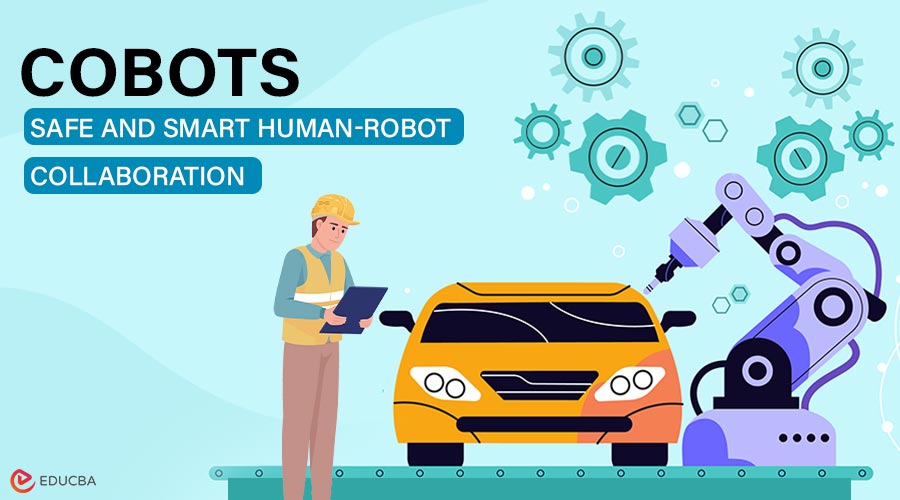
Cobots (collaborative robots) are robots that can safely work in direct interaction with humans. Unlike traditional industrial robots, which are typically isolated from people due to safety concerns, cobots are built with sensors, cameras, and advanced software to ensure safe human-robot collaboration.
For example, in a manufacturing plant, a traditional robot may weld car doors continuously. A cobot, on the other hand, may assist a human worker in assembling small components, passing tools, or lifting heavy parts safely.
Table of Contents
- What Are Cobots?
- Key Features
- How Cobots Work?
- Applications of Collaborative Robots
- How Cobots Differ from Traditional Robots
- Who Makes Collaborative Robots?
- Challenges of Cobots
- The Future
Key Features of Cobots
Collaborative robots differ from traditional industrial robots because they specifically support safe, flexible, and efficient human-robot collaboration. Some of their key features include:
- Safety and Force Limiting: Cobots use advanced sensors and force-limiting technology to ensure safe interaction with humans. If they come into contact with a human, they either stop or reduce their movement speed, preventing accidents.
- User-Friendly Programming: Unlike traditional robots that require specialized coding, cobots can be programmed through drag-and-drop interfaces, hand guidance, or even mobile apps, making them accessible to non-experts.
- Flexibility and Versatility: They can perform various tasks, including assembly, packaging, welding, and inspection. They can be quickly reprogrammed and redeployed for different functions in the same workplace.
- Compact and Lightweight Design: These robots are compact, lightweight, and simple to set up, making them a perfect choice for small and medium enterprises that have limited floor space.
- Cost-Effectiveness: Collaborative robots reduce infrastructure costs since they do not require safety cages or complex installations. This makes them more affordable for businesses of all sizes.
- Collaboration and Human Assistance: Rather than replacing humans, cobots complement them by handling repetitive, strenuous, or dangerous tasks—allowing workers to focus on higher-value activities.
- Scalability: It can be integrated into existing production lines and scaled up as business needs grow, without the need for large restructuring.
How Cobots Work?
Collaborative robots combine sensors, smart programming, and safety features to work smoothly alongside humans.
- Sensing the Environment: Cobots use cameras, vision systems, and proximity sensors to detect objects, people, and their surroundings.
- Programming the Task: Operators either use a simple interface or physically guide the cobot’s arm to teach it the required movement.
- Movement Execution: The cobot follows programmed instructions with precision, repeating tasks like assembly, packaging, or inspection.
- Safety Monitoring: Built-in force and torque sensors stop the cobot instantly if it encounters unexpected resistance or contact with a human.
- Learning and Adapting With machine learning, cobots can improve efficiency, adapt to slight variations, and switch tasks quickly.
Applications of Collaborative Robots
Industries use cobots across multiple sectors, from manufacturing to healthcare.
1. Manufacturing
- Assembly: Cobots assist workers by handling repetitive assembly tasks such as screwing, welding, or fitting parts.
- Quality Inspection: They use cameras and sensors to check for product defects with high precision.
- Packaging: Cobots package products on production lines, improving efficiency while workers handle supervision and customization.
2. Healthcare
- Surgical Assistance: Cobots support surgeons by holding tools or stabilizing tissues.
- Pharmaceuticals: They are used to mix compounds, handle delicate materials, and package medicines.
- Patient Care: Collaborative robots help in rehabilitation therapy by providing consistent, repeatable movement exercises.
3. Logistics and Warehousing
- Order Picking: Cobots work alongside staff in warehouses to pick, pack, and sort items.
- Loading and Unloading: They help with moving heavy packages, reducing the risk of workplace injuries.
4. Agriculture
- Harvesting: Cobots pick fruits and vegetables, working safely alongside farmers.
- Plant Monitoring: Equipped with cameras, collaborative robots help detect crop health issues.
5. Retail and Service Industry
- Customer Assistance: Cobots interact with customers for product information or self-service kiosks.
- Inventory Management: They scan shelves and assist staff in maintaining stock levels.
How Cobots Differ from Traditional Robots?
Here is a clear and concise table highlighting the differences between collaborative robots and traditional robots:
| Feature | Collaborative Robots | Traditional Robots |
| Work Environment | Can safely work alongside humans | Operate in isolated cages or restricted areas |
| Safety | Equipped with sensors and force-limiting tech to prevent accidents | Require barriers, safety guards, or supervision |
| Programming | Easy to program; can learn tasks through demonstration or simple interfaces | Often require specialized programming skills |
| Flexibility | Lightweight, portable, and easy to redeploy | Fixed in place; difficult to reconfigure |
| Cost | More affordable, low maintenance, shorter setup | Higher upfront costs, complex maintenance |
| Collaboration | Designed to assist humans, not replace them | Designed for independent operation, with minimal human interaction |
| Speed & Strength | Moderate speed and force; suitable for tasks requiring care | High speed and power; suitable for heavy-duty, repetitive tasks |
Who Makes Collaborative Robots?
Several companies design and manufacture cobots (collaborative robots), ranging from specialized robotics startups to large industrial automation firms. Here are the main players:
1. Universal Robots (UR)
- Based in Denmark, UR is often considered the pioneer in commercial collaborative robots.
- Popular models: UR3, UR5, UR10, UR16 — named after their payload in kilograms.
- Known for easy programming, lightweight arms, and flexibility, widely used in assembly, machine tending, and pick-and-place tasks.
2. FANUC
- A Japanese industrial robotics giant that offers both traditional industrial robots and cobots.
- Their CR series cobots can handle payloads up to 35 kg and feature integrated safety features for human collaboration.
3. ABB
- ABB offers cobots under its YuMi series (dual-arm and single-arm options).
- YuMi cobots handle precise assembly tasks in electronics manufacturing.
4. KUKA
- German robotics manufacturer offering LBR iiwa cobots.
- LBR iiwa is lightweight and highly sensitive, ideal for collaborative assembly and handling delicate components.
5. Doosan Robotics
- A South Korean company specializes in producing collaborative robots with payloads ranging from 4 kg to 15 kg.
- Focused on versatility and easy integration for small and medium enterprises (SMEs).
6. Other Niche and Emerging Players
- AUBO Robotics, Omron, and Hanwha provide lightweight, flexible cobots for specialized tasks.
- Startups often offer collaborative robots tailored for food, lab, or healthcare applications.
Challenges of Cobots
Despite their advantages, collaborative robots face certain limitations:
- Initial Cost: Although cheaper than industrial robots, this option still requires an upfront investment.
- Integration Issues: Adapting cobots into existing workflows may take time and training.
- Task Limitations: They are better suited for lighter, less complex tasks compared to heavy-duty industrial robots.
- Workforce Concerns: Some fear cobots may reduce job opportunities, though in reality, they often create new roles.
The Future
The future of cobots looks promising as industries continue to move toward Industry 4.0. With advancements in AI, machine learning, and IoT, it will become smarter, more autonomous, and capable of handling complex decision-making.
We can expect:
- Increased use in small businesses.
- Wider adoption in non-industrial sectors like retail and hospitality.
- Smarter cobots that learn tasks by observing humans.
- Integration with cloud systems for real-time monitoring and updates.
Final Thoughts
Cobots are no longer just a futuristic concept—they are already reshaping industries by enhancing productivity, safety, and efficiency. Their ability to work alongside humans rather than replace them makes them a key driver of modern industrial transformation. As technology advances, cobots will continue to bridge the gap between human creativity and robotic precision, creating a collaborative future where both can thrive together.
Recommended Articles
We hope this comprehensive guide to cobots helps you understand how collaborative robots are transforming industries. Explore these recommended articles for more insights and strategies to boost your automation and productivity success.

