


Why Cloud Managed IT Services are the Backbone of Modern Business?
In the current digital landscape, the phrase “digital transformation” has transitioned from a buzzword to a fundamental survival strategy. For most organizations, the heart of this transformation is the cloud. However, as cloud environments grow in complexity incorporating hybrid architectures, multi-cloud strategies, and serverless computing the internal resources required to manage them have become a significant burden. This is where cloud managed IT services become crucial.
For businesses aiming to balance innovation with operational stability, OpsioCloud provides the expertise needed to navigate these waters. To truly excel, one must understand the depth of cloud managed IT services. This comprehensive guide explores why outsourcing your cloud management is no longer just an option, but a strategic imperative.
What are Cloud Managed IT Services
Cloud managed IT services refer to the partial or complete oversight and administrative control of a company’s cloud environment by a third-party provider. Unlike traditional IT support, which often operates on a “break-fix” model, managed services are proactive.
OpsioCloud acts as an extension of your internal team, handling the intricate layers of the cloud stack from the physical hardware abstraction provided by AWS, Azure, or GCP, up through the operating systems, middleware, and application layers. This allows your internal developers and stakeholders to stop worrying about server uptime and start focusing on the code and products that generate revenue.
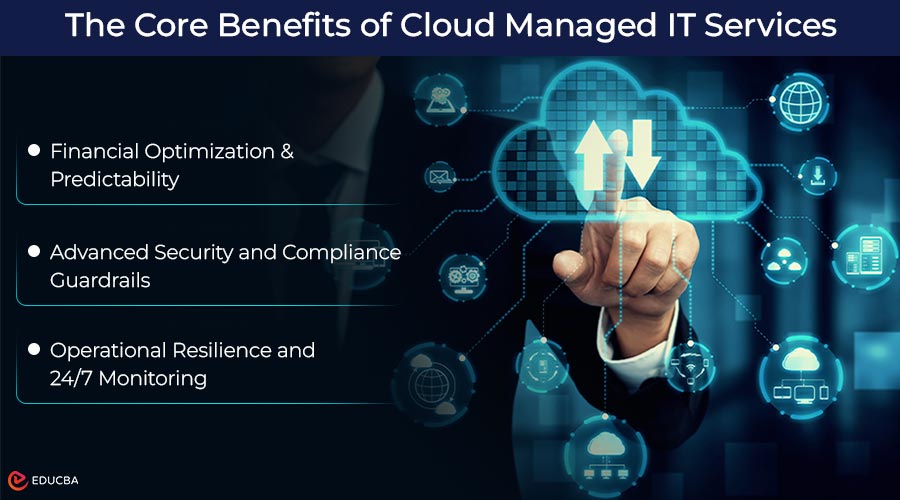
The Core Benefits of Cloud Managed IT Services
When an organization partners with a managed service provider (MSP), it is not just buying hours of labor; it is buying peace of mind and operational excellence.
1. Financial Optimization and Predictability
One of the most common pitfalls of cloud adoption is “Cloud Sprawl” the uncontrolled growth of cloud instances that leads to massive, unexpected bills. Managed services implement strict cost-governance frameworks. By utilizing automated scaling and “right-sizing” (ensuring you are not paying for a 64GB RAM server when you only need 8GB), OpsioCloud helps convert variable, high-risk IT costs into a stable, monthly operational expense (OpEx).
2. Advanced Security and Compliance Guardrails
Cyber threats are advancing faster than most internal IT teams can keep up with. Managed IT services provide a “Security-First” approach. This includes:
- Identity and Access Management (IAM): Restrict access to sensitive data to authorized users only.
- Continuous Compliance: Automatically auditing your environment against standards like GDPR, HIPAA, or PCI-DSS.
- Threat Hunting: Using AI-driven tools to identify suspicious patterns before a breach occurs.
3. Operational Resilience and 24/7 Monitoring
Infrastructure does not sleep, and neither should your monitoring. Cloud managed services provide “follow-the-sun” support. If a database fails at 3:00 AM on a Sunday, the MSP’s automated systems and on-call engineers are already resolving the issue before your customers even notice a lag.
Key Use Cases: Where Managed Services Shine
Every business has unique needs, but several common scenarios highlight the immediate value of a managed approach:
- Accelerating Cloud Migration: Many businesses get stuck in “migration paralysis.” OpsioCloud simplifies this by using a “Lift and Shift” or “Refactoring” strategy to ensure legacy applications run seamlessly in a cloud-native environment.
- Scaling for Growth: For e-commerce companies or SaaS startups, traffic spikes can be lethal. Managed services ensure your infrastructure scales horizontally to meet demand and scales back down to reduce costs when demand subsides.
- Disaster Recovery (DR): With a managed DR plan, your Recovery Time Objective (RTO) is reduced to minutes, even during regional outages or ransomware attacks.
- Kubernetes and Containerization: Managing containerized environments is notoriously difficult. MSPs handle the orchestration (Kubernetes), allowing your team to deploy microservices with confidence.
Best Practices for Effective Cloud Management
Simply hiring a provider is not enough; success requires a shared commitment to best practices. Here is how OpsioCloud ensures peak performance:
1. Implement Infrastructure as Code (IaC)
Manual configuration is the enemy of reliability. Using IaC tools like Terraform or AWS CloudFormation lets you define your entire infrastructure in code. This makes it version-controlled, repeatable, and less prone to the human errors that cause 80% of outages.
2. Establish a Cloud Center of Excellence (CCoE)
A CCoE is a cross-functional team that sets the standards for cloud usage across the organization. By aligning the MSP’s technical expertise with the business’s strategic goals, you ensure that every cloud dollar spent is contributing to a specific business outcome.
3. Performance Benchmarking
You cannot improve what you do not measure. Managed services involve setting Key Performance Indicators (KPIs) such as latency, error rates, and throughput. Regularly reviewing these metrics keeps the environment continuously optimized for efficiency.
4. Zero Trust Architecture
The traditional “perimeter” of the office is gone. Managed services help implement a Zero Trust model in which every request, whether from inside or outside the network, must be verified and encrypted.
Why OpsioCloud is the Right Partner?
Selecting the right provider is a critical strategic choice. OpsioCloud delivers more than technical support it offers a true partnership. With transparency, technical depth, and global cloud expertise, OpsioCloud helps businesses transition from reactive IT to proactive innovation. By leveraging cloud managed IT services, companies can fully harness the power of cloud technologies including AI, Machine Learning, and Big Data without the traditional overhead.
Final Thoughts
The cloud powers modern enterprises, but cloud managed IT services provide the fuel and navigation needed for success. Businesses that embrace managed services remain secure, financially optimized, and technologically ahead of the competition. Do not let infrastructure complexities hold your business back. Focus on innovation and customer experience, and let the experts manage your cloud environment.
Recommended Articles
We hope this guide on cloud managed IT services helps optimize your cloud strategy. Explore these recommended articles for more insights and practical tips.


