


What is Brand Cannibalization?
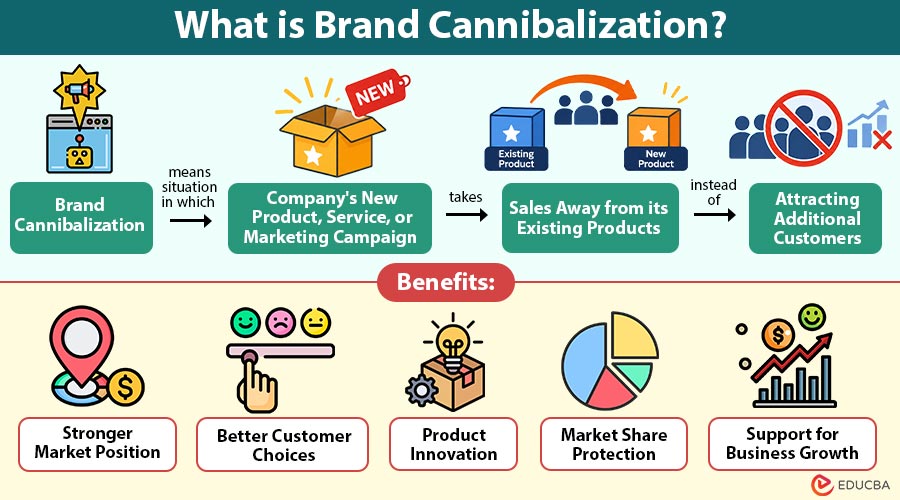
Brand cannibalization means a situation in which a company’s new product, service, or marketing campaign takes sales away from its existing products instead of attracting additional customers.
Businesses often introduce new products to reach different audiences, increase market share, and improve revenue. However, these launches do not always bring new customers. Sometimes, existing customers simply switch from one product to another within the same company. This can reduce the sales of older products without increasing the company’s overall revenue.
For example, a smartphone company may introduce a new model with features similar to its existing model. Customers who planned to purchase the older version may choose the new one instead. Although the new model records strong sales, the company may not gain many additional customers.
Table of Contents:
- Meaning
- Working
- Causes
- Examples
- Types
- Effects
- How to Prevent Brand Cannibalization?
- Benefits
- Difference
Key Takeaways:
- Brand cannibalization occurs when new products attract customers away from existing offerings within the same company.
- Similar features, overlapping audiences, and incorrect pricing can increase competition between a company’s products.
- Businesses can reduce unnecessary cannibalization through market research, product differentiation, and regular sales monitoring.
- Planned cannibalization can encourage innovation, improve customer choices, and protect market share against competitors.
How Does Brand Cannibalization Work?
Brand cannibalization usually happens when a company introduces a product that competes with something it already sells. Customers compare both options and may select the newer offering because of its features, price, design, or promotional appeal.
The process generally follows these steps:
1. Product Introduction
A company launches a new product that offers features, pricing, or benefits similar to an existing product in its current product range.
2. Customer Comparison
Customers compare both products based on their prices, features, quality, availability, and personal preferences before deciding which option suits them.
3. Customer Switching
Some existing customers choose the newly introduced product instead of purchasing the older offering they previously considered or regularly bought.
4. Sales Redistribution
The new product gains sales while the older product experiences declining demand, shifting revenue between offerings within the same company.
5. Business Impact
The company evaluates whether additional sales justify declining performance, reduced profitability, and the resources spent introducing and promoting its new product.
Causes of Brand Cannibalization
Several business decisions and market conditions can cause one product to compete with another product from the same company.
1. Similar Product Features
When two products offer nearly identical features, customers may struggle to understand their differences and select one instead of purchasing both.
2. Overlapping Target Audiences
Companies sometimes introduce products for customer groups with similar needs, creating competition between offerings rather than attracting completely new buyers.
3. Incorrect Pricing Decisions
Setting similar prices for products with overlapping benefits can encourage customers to switch between offerings instead of increasing overall company sales.
4. Frequent Product Launches
Introducing new products without evaluating existing offerings can create unnecessary competition and reduce demand for products that already perform well.
5. Poor Market Research
Businesses that misunderstand customer preferences may launch products that duplicate existing solutions rather than addressing genuine gaps within their target markets.
Examples of Brand Cannibalization
Brand cannibalization can occur across several industries, especially when businesses offer multiple products that serve similar customer requirements.
1. Smartphone Industry
A smartphone manufacturer launches a new budget-friendly tablet with features similar to its existing entry-level laptop. Some customers who planned to purchase the laptop choose the tablet instead, reducing laptop sales without bringing enough new customers to the company.
2. Fast Food Industry
A fast-food restaurant introduces a new chicken burger alongside its existing chicken sandwich. Both products target customers looking for similar meals. Regular customers begin choosing the new burger instead of their usual sandwich, reducing demand for the older menu item without attracting enough additional buyers.
3. Clothing Industry
A clothing company launches a new casual wear collection with designs and prices similar to its existing collection. Customers who previously purchased the older range start selecting the new collection, shifting sales between the company’s own product lines.
Types of Brand Cannibalization
Brand cannibalization can take different forms depending on the products, marketing activities, and customer behavior involved.
1. Product Cannibalization
This occurs when a newly launched product attracts customers who would otherwise purchase an existing product from the same company’s product portfolio.
2. Price Cannibalization
A company introduces a lower-priced alternative that encourages existing customers to switch from higher-priced products, potentially reducing its overall profit margins.
3. Marketing Cannibalization
Promotional campaigns for one product receive attention from customers who previously purchased another offering, shifting demand without creating additional customer interest.
4. Channel Cannibalization
A company introduces a new sales channel that attracts customers away from its existing retail stores, distributors, or other selling platforms.
Effects of Brand Cannibalization
Brand cannibalization can influence a company’s revenue, product performance, customer relationships, and long-term business decisions.
1. Reduced Product Sales
Existing products may experience declining sales when customers move toward newer alternatives, making it difficult for businesses to maintain previous performance levels.
2. Lower Profit Margins
When customers switch toward cheaper alternatives, companies may generate less profit even when their overall product sales remain relatively stable.
3. Increased Marketing Expenses
Businesses may spend additional money promoting competing products within their portfolios, increasing expenses without necessarily improving their overall market position.
4. Customer Confusion
Offering several products with similar features can make purchasing decisions difficult, causing customers to question the differences between available options.
5. Inventory Challenges
Reduced demand for older products may leave businesses with excess inventory, creating storage costs and increasing pressure to offer discounts.
How to Prevent Brand Cannibalization?
Businesses can reduce unnecessary competition between their products by planning launches carefully and understanding customer expectations.
1. Conduct Market Research
Study customer preferences, purchasing habits, competitor offerings, and existing product performance before launching something new to identify potential overlaps and opportunities.
2. Differentiate Products
Give each product distinct features, benefits, pricing, or purposes so customers can understand why different offerings deserve separate places in the market.
3. Identify Target Audiences
Define the customer group for every product carefully, ensuring new offerings attract additional buyers rather than mainly replacing existing customers.
4. Evaluate Existing Products
Review sales figures, customer feedback, and product performance regularly to understand whether new launches are affecting established offerings unnecessarily.
5. Develop Clear Pricing Strategies
Set prices according to product value, customer expectations, and market positioning to prevent unnecessary switching between products within the same portfolio.
6. Monitor Sales Performance
Track individual product sales and overall revenue after every launch to identify unexpected changes and make timely adjustments to business strategies.
7. Plan Product Launches
Introduce new offerings with clear objectives and suitable market positioning, ensuring each launch supports the company’s wider growth plans and customer needs.
Benefits of Brand Cannibalization
Although brand cannibalization can create challenges, it is not always harmful. Sometimes, businesses intentionally introduce products that compete with their existing offerings.
1. Stronger Market Position
Launching an alternative product can help businesses compete with new market entrants and protect their customer base from external competitors.
2. Better Customer Choices
Offering different product options allows customers to select solutions that match their changing preferences, budgets, and individual purchasing requirements.
3. Product Innovation
Competition between products encourages businesses to improve features, update designs, and introduce new ideas that better match changing customer expectations.
4. Market Share Protection
Introducing a new offering can prevent competitors from attracting existing customers by providing alternative choices within the company’s own product portfolio.
5. Support for Business Growth
Planned product replacement can help companies move toward improved offerings while maintaining customer relationships and strengthening their long-term market presence.
Difference Between Brand Cannibalization and Market Cannibalization
The table below highlights the differences between the two:
| Basis | Brand Cannibalization | Market Cannibalization |
| Meaning | One product takes sales from another product within the same brand. | A new offering reduces demand for existing products within a broader market or business context. |
| Focus | Competition between products under the same brand. | Changes in demand across products or market segments. |
| Scope | Generally focuses on a company’s own product portfolio. | Can involve a wider market and multiple competing offerings. |
| Example | A cosmetics brand’s new lipstick range reduces sales of its existing lipstick collection. | A new digital service reduces demand for traditional services across an industry. |
Final Thoughts
Brand cannibalization occurs when a company’s products compete for the same customers, affecting sales and profitability. However, it can encourage innovation and protect market share. Businesses should understand customer needs, differentiate offerings, and monitor performance. Proper planning helps reduce internal competition, strengthen customer relationships, and support sustainable growth.
Frequently Asked Questions (FAQs)
Q1. How can businesses identify brand cannibalization?
Answer: Businesses can identify it by comparing product sales before and after launches, examining customer switching patterns, and checking whether overall revenue increases or remains unchanged.
Q2. Is brand cannibalization always bad for a business?
Answer: No, brand cannibalization is not always harmful. It can help businesses replace outdated products, introduce improved alternatives, and protect their market position against competitors.
Q3. Does brand cannibalization affect customer loyalty?
Answer: It can influence customer loyalty when product differences become unclear, but offering relevant choices may also encourage customers to continue buying from the same brand.
Q4. Which industries commonly experience brand cannibalization?
Answer: Retail, technology, fashion, automobiles, food and beverages, and consumer electronics frequently experience this situation because companies offer multiple products for similar customer needs.
Recommended Articles
We hope that this EDUCBA information on “Brand Cannibalization” was beneficial to you. You can view EDUCBA’s recommended articles for more information –

