


What Is a Bottleneck?
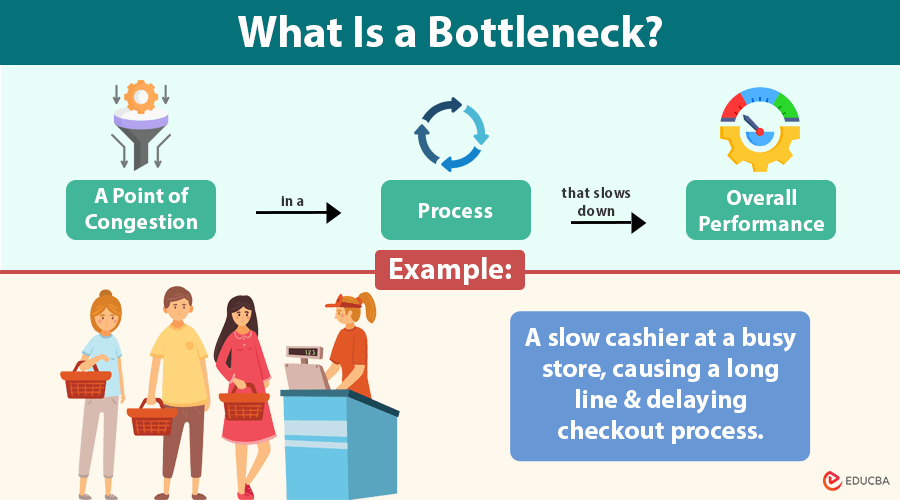
A bottleneck is a point of congestion or limitation in a process that slows down overall performance or efficiency. It occurs when demand exceeds the capacity of a particular resource, restricting the workflow.
Imagine a factory assembling smartphones. If the screen installation process takes 10 minutes per phone, but all other processes take 5 minutes, then screen installation becomes a bottleneck because it slows down the entire production line.
Identifying bottlenecks improves efficiency, reduces costs, and boosts productivity by optimizing workflows and resource allocation. In industries like manufacturing, software, and business operations, resolving it ensures smoother processes, faster performance, and better customer satisfaction, ultimately driving profitability.
Table of Contents
Types of Bottleneck
Here are the types of bottlenecks:
| Types | Description | Example |
| Short-Term Bottleneck | Temporary slowdowns due to sudden demand or technical issues. | An e-commerce website crashes during Black Friday sales due to high traffic. |
| Long-Term Bottleneck | Inefficiencies or outdated processes cause persistent constraints. | A car manufacturing plant struggles with production due to an old assembly line. |
| Process Bottleneck | A slow step in a workflow delays the entire process. | A hospital’s long patient registration process causes delays in consultations. |
| Resource Bottleneck | A shortage of people, machines, or materials limits performance. | A construction project is slowed down due to a shortage of skilled workers. |
| Performance Bottleneck | System limitations often restrict efficiency in technology. | A mobile app crashes frequently because the server cannot handle too many users. |
| Financial Bottleneck | Limited cash flow or budget constraints slow down operations. | A startup delays product launches due to a lack of marketing funds. |
| Decision-Making Bottleneck | Slow approvals or bureaucratic delays hinder progress. | A company’s expansion is stalled because the board takes too long to approve plans. |
What Causes Bottleneck?
It can occur in various areas:
1. Work & Business
Limited resources, inefficient workflows, and task dependencies often create bottlenecks. When one step is delayed, everything piles up behind it. Poor communication can worsen the situation by causing misunderstandings and misalignment between teams.
2. Technology & Computing
Hardware limitations, such as a slow processor, insufficient RAM, or outdated storage, can slow down system performance. Network congestion can also create delays, especially when too many users are accessing the same resources. Poorly optimized software that consumes excessive resources further contributes to inefficiencies.
3. Manufacturing & Supply Chain
Machine downtime, supply delays, and storage limitations are common bottlenecks in production. If one machine in a manufacturing line breaks down, the entire operation may stall. Late deliveries of raw materials can disrupt workflows, while inadequate storage space slows down inventory movement.
4. Daily Life
Traffic jams occur when a slow-moving lane creates a ripple effect. Long checkout lines form when there are not enough cashiers. Household chores can also face bottlenecks—if one task, like laundry, takes too long, it can delay everything else.
Real-world Examples
1. McDonald’s Drive-Thru Delays
McDonald’s has experienced bottlenecks at drive-thrus, especially during peak hours. Long wait times in the order-taking or food preparation process slow down service, leading to lost sales and customer dissatisfaction. To solve this, McDonald’s introduced dual drive-thru lanes and AI-powered ordering to improve efficiency and reduce bottlenecks.
2. Tesla’s Production Delays
Tesla has faced bottlenecks in its production lines, particularly with the Model 3. In 2017, Tesla struggled with its battery module assembly at the Gigafactory, significantly slowing overall production. The bottleneck caused delivery delays, increased costs, and frustrated customers, highlighting how a single constraint in the supply chain can affect an entire business.
Steps to Fix Bottleneck
Fixing a bottleneck requires identifying, analyzing, and resolving the issue systematically. Here is a step-by-step approach:
Step 1. Identify the Bottleneck
Observe the workflow and determine where delays are happening. Look for tasks that take longer than expected, create backlogs, or cause frequent interruptions.
Step 2. Analyze the Root Cause
Once it is identified, find out why it is occurring. Common causes include a lack of resources, inefficient processes, or uneven workload distribution. Tools like process mapping or the 5 Whys method can help identify the main issue.
Step 3. Implement Solutions
Depending on the cause, consider the following actions:
- Eliminate unnecessary steps to simplify the process.
- Increase capacity by adding resources, training employees, or improving tools.
- Balance the workload by redistributing tasks more efficiently.
- Standardize processes to reduce inconsistencies and inefficiencies.
Step 4. Test and Monitor the Changes
Implement the improvements and observe their impact. Start with minor adjustments and refine them based on the results, if necessary. Ensure that all involved teams are aware of and understand the changes.
Step 5. Continuously Improve
Monitor the process regularly to prevent future bottlenecks. Track performance, gather feedback, and make further refinements as needed. Continuous improvement ensures long-term efficiency.
How to Avoid Bottleneck?
Follow these to avoid bottlenecks:
1. Identify the Bottleneck
Analyze the workflow to pinpoint where delays occur. Look for tasks piling up or processes taking longer than expected. Tools like flowcharts and process mapping can help visualize constraints.
2. Increase Capacity at the Bottleneck
Enhance the efficiency of the limiting factor by adding more resources, upgrading equipment, or automating repetitive tasks. Increasing capacity at the slowest stage speeds up the entire process.
3. Balance the Workflow
Ensure that work is evenly distributed across all stages. Avoid overloading one step while others remain idle. Parallel processing and task redistribution can help maintain a steady flow.
4. Reduce Unnecessary Work & Waste
Eliminate redundant steps, streamline processes, and remove inefficiencies. Using Lean principles helps optimize operations, ensuring that only valuable work moves forward.
5. Improve Communication & Coordination
Clear communication between teams ensures smooth handovers and reduces delays. Project management tools help track progress, set priorities, and align efforts to avoid bottlenecks.
6. Monitor & Continuously Improve
Review processes regularly and track performance metrics to identify new bottlenecks. Continuous improvement through feedback and data analysis helps maintain efficiency over time.
Final Thoughts
Bottlenecks can slow down efficiency and impact productivity, but they are manageable with the right approach. Businesses can minimize delays and improve performance by identifying constraints, optimizing workflows, and leveraging automation. While it may not be eliminated, continuous monitoring and process improvements ensure smoother operations and long-term success.
Frequently Asked Questions (FAQs)
Q1. Can bottlenecks be eliminated completely?
Answer: Not always, but they can be minimized through continuous improvement, process optimization, and resource allocation strategies.
Q2. Can bottlenecks occur in any industry?
Answer: Yes, it can occur in any industry, including manufacturing, IT, healthcare, finance, and logistics. Any process with dependencies or constraints can experience bottlenecks.
Q3. What is the fastest way to identify a bottleneck?
Answer: The fastest way is to observe where work is piling up, analyze performance data, and compare output rates across different process stages. A slowdown at a particular step usually indicates a bottleneck.
Q4. How can technology help reduce bottlenecks?
Answer: Technology can automate repetitive tasks, improve communication, and provide real-time analytics to detect and fix bottlenecks before they cause major disruptions.
Q5. Are bottlenecks always bad?
Answer: Not always. Sometimes, bottlenecks highlight areas that need improvement. Addressing them can lead to more efficient processes and long-term business growth.
Recommended Articles
We hope this guide on bottleneck has been helpful. Check out these recommended articles for more insights on process optimization, workflow efficiency, and productivity strategies.

