


What is a Blue Bond?
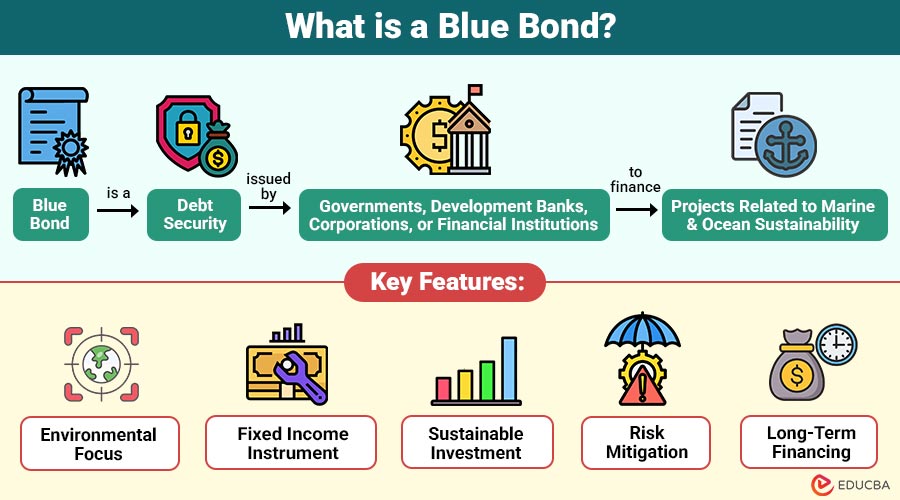
Blue Bond is a debt security issued by governments, development banks, corporations, or financial institutions to finance projects related to marine and ocean sustainability.
The funds raised through blue bonds are generally used for:
- Marine conservation programs
- Sustainable fisheries
- Coral reef protection
- Ocean pollution reduction
- Coastal infrastructure development
- Renewable ocean energy projects
- Sustainable tourism initiatives
- Wastewater management systems
Blue bonds are part of the broader blue economy concept, which promotes economic growth while preserving ocean ecosystems and marine biodiversity.
Table of Contents:
Key Takeaways:
- Blue bonds finance marine conservation projects supporting sustainable ocean economies and long-term environmental protection.
- It attracts ESG investors seeking stable returns with positive environmental and social sustainability impacts.
- Governments and institutions use blue bonds to fund fisheries, coastal infrastructure, and renewable ocean energy projects.
- Strengthens climate resilience by protecting marine ecosystems, coastlines, and vulnerable coastal communities.
Importance of Blue Bonds
Below are the key reasons why it is becoming increasingly important for sustainable ocean development and environmental protection worldwide.
1. Ocean Conservation
Supports marine ecosystem protection by reducing risks of pollution, habitat destruction, and environmental degradation globally.
2. Climate Change Mitigation
The effective absorption of carbon dioxide by healthy oceans lessens the effects of global warming and climate change.
3. Sustainable Economic Growth
Encourages sustainable marine industries, supporting responsible economic growth and long-term environmental resource management.
4. Employment Generation
Blue economy industries create employment opportunities across tourism, fisheries, renewable energy, and marine research sectors globally.
5. Biodiversity Protection
It finances conservation projects that sustainably preserve marine biodiversity, endangered species, and critical ocean habitats.
How do Blue Bonds Work?
It operates similarly to traditional bonds but focuses specifically on marine sustainability projects.
Step 1: Bond Issuance
Governments, financial institutions, or organizations issue blue bonds specifically to raise funds for marine conservation and sustainability.
Step 2: Investor Participation
Institutional investors, banks, environmental organizations, and individuals purchase blue bonds supporting sustainable ocean-related development projects.
Step 3: Capital Collection
The issuing organization collects investment capital from bond buyers to finance approved marine sustainability initiatives globally.
Step 4: Project Financing
Collected funds are invested into fisheries protection, ocean conservation, renewable energy, and coastal restoration sustainability projects.
Step 5: Interest Payments
Investors receive regular interest payments from issuers throughout the blue bond investment period until maturity.
Step 6: Bond Maturity
Upon maturity, investors receive their original principal amount from the issuing organization.
Key Features of Blue Bonds
Below are the major features that make it an important financial instrument for supporting sustainable ocean-related projects and investments.
1. Environmental Focus
It finances projects that promote marine conservation, sustainable fisheries, and the protection of ocean ecosystems.
2. Fixed Income Instrument
Most blue bonds provide investors with regular, predictable interest income throughout the investment tenure.
3. Sustainable Investment
Supports ESG investment strategies focused on environmental responsibility and sustainable economic development goals.
4. Risk Mitigation
International organizations and development banks often support blue bonds, reducing investment risks for participating investors.
5. Long-Term Financing
Primarily finance long-term marine sustainability projects that require extended funding and capital support.
Benefits of Blue Bonds
Below are the major benefits for governments, investors, businesses, and global marine sustainability initiatives.
1. Supports Marine Conservation
It finances projects protecting oceans, coral reefs, fisheries, and marine biodiversity from environmental damage.
2. Promotes Sustainable Economic Development
They encourage responsible ocean-based industries supporting long-term economic growth and environmental sustainability worldwide.
3. Attracts ESG Investors
Appeal to environmentally conscious investors seeking sustainable and socially responsible investment opportunities globally.
4. Provides Stable Investment Returns
Most blue bonds offer fixed interest payments, providing investors with predictable and reliable long-term financial returns.
5. Encourages Climate Change Action
Projects help reduce pollution, protect coastlines, and strengthen climate resilience in vulnerable regions globally.
6. Creates Employment Opportunities
Blue economy projects generate jobs in fisheries, tourism, renewable energy, marine transportation, and environmental conservation sectors.
Challenges of Blue Bonds
Despite their advantages, they face several challenges.
1. Limited Market Awareness
Many investors lack awareness, which limits participation and overall growth in the global sustainable investment market.
2. Complex Project Evaluation
Assessing environmental impact and sustainability outcomes of marine projects remains technically challenging for organizations and investors.
3. High Initial Costs
Marine conservation and sustainability projects often require substantial upfront funding, significantly increasing financial investment challenges.
4. Regulatory Challenges
Divergent environmental policies and financial regulations across countries complicate blue bond issuance and project implementation.
5. Risk of Greenwashing
Some issuers misleadingly promote projects as sustainable without effectively delivering genuine environmental or marine conservation benefits.
Real-World Examples
Below are some notable real-world examples of blue bonds:
1. Seychelles Blue Bond
Seychelles launched world’s first sovereign blue bond supporting fisheries, marine conservation, and sustainable ocean resource management.
2. Nordic Investment Bank Blue Bond
Nordic Investment Bank issued blue bonds financing marine protection, sustainable water management, and environmentally focused infrastructure development projects.
3. Asian Development Bank Initiatives
The Asian Development Bank extensively supports coastal infrastructure, ocean resilience, and sustainable marine development projects throughout the Asia-Pacific region.
Best Practices for Successful Blue Bond Programs
Organizations issuing blue bonds should follow these best practices:
1. Establish Clear Sustainability Goals
Organizations should define measurable sustainability objectives and align blue bond projects effectively with long-term marine conservation priorities.
2. Maintain Transparent Reporting Systems
Issuers must provide transparent financial and environmental reports, ensuring investor confidence and regulatory compliance consistently worldwide.
3. Conduct Environmental Impact Assessments
Comprehensive environmental assessments help evaluate the sustainability impacts of projects and identify potential ecological risks before implementation begins.
4. Follow International ESG Standards
Organizations should follow recognized ESG standards to promote responsible investments and sustainable marine development practices globally.
5. Monitor Project Performance Regularly
Regular performance monitoring ensures that projects achieve environmental objectives while continuously maintaining financial accountability and operational efficiency.
6. Engage Local Communities in Conservation Efforts
Community participation strengthens marine conservation initiatives by fostering local awareness, collaboration, and sustainable resource management practices.
Final Thoughts
Blue bonds support marine conservation, climate resilience, and sustainable economic growth by financing ocean-related environmental projects worldwide. Increasing investor interest, international cooperation, and ESG adoption are expanding blue bond markets globally. Despite regulatory and impact-measurement challenges, it offers long-term environmental, social, and economic benefits for the sustainable protection of marine ecosystems.
Frequently Asked Questions (FAQs)
Q1. What is the maturity period of blue bonds?
Answer: Maturity periods vary depending on the issuer and project requirements, ranging from a few years to several decades.
Q2. How do blue bonds help marine life?
Answer: Blue bonds fund projects that reduce pollution, protect habitats, preserve coral reefs, and support sustainable fishing practices.
Q3. What are blue bond funds used for?
Answer: Funds support sustainable fisheries, marine conservation, pollution reduction, coastal infrastructure, and renewable ocean energy projects.
Q4. How do blue bonds support climate resilience?
Answer: Blue bond projects protect coastlines, restore marine ecosystems, improve water management, and strengthen communities against rising sea levels and climate-related disasters.
Recommended Articles
We hope that this EDUCBA information on “Blue Bond” was beneficial to you. You can view EDUCBA’s recommended articles for more information.


