


Beyond Digital Transformation: Redefining Business in 2026
The conversation around digital transformation has evolved. In 2026, organizations are moving beyond digital transformation as a simple technology upgrade and embracing it as a strategic reinvention of how they operate, compete, and create value. Modern businesses are not simply upgrading systems. They are redesigning processes, redefining workforce expectations, and reimagining growth models.
Digital transformation today is holistic. It touches every layer of the organization, from frontline operations to executive decision-making. This new era belongs to companies that understand one fundamental truth: transformation is continuous. It is not a project with a deadline, but a mindset that drives long-term resilience and relevance.
From Automation to Intelligent Operations
Early digital initiatives focused heavily on automation. Today, the focus has shifted toward intelligent operations. Artificial intelligence, predictive analytics, and integrated cloud ecosystems help businesses shift from reactive to proactive decision-making. Organizations use live data to predict customer needs, guess demand changes, and improve supply chains accurately.
Decisions that once took weeks are now made in minutes. The ability to interpret data quickly has become a defining competitive advantage. At the same time, businesses are balancing speed with responsibility. Data governance, cybersecurity frameworks, and ethical AI policies are becoming core components of transformation strategies. Technology is powerful, but trust is what sustains it.
Key Insight: The most adaptive companies treat data as a strategic asset and intelligence as a daily operational tool.
Customer Experience as a Digital Ecosystem
Modern transformation extends beyond internal systems. It reshapes how customers interact with brands across channels. Businesses are building seamless digital ecosystems that connect mobile platforms, physical experiences, support systems, and personalized communication into one unified journey.
Customers now expect consistency, speed, and relevance. Companies are responding by integrating automation with human support, ensuring that technology enhances rather than replaces meaningful interaction. Digital maturity in 2026 is measured not just by innovation, but by how frictionless and intuitive the customer experience feels. Businesses that align technology with empathy are seeing stronger loyalty and deeper engagement.
Key Insight: Transformation succeeds when technology simplifies customer complexity.
The Reinvention of Work and Talent
Digital transformation is equally a workforce transformation. Hybrid models, global collaboration tools, and AI-driven productivity systems are redefining how teams operate. Businesses are investing in upskilling initiatives, internal digital academies, and cross-functional training to prepare employees for evolving roles. The emphasis is shifting from rigid job descriptions to adaptable skill ecosystems.
Learning is not occasional anymore. It is ongoing and part of daily work. Leadership styles are changing too. Openness, quick action, and data-based decisions are replacing strict top-down systems. Organizations that build digital confidence in their teams are in a better position to create new ideas and grow steadily.
Key Insight: Digitally empowered people build a digitally transformed company.
Sustainable and Responsible Innovation
Modern transformation is not only about growth. It is about responsible growth. Companies are integrating sustainability metrics into digital dashboards, tracking environmental impact alongside financial performance. Smart energy management systems, circular supply chain platforms, and carbon tracking software are becoming part of enterprise infrastructure. Investors and customers alike expect measurable accountability.
Responsible innovation ensures that digital acceleration does not compromise ethical standards or environmental priorities. Businesses that align technology with long-term societal value are gaining credibility in an increasingly conscious marketplace.
Key Insight: A transformation that ignores sustainability risks becomes obsolete.
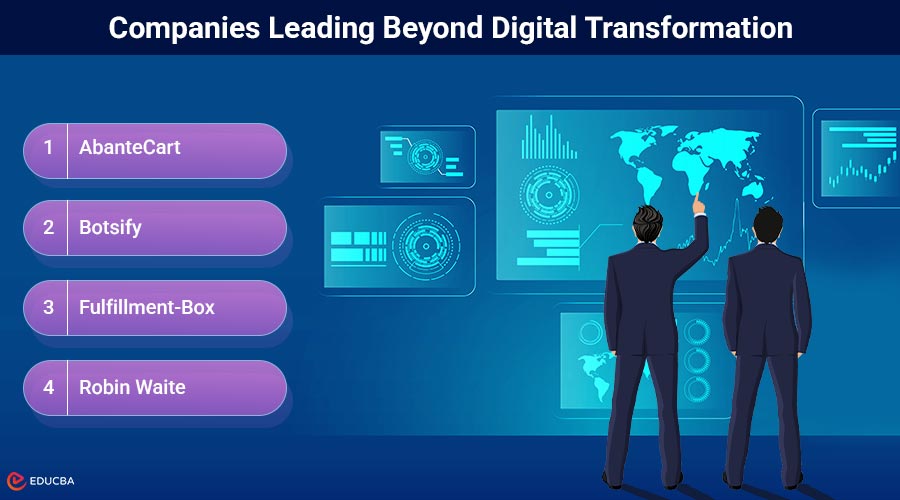
Companies Leading Beyond Digital Transformation
You can best understand modern digital transformation by looking at the organizations that actively put it into practice. These businesses demonstrate that transformation is not simply about adopting new tools, but about aligning strategy, systems, and customer value into one cohesive digital vision.
1. AbanteCart
AbanteCart represents how digital transformation is empowering businesses to take full control of their e-commerce infrastructure. As an open-source e-commerce platform, AbanteCart provides merchants with a flexible, customizable framework for building, managing, and scaling online stores without being locked into rigid ecosystems. Its modular design enables businesses to integrate payment gateways, shipping providers, marketing tools, and third-party extensions while retaining control over their data and customer relationships.
In a landscape where agility and independence are increasingly strategic advantages, AbanteCart demonstrates how modern commerce platforms can combine cost efficiency, scalability, and technological adaptability to support sustainable digital growth.
2. Botsify
Botsify reflects the growing importance of conversational automation within modern digital ecosystems. As businesses seek to provide instant, intelligent support across websites, messaging platforms, and social channels, AI-powered chat solutions are becoming essential infrastructure. Botsify helps organizations create and launch custom chatbots that answer customer questions, collect leads, and make service chats smoother while keeping the brand style the same.
By mixing automation with smooth human support when needed, the platform allows growth and wider reach without losing personal touch. In an era where responsiveness defines competitive advantage, Botsify illustrates how conversational AI is transforming customer communication into a strategic growth driver.
3. Fulfillment-Box
Fulfillment‑Box is an example of how logistics and supply chain services are evolving in the age of digital transformation. As a full-service third-party logistics (3PL) provider for e-commerce businesses, Fulfillment-Box combines advanced cloud-based automation with a global network of warehouses to help brands manage inventory, process orders, and ship products worldwide with speed and transparency. Its platform connects easily with big marketplaces and online stores, allowing live stock tracking and simple order management.
In addition to core fulfillment services, the company offers freight forwarding and compliance solutions that help businesses expand into new markets more efficiently. By blending technology with customer-focused logistics operations, Fulfillment-Box exemplifies how digital transformation can enhance supply chain agility and scalability in a competitive global economy.
4. Robin Waite
Robin Waite shows how powerful guidance helps modern businesses grow through smart planning and people-focused leadership. As an experienced entrepreneur and trusted advisor, he works closely with founders and leadership teams, navigating periods of change and expansion.
Through structured business mentoring programs, Waite helps organizations clarify their positioning, strengthen pricing strategies, and implement scalable systems that support long-term profitability. His approach demonstrates how a skilled Business Mentor can provide not only accountability, but also the strategic perspective needed to turn digital ambition into measurable results.
The Strategic Advantage of Continuous Adaptation
One of the clearest patterns in 2026 is that transformation has no finish line. Market conditions shift rapidly. Consumer expectations evolve. Technological capabilities expand at an unprecedented pace. Companies that thrive institutionalize adaptability. They make testing new ideas part of their culture, support partnerships with other industries, and stay open to adjusting their business models. Rather than fearing disruption, they design systems flexible enough to evolve with it.
Final Thoughts
Digital transformation is no longer a trend. It is the operational foundation of modern business. But beyond digital transformation lies something deeper: a commitment to intelligence, empathy, sustainability, and continuous reinvention. The future belongs to organizations that see change not as a threat, but as an opportunity. In this environment, transformation is not just about technology it is about vision, responsibility, and the courage to evolve without pause.
Recommended Articles
We hope this guide on beyond digital transformation helps you understand how businesses are evolving in 2026. Explore our recommended articles for deeper insights into building agile, future-ready organizations.


