
Introduction to the Benefits of IT Outsourcing
The benefits of IT outsourcing have become increasingly evident in today’s dynamic and technology-driven business environment. IT outsourcing involves hiring external service providers to manage various information technology functions, such as infrastructure, software development, and technical support. Organizations across industries leverage outsourcing to reduce operational costs, access global expertise, and enhance efficiency. By shifting IT responsibilities to specialized vendors, businesses can focus on their core objectives while improving scalability, flexibility, innovation, and service quality.
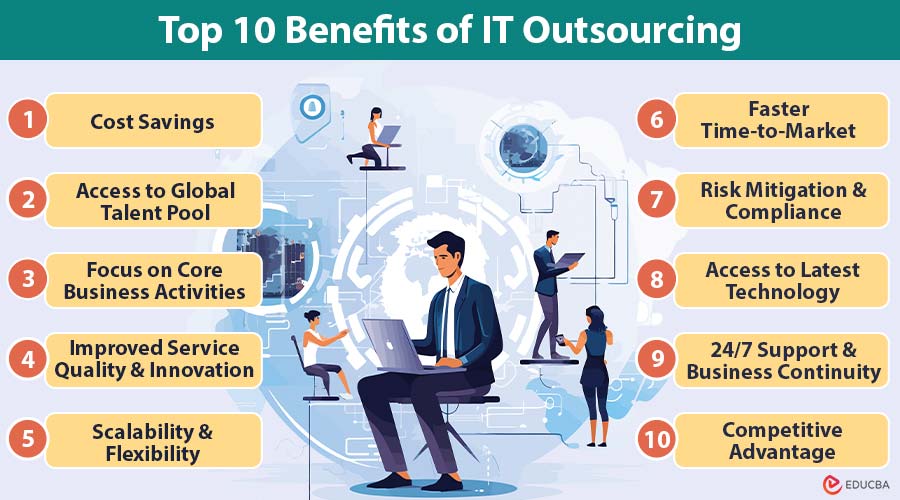
Top 10 Benefits of IT Outsourcing
Here are the top benefits of IT outsourcing that empower businesses to scale faster, minimize costs, and stay competitive in today’s dynamic market.
#1. Cost Savings
Cost savings in IT outsourcing result from lower labor, infrastructure, and operational costs by working with vendors in economically advantageous locations, which helps businesses optimize their budgets and reduce unnecessary overhead expenses.
Key Highlights:
- Frees up capital for strategic investments instead of routine IT expenses
- Avoids the costs of hiring, onboarding, and training in-house staff
- Reduces hardware and software maintenance expenditures
#2. Access to Global Talent Pool
IT outsourcing offers companies with access to a broad, international workforce of specialized professionals possessing diverse technical skills, including emerging technologies that are often unavailable or too costly locally.
Key Highlights:
- Allows recruitment from a worldwide pool without geographic limits
- Enables collaboration with experts in advanced or niche technologies
- Facilitates access to multilingual and multicultural teams for global projects
#3. Focus on Core Business Activities
By outsourcing non-core IT functions, companies can redirect internal resources and energy toward primary business goals such as product development, innovation, sales, and customer service.
Key Highlights:
- Streamlines internal operations by removing tech distractions
- Enhances leadership focus on strategic growth and profitability
- Promotes better use of in-house talent for core competencies
#4. Improved Service Quality and Innovation
Outsourcing IT services to specialized vendors ensures higher service quality through adherence to global standards, continuous process improvements, and integration of modern, innovative technologies.
Key Highlights:
- Enables better uptime, faster issue resolution, and system reliability
- Encourages the use of DevOps, Agile, and modern frameworks
- Drives ongoing enhancement through regular audits and feedback
#5. Scalability and Flexibility
Outsourcing enables organizations to scale IT operations up or down quickly based on changing workloads, project timelines, or business needs, without long-term employee commitments.
Key Highlights:
- Eliminates delays from internal hiring and training
- Offers immediate access to varied technical skills when needed
- Allows rapid response to business expansion or downturns
#6. Faster Time-to-Market
Outsourced IT teams use predefined processes, round-the-clock operations, and extensive experience to reduce software development cycles and accelerate product launches.
Key Highlights:
- Minimizes delays through time zone coverage and parallel workflows
- Shortens iteration cycles with readily available expert teams
- Enhances first-mover advantage in competitive industries
#7. Risk Mitigation and Compliance
IT outsourcing providers maintain strict security protocols, industry certifications, and legal compliance practices, thereby reducing the business risks associated with data privacy breaches, legal violations, and service interruptions.
Key Highlights:
- Ensures up-to-date security policies and proactive threat detection
- Helps businesses navigate regional laws, such as GDPR and HIPAA.
- Shares responsibility for disaster recovery and business continuity
#8. Access to Latest Technology
Outsourcing partners often invest in advanced tools, platforms, and systems, providing clients access to the latest IT innovations without direct capital investment.
Key Highlights:
- Enables immediate use of AI, cloud, and IoT tools
- Reduces technology obsolescence risk
- Supports experimentation with new tech before committing in-house
#9. 24/7 Support and Business Continuity
Global outsourcing provides continuous IT support and uninterrupted operations across multiple time zones, ensuring systems remain online and issues are resolved promptly.
Key Highlights:
- Reduces service downtime and enhances user experience
- Strengthens global support for customers in different regions
- Enhances organizational resilience in crisis scenarios
#10. Competitive Advantage
Outsourcing enables companies to accelerate innovation, enhance efficiency, and respond promptly to market demands, thereby gaining a competitive edge over slower and less adaptable competitors.
Key Highlights:
- Promotes agility in rolling out new features and services
- Facilitates consistent service delivery across markets
- Enhances customer satisfaction through better value propositions
Final Thoughts
IT outsourcing is more than just a cost-cutting strategy—it is a strategic move to enhance innovation, agility, and service quality. By leveraging global expertise and advanced technologies, businesses can focus on core goals while staying resilient and competitive. With the right outsourcing partner, companies unlock growth, flexibility, and long-term value in an ever-evolving digital landscape.
Recommended Articles
We hope that this EDUCBA information on “Benefits of IT Outsourcing” was beneficial to you. You can view EDUCBA’s recommended articles for more information.

