
What is Bank Reconciliation?
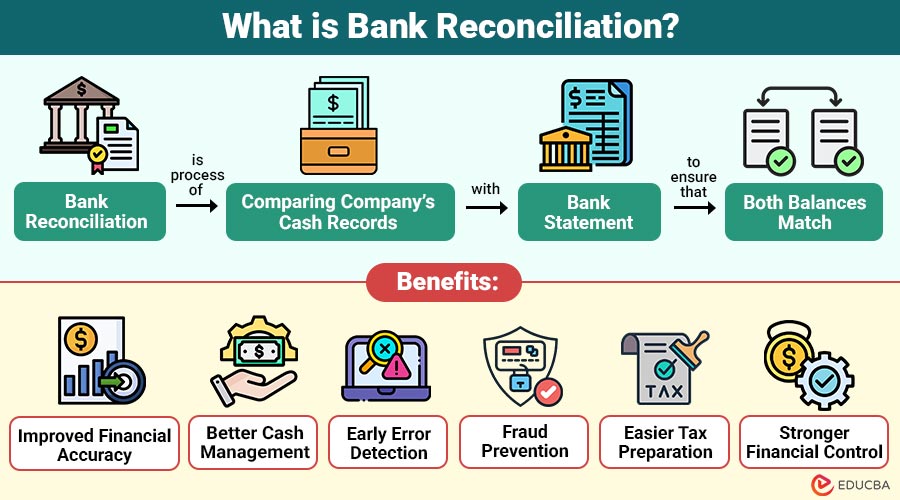
Bank reconciliation is process of comparing a company’s cash records with bank statement to ensure that both balances match.
A business records all cash transactions in its cash book or accounting software, while the bank records the same transactions in the bank statement. Sometimes the balances may differ due to timing delays, missing entries, bank charges, or errors. The purpose of the bank reconciliation is to identify these differences and, if needed, make corrections.
Table of Contents:
- Meaning
- Importance
- Working
- Common Causes
- Steps in the Bank Reconciliation Process
- Types
- Benefits
- Challenges
- Tips
- Who Uses Bank Reconciliation?
- Example
Key Takeaways:
- Bank reconciliation ensures accurate financial records by comparing the company books with official bank statements.
- Regular reconciliation helps businesses detect fraud, errors, and unauthorized transactions quickly and efficiently.
- Businesses use bank reconciliation to monitor cash flow, improve budgeting, and maintain financial transparency.
- Automated bank reconciliation software saves time, reduces manual errors, and improves accounting process efficiency.
Why is Bank Reconciliation Important?
Bank reconciliation plays a major role in financial accuracy and business management. Here are some important reasons why businesses perform bank reconciliation:
1. Detects Errors
Mistakes can happen while recording transactions. A payment may be entered twice, or an amount may be recorded incorrectly. Reconciliation helps find these errors quickly.
2. Prevents Fraud
Regular reconciliation helps identify unauthorized transactions or suspicious activities in the bank account.
3. Maintains Accurate Financial Records
Accurate records are necessary for preparing financial statements, filing taxes, and making business decisions.
4. Tracks Cash Flow Properly
Businesses can monitor cash inflows, outgoing payments, pending deposits, and available balances for improved financial planning.
5. Helps in Auditing
Auditors use reconciliation statements to verify transaction accuracy, confirm balances, and ensure proper compliance with accounting standards.
How Bank Reconciliation Works?
Below are the main records and common reasons involved in the bank reconciliation process.
The process of bank reconciliation involves comparing two records:
- Cash Book or Company Records
- Bank Statement
The balances may not match due to certain reasons, such as:
- Outstanding checks
- Deposits in transit
- Bank charges
- Interest income
- Recording errors
After identifying the differences, adjustments are made to reconcile the balances.
Common Causes of Differences in Bank Reconciliation
The following are the most common reasons why balances in cash book and bank statement may not match.
1. Outstanding Checks
Outstanding checks are payments issued by a company that have been recorded in accounting books but have not yet been cleared or processed by the bank.
2. Deposits in Transit
Deposits in transit are amounts already recorded by a business but not yet reflected in the bank statement due to processing delays.
3. Bank Charges
Bank charges are fees banks deduct for services such as account maintenance, transactions, overdrafts, and other banking activities.
4. Interest Income
Interest income is money added by a bank to an account as earnings on the available balance in a savings account.
5. NSF Checks
NSF stands for “Non-Sufficient Funds.” It happens when a customer’s check bounces because of insufficient balance.
6. Recording Errors
Recording errors occur when incorrect amounts or transactions are entered into accounting records or bank statements due to human mistakes.
Steps in the Bank Reconciliation Process
It can be done manually or using accounting software. Here is the step-by-step process:
Step 1: Compare Opening Balances
Start by checking whether the opening balances in both records match.
Step 2: Match Deposits
Compare all deposits in the cash book with deposits shown in the bank statement. Identify:
- Deposits in transit
- Missing deposits
- Incorrect amounts
Step 3: Match Payments
Compare checks, withdrawals, debit card transactions, and online payments. Look for:
- Outstanding checks
- Duplicate payments
- Unauthorized transactions
Step 4: Record Bank Adjustments
Add transactions recorded by the bank but not reflected in the company records. Examples include:
- Bank fees
- Interest income
- Automatic payments
- Direct deposits
Step 5: Correct Errors
Fix any mistakes found during reconciliation.
Step 6: Prepare Reconciliation Statement
After adjustments, prepare the final reconciliation statement showing that both balances agree.
Types of Bank Reconciliation
Depending on the size and requirements of the company, it can be done manually or with automated accounting software.
1. Manual Bank Reconciliation
Manual bank reconciliation is the process of comparing bank statements with company records using spreadsheets, registers, or paper documents to identify differences accurately.
2. Automated Bank Reconciliation
Automated bank reconciliation uses accounting software to automatically match bank transactions with financial records, improving accuracy, reducing errors, and saving valuable business time.
Benefits of Bank Reconciliation
Bank reconciliation offers many benefits for businesses of all sizes.
1. Improved Financial Accuracy
Regular bank reconciliation keeps financial records accurate, up to date, and consistent with the actual bank account transaction balances.
2. Better Cash Management
Businesses can track available cash properly, manage expenses efficiently, and avoid overdrafts or payment delays.
3. Early Error Detection
Helps identify recording mistakes quickly before they create serious accounting or financial reporting problems.
4. Fraud Prevention
Regular account reviews help detect unauthorized transactions, suspicious activities, and possible fraudulent banking operations early.
5. Easier Tax Preparation
Accurate financial records simplify tax calculations, reporting processes, and document preparation during tax filing periods.
6. Stronger Financial Control
Business owners gain clearer financial visibility, improving decision-making, budgeting, and overall control over company finances.
Challenges in Bank Reconciliation
Although bank reconciliation is important, businesses may face some challenges.
1. Large Transaction Volumes
Businesses handling numerous daily transactions may struggle to accurately and efficiently manage and reconcile all financial records.
2. Human Errors
Manual data entry mistakes can lead to incorrect records, mismatched balances, and time-consuming reconciliation corrections later.
3. Missing Documents
Lost invoices, receipts, or payment records can delay reconciliation and create confusion in financial reporting processes.
4. Timing Differences
Transactions recorded on different dates by banks and businesses may temporarily cause account balances to mismatch during reconciliation.
Tips for Effective Bank Reconciliation
Here are some tips for maintaining smooth reconciliation:
1. Reconcile Regularly
Perform bank reconciliation weekly or monthly to identify discrepancies early and maintain accurate financial records consistently.
2. Use Accounting Software
Accounting software automates transaction matching, reduces manual errors, and saves valuable business time during reconciliation processes.
3. Maintain Proper Documentation
Organizing invoices, receipts, and financial records helps businesses complete reconciliation accurately and resolve discrepancies quickly.
4. Review Transactions Carefully
Careful review of unusual or large transactions helps identify mistakes, fraud, or unauthorized banking activity early.
5. Separate Business and Personal Accounts
Using separate accounts improves financial accuracy, simplifies reconciliation, and keeps business records professionally organized.
Who Uses Bank Reconciliation?
Bank reconciliation is useful for many individuals and organizations, including:
1. Small Businesses
Small businesses use bank reconciliation to maintain accurate records, monitor cash flow, and regularly prevent financial discrepancies.
2. Large Corporations
Large corporations perform bank reconciliation to manage complex transactions, ensure compliance, and maintain accurate financial reporting.
3. Freelancers
Freelancers use bank reconciliation to track payments, manage income accurately, and simplify tax preparation.
4. Accountants
Accountants perform bank reconciliations to verify transaction accuracy, detect errors, and prepare reliable financial statements.
5. Nonprofit Organizations
Nonprofit organizations use bank reconciliation to maintain transparency, monitor donations, and ensure accurate financial accountability records.
6. Educational Institutions
Educational institutions perform bank reconciliation to manage funds properly, track expenses, and maintain accurate financial operations records.
Example
Let us understand with a simple example.
A company’s cash book shows a balance of $5,000, while the bank statement shows $4,700.
After checking both records, the company finds:
- Outstanding check: $200
- Bank charges: $50
- Interest income: $150
Reconciliation Calculation:
| Particulars | Amounts |
| Bank Statement Balance | $4,700 |
| Add: Interest Income | +$150 |
| Less: Outstanding Check | -$200 |
| Less: Bank Charges | -$50 |
Adjusted Balance = $4,600
After updating the cash book with bank charges and interest income, both balances match at $4,600.
Final Thoughts
Bank reconciliation is an important accounting process that compares company records with bank statements to ensure financial accuracy. It helps detect errors, prevent fraud, manage cash flow, and improve financial control. Regular reconciliation supports better decision-making, simplifies tax preparation, ensures transparency, and strengthens overall business financial management and long-term operational success.
Frequently Asked Questions (FAQs)
Q1. Why do businesses perform bank reconciliation?
Answer: Businesses perform reconciliation to identify errors, detect fraud, maintain accurate records, and track cash flow.
Q2. How often should bank reconciliation be done?
Answer: Most businesses perform bank reconciliation monthly, but some may do it weekly or daily.
Q3. What causes differences in bank reconciliation?
Answer: Common causes include outstanding checks, deposits in transit, bank fees, interest income, and recording errors.
Q4. Can bank reconciliation be automated?
Answer: Yes. Modern accounting software can automate much of reconciliation process and reduce manual effort.
Recommended Articles
We hope that this EDUCBA information on “Bank Reconciliation” was beneficial to you. You can view EDUCBA’s recommended articles for more information.


