


Smart Charge America, an electric vehicle charger installer, needed several manual steps to schedule each installation and notify customers and field staff. The team used Zapier to connect these tasks. Once a sales rep booked an installation, they could trigger a calendar invitation, a customer confirmation email, and a QuickBooks invoice. Sales reps spent 75% less time scheduling installations, saving each rep 75 minutes per workday. The team achieved these savings by removing the follow-up tasks that reps performed for each booking. This guide explains what an automation consultant does, why hiring one matters, and how to pick the right person for your business.
What is an Automation Consultant?
An automation consultant is a specialist who designs systems to carry out routine business tasks. They determine which actions should happen, what should trigger them, and where employees must remain involved.
For example, a retailer might need to route return requests. The consultant could define which requests qualify for automatic approval and which need a manager’s decision. Some tasks follow fixed rules, while others require interpreting text or documents. These tasks decide if the work calls for intelligent automation consulting rather than a simple manual workflow.
Why is an Automation Consultant Necessary?
You need intelligent automation consulting when your team lacks the expertise to build the system your business needs. They provide specialist help without requiring you to create a permanent role. This matters when your workload grows, but employees must keep up with their regular duties. Your team understands the problem but has little time to develop a solution alongside daily work.
For example, a recruitment agency opens a second office while one coordinator manages interview bookings. The agency hires a business automation consultant to automate scheduling across both offices. The coordinator continues arranging interviews while the consultant develops the new process.
How Can an Automation Consultant Help You?
An automation consultant helps you save time and avoid spending money on systems that do not meet your needs. The consultant reviews your processes and identifies tasks worth automating based on the cost and expected benefit. For example, your accounts team may spend hours chasing invoice approvals by email. A consultant could set up a shared approval list with reminders for the person responsible.
Your team could then check outstanding invoices without asking colleagues for updates. Before you commit, the consultant should explain the expected savings and the full cost of the work. Data Teams providing intelligent automation consulting services help businesses identify repetitive tasks and connect existing tools to reduce manual work.
Examples of Automation in Practice
Arden Insurance staff spent up to five hours daily sending overdue payment notices. Operations Manager Tyler Diogo automated invoice checks and reminder emails using Zapier. The process then took seconds. The mailing workflow saved more than three hours per day. Poka needed to track security training and software reviews. The analyst Mathieu Marcotte used Zapier to connect existing tools.
He automated training reminders and alerts for unreviewed software changes. He reported saving three to five hours per week on his own work. A Wellness Coach, Chochi Montero, needed help tracking client follow-ups. She used Zapier to create Trello tasks from meeting summaries and calendar events. She automated 158 tasks in 30 days, saving over nine hours per month.
What Do You Need Before Hiring an Automation Consultant?
Before hiring an automation consultant, make sure the following are aligned. Pick the task that eats the most hours or causes the most errors. Write down every step, in order, exactly as your team performs it today. After choosing the improvement task, define what success would mean in terms of that task. Knowing your range before the first call keeps the conversation honest. Independent consultants typically charge $150 to $350 an hour. Specialist implementation firms run $350 to $650 an hour. A small first project usually lands between $5,000 and $15,000.
Choose an internal owner who can answer questions, resolve disagreements, and review the consultant’s work. Automation cannot settle a disagreement about how a task should work. Someone on your team needs the authority before a consultant builds anything. Name every app your team touches during the process. Business automation consultants need to know whether these tools open their systems to outside connections before quoting you a price or a timeline.
How to Choose the Right Automation Consultant?
With your process and budget ready, evaluate candidates against these criteria.
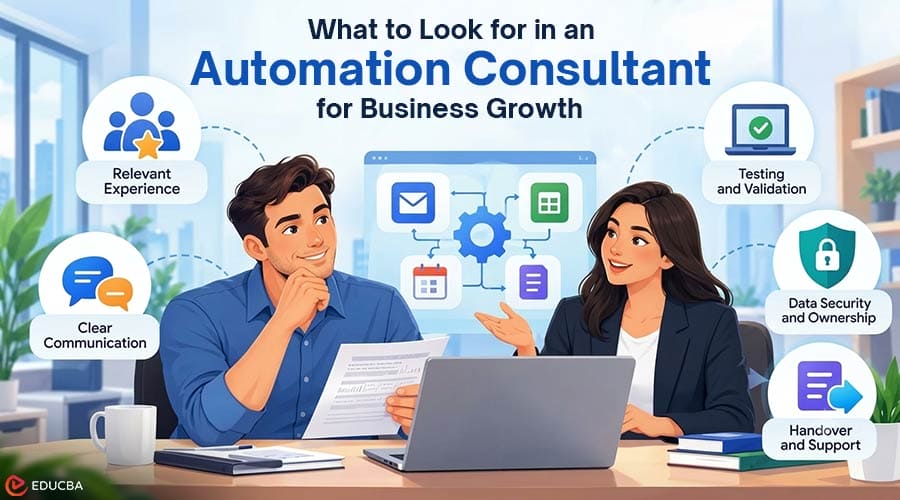
1. Look for Experience With Similar Work
Ask the business automation consultant to describe a completed project involving a task like yours. Request permission to speak with the client involved. A useful reference should explain both the results and the difficulties of working with the consultant.
2. Assess the Questions They Ask
Pay attention to what the consultant asks during your first discussion. They should explore where employees depart from the usual process, and which decisions require a manager’s approval. These questions help you judge whether they understand the work before recommending a solution. Look for an explanation that connects their choices to your business needs.
3. Check How They Communicate
Ask the consultant to explain their approach in language your employees understand, including what will change and what your team must contribute. Agree on regular progress reviews, such as weekly demonstrations, so that employees can raise concerns during development. Ask the consultant to document decisions, unresolved questions, and schedule changes.
4. Request Evidence of Their Testing Process
Ask the consultant to walk you through an anonymized test report or a sample testing plan. Look for the checks they performed, the problems they found, and how they verified their corrections. This gives you a way to assess their testing approach beyond a successful demonstration.
5. Examine Their Data and Ownership Practices
Ask where the consultant will store company information and who will have access during the project. Confirm whether they will send any data to outside providers. Your internal data owner should review these arrangements before the consultant receives access.
6. Review a Sample Handover
Request sample instructions from a completed project. Check whether an employee could follow them to identify a failed task or update a routine setting. Ask how the consultant will train your team, and confirm that employees can use the instructions.
Final Thoughts
Choose an automation consultant who understands your team’s work and can explain how they will improve it. Look for relevant experience, clear communication, and a plan your employees can manage after the project ends.
Before contacting business automation consultants, prepare a brief for one process you want to improve. Give each candidate the same information so you can compare their recommendations and costs. Start with a manageable project, review the results, then expand.
Author Bio: Affan Tariq

Affan Tariq is a data engineer and technical author focused on Snowflake, cloud data platforms, dbt, data pipelines, and AI integration. At Data Prism, he helps businesses unify data and automate processes while sharing practical insights on data engineering and AI automation.
Recommended Articles
We hope this comprehensive guide to choosing an automation consultant helps you streamline your business processes. Check out these recommended articles for more insights and strategies to improve your business automation efforts.


