


What is Attack Surface?
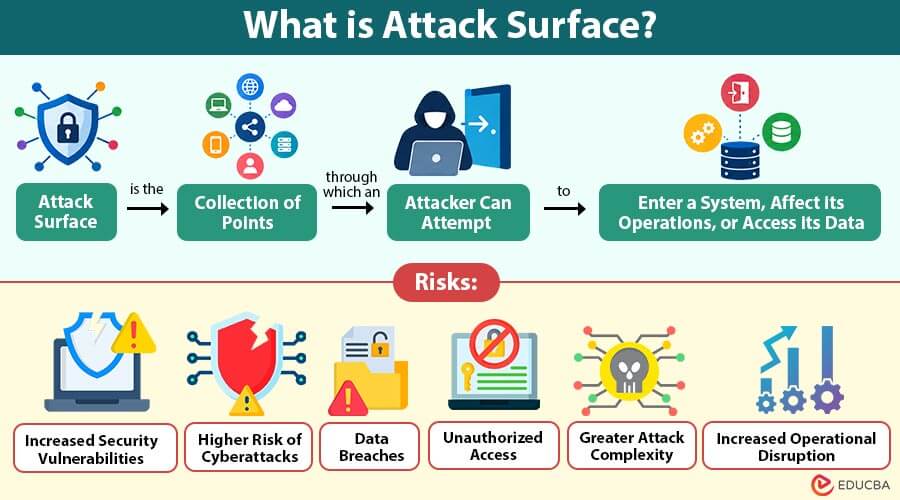
An attack surface is the collection of points through which an attacker can attempt to enter a system, affect its operations, or access its data. These points may include applications, devices, networks, cloud resources, user accounts, APIs, and other connected assets.
These exposed components can create security weaknesses when they have outdated software, poor configurations, weak authentication, unnecessary access permissions, or other vulnerabilities. Attackers may target such weaknesses to gain unauthorized access, steal information, disrupt services, or compromise business systems.
For example, a company may operate a public website, cloud applications, employee laptops, remote-access services, APIs, and email accounts. Each of these can create potential opportunities for unauthorized access if they contain vulnerabilities, weak configurations, or excessive permissions.
The size of an attack surface can change as an organization adds new applications, devices, employees, cloud services, and third-party connections. Therefore, organizations need continuous visibility into their assets and security exposures.
Table of Contents:
Key Takeaways:
- An attack surface represents the potential points attackers can target within an organization or system.
- It can include hardware, software, networks, cloud resources, applications, accounts, and human-related entry points.
- Internet-facing systems often create significant exposure when they contain vulnerabilities or misconfigurations.
- A larger attack surface increases the opportunities available to attackers.
Why is Understanding Attack Surface Important?
Understanding the attack surface helps organizations identify where security weaknesses may exist.
1. Improves Asset Visibility
Organizations cannot effectively protect assets they do not know about. Maintaining an accurate inventory helps security teams identify devices, applications, services, and other resources that require protection.
2. Reduces Security Exposure
Identifying unnecessary or vulnerable entry points allows organizations to remove, restrict, or secure them. CISA specifically recommends assessing internet exposure and removing access where it is not operationally necessary.
3. Supports Risk Prioritization
Not every asset presents the same level of risk. Security teams can prioritize exposed systems that contain sensitive information or support critical business operations.
4. Helps Prevent Cyberattacks
Reducing unnecessary entry points can make it harder for attackers to identify and exploit weaknesses.
5. Strengthens Security Monitoring
A clear understanding of the attack surface lets security teams monitor key systems and identify unusual activity more effectively.
Types of Attack Surface
Organizations can have several types of attack surfaces depending on their technology and operating environment.
1. Digital Attack Surface
A digital attack surface includes software, websites, applications, APIs, databases, cloud services, and other digital assets that attackers can potentially exploit.
2. Physical Attack Surface
A physical attack surface includes devices, hardware, facilities, and infrastructure that attackers can physically access, manipulate, damage, or exploit for unauthorized entry.
3. Human Attack Surface
A human attack surface includes employees, contractors, customers, and users who attackers may target through phishing, social engineering, credential theft, or manipulation.
4. External Attack Surface
An external attack surface includes internet-facing assets that outsiders can access, such as websites, domains, APIs, cloud services, and remote-access systems.
5. Internal Attack Surface
An internal attack surface includes systems, devices, applications, accounts, and network resources that attackers can reach after gaining access to an organization.
Components of an Attack Surface
Several components can contribute to an organization’s attack surface.
| Component | Potential Exposure |
| Websites | Vulnerabilities, outdated software, insecure configurations |
| Applications | Software flaws and authentication weaknesses |
| APIs | Improper access controls and exposed data |
| Cloud resources | Misconfigured storage, services, or permissions |
| Endpoints | Malware, outdated software, and stolen credentials |
| Network devices | Weak configurations and exposed services |
| User accounts | Password attacks and credential theft |
| Remote-access systems | Unauthorized access attempts |
| Third-party services | Vendor-related security weaknesses |
| IoT device | Weak credentials and outdated firmware |
How Does an Attack Surface Work?
An attack surface does not represent a single vulnerability. Instead, it describes the collection of points an attacker could use.
Consider a company with an online customer portal. The portal may connect to an API, authentication service, database, and cloud infrastructure. Each connection or component may introduce potential exposure.
An attacker may first identify publicly accessible assets. They may then look for weaknesses such as outdated software, exposed services, weak authentication, or incorrect permissions. If an attacker successfully exploits a weakness, they may try to access additional systems or sensitive information.
Therefore, organizations need to understand not only individual vulnerabilities but also how different assets connect and interact.
Example of Attack Surface
Consider a hospital that uses connected medical devices, patient portals, electronic health record systems, Wi-Fi networks, staff computers, and cloud-based applications. An outdated medical device, a poorly secured staff account, or a misconfigured cloud system can create an entry point for attackers. If an attacker exploits one of these weaknesses, they may attempt to access patient information or move toward other connected systems. The hospital can reduce its attack surface by updating devices, securing user accounts, restricting access, and continuously monitoring connected systems.
Risks of a Large Attack Surface
The points below highlight the key risks associated with maintaining a large attack surface:
1. Increased Security Vulnerabilities
More exposed assets create more opportunities for attackers to identify and exploit security weaknesses.
2. Higher Risk of Cyberattacks
A larger attack surface gives attackers more potential entry points to launch cyberattacks.
3. Data Breaches
Vulnerable systems, applications, or devices can allow attackers to gain unauthorized access to sensitive business and customer information.
4. Unauthorized Access
Weak credentials, exposed accounts, or poorly secured systems can enable attackers to access restricted organizational resources.
5. Greater Attack Complexity
Managing and monitoring numerous assets makes it harder for security teams to identify and address every potential threat.
6. Increased Operational Disruption
Successful attacks against exposed systems can interrupt business operations, damage infrastructure, and reduce organizational productivity.
How to Reduce Attack Surface?
Organizations can take several steps to reduce unnecessary exposure.
1. Maintain an Asset Inventory
Organizations should identify hardware, software, cloud resources, applications, accounts, APIs, and internet-facing services across their environments.
2. Remove Unnecessary Exposure
Organizations should disable unused services and restrict internet access for systems that do not require external connectivity.
3. Apply Security Updates
Organizations should regularly update operating systems, applications, firmware, and other components to fix known vulnerabilities and security weaknesses.
4. Strengthen Authentication
Organizations should implement strong authentication methods and multifactor authentication to protect exposed systems, accounts, and sensitive organizational resources.
5. Apply Least Privilege
Organizations should provide users and systems only the permissions necessary for their responsibilities, reducing potential damage from compromised accounts.
6. Monitor Exposed Assets
Organizations should continuously monitor internal and internet-facing assets for vulnerabilities, configuration changes, unauthorized services, and suspicious security activity.
7. Segment Networks
Organizations should use network segmentation and microsegmentation to restrict system communication and limit attackers’ ability to move laterally.
Benefits of Managing Attack Surface
Effective attack surface management can provide several benefits:
1. Better Visibility into IT Assets
Organizations gain a clearer understanding of hardware, software, cloud resources, applications, and other assets within their environment.
2. Faster Identification of Exposed Systems
ASM helps security teams quickly identify internet-facing systems and assets that may create potential security risks.
3. Reduced Unnecessary Internet Exposure
Organizations can identify and restrict unnecessary internet-facing services, reducing opportunities for attackers to access internal resources.
4. Improved Vulnerability Prioritization
Security teams can prioritize vulnerabilities based on asset importance, exposure, severity, and potential business impact for faster remediation.
5. Stronger Security Posture
Continuous monitoring and remediation help organizations strengthen security controls and reduce weaknesses across their overall technology environment.
6. Lower Risk of Unauthorized Access
Identifying exposed assets and addressing security weaknesses helps reduce opportunities for attackers to gain unauthorized access to organizational systems.
7. Better Protection of Sensitive Data
Managing exposed systems and vulnerabilities helps protect confidential business, financial, employee, and customer information from unauthorized access.
Final Thoughts
An attack surface represents the collection of points through which attackers may attempt to access, affect, or extract information from a system. It can include applications, devices, networks, cloud services, accounts, APIs, people, and third-party connections. As technology environments become more interconnected, organizations should continuously identify their assets, reduce unnecessary exposure, strengthen security controls, and monitor changes. Effective attack surface management helps organizations reduce potential entry points and improve overall cybersecurity.
Frequently Asked Questions (FAQs)
Q1. Can an attack surface change over time?
Answer: Yes. It can expand or shrink as organizations add, remove, update, connect, or disconnect systems, services, devices, and users.
Q2. Who is responsible for managing an organization’s attack surface?
Answer: Responsibility is usually shared among cybersecurity, IT, network, cloud, application, and risk management teams rather than assigned to one department.
Q3. Does reducing the attack surface eliminate all cybersecurity threats?
Answer: No. It reduces potential exposure but cannot eliminate all threats, so organizations still need monitoring, security controls, incident response, and employee awareness.
Q4. Can small businesses have an attack surface?
Answer: Yes. Even a small business may have websites, employee devices, email accounts, cloud applications, Wi-Fi networks, and third-party platforms that require protection.
Recommended Articles
We hope that this EDUCBA information on “Attack Surface” was beneficial to you. You can view EDUCBA’s recommended articles for more information.


