


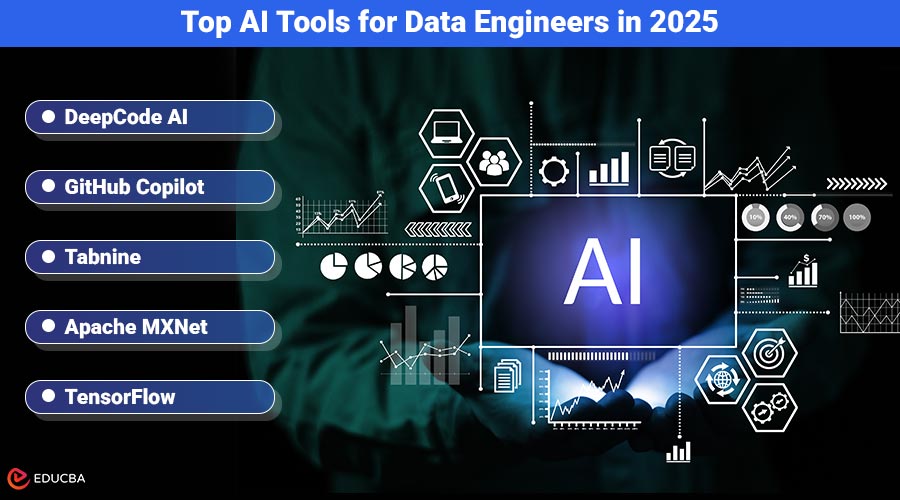
AI Tools for Data Engineers: Overview
The lines between data engineering and artificial intelligence are increasingly blurred. As enterprises pivot towards intelligent automation, they increasingly expect data engineers to collaborate with AI models, integrate machine learning systems, and build scalable pipelines that support real-time, AI-driven decision-making. Whether you are taking a data engineer online course or exploring advanced AI tools for data engineers, this guide will help you understand the skills, tools, and technologies needed to thrive in this fast-changing field.
Foundational AI Concepts in Data Engineering
Before diving into tools and frameworks, it is crucial to understand the foundational AI and ML concepts shaping the modern data engineer online course. AI is not just about smart algorithms—it is about building systems that can learn, predict, and improve over time. That is where data engineers play a central role: preparing clean, structured, and scalable data systems that fuel AI.
To support AI and machine learning, engineers must understand:
- Supervised and unsupervised learning models
- Feature engineering and data labeling
- Data pipelines that serve AI in real-time
- ETL/ELT frameworks tailored for model training
Courses such as an AI Learning Course or a generative AI certification course can help engineers bridge their current skills with AI expertise. As a result, many professionals are now pursuing AI and ML certification to validate their cross-functional capabilities. One key trend is that engineers are building pipelines not just for reporting, but to feed AI models dynamically, especially in applications like recommendation engines, anomaly detection, and real-time personalization.
Top AI Tools for Data Engineers in 2025
Using the right tools can save time, reduce errors, and enhance productivity. Below is a curated list of the best AI tools for data engineers to know and use.
1. DeepCode AI
DeepCode AI is like a turbocharged code reviewer. It reviews your codebase and indicates bugs, potential security flaws, and performance bottlenecks in real-time.
- Why it is helpful: It assists data engineers with keeping clean, safe code in big-scale projects.
- Pros: Works in real-time, supports multiple languages, and integrates well with popular IDEs.
- Cons: Its performance is highly dependent on the quality of the training data.
- Best For: Developers aiming to increase code dependability and uphold secure data streams.
2. GitHub Copilot
Created by GitHub and OpenAI, Copilot acts like a clever coding buddy. It predicts lines or chunks of code as you type, assisting you in writing and discovering code more efficiently.
- Why it is helpful: Saves time and lessens mental burden, particularly when coding in unknown codebases.
- Pros: Minimally supported languages and frameworks; can even suggest whole functions.
- Cons: Suggestions are not perfect—code review is still required.
- Best For: Data engineers who jump back and forth between languages or work with complex scripts.
3. Tabnine
Tabnine provides context-aware intelligent code completion. It picks up on your current code habits and suggests completions that align with your style.
- Why it is useful: Accelerates repetitive coding tasks while ensuring consistency.
- Pros: Lightweight, easy to install, supports many IDEs and languages.
- Cons: It occasionally proposes irrelevant or overly generic completions.
- Best For: Engineers seeking to accelerate their coding with minimal resistance.
4. Apache MXNet
MXNet is a deep learning framework capable of symbolic and imperative programming. It is scalable, fast, and versatile.
- Why it is useful: It is very effective when dealing with big, complicated deep learning models.
- Pros: Support for multiple languages, effective GPU use, and scalability.
- Cons: Smaller community compared to TensorFlow or PyTorch, hence fewer learning materials.
- Best For: Engineers preferring flexibility in developing deep learning systems in various languages.
5. TensorFlow
TensorFlow remains a powerful and dominant platform for machine learning and deep learning. From Google, it is an engineer’s preferred choice for model training, deployment, and big data science.
- Why it is useful: Provides unparalleled flexibility when it comes to developing tailor-made ML models.
- Pros: Massive ecosystem, robust community, production-ready.
- Cons: Steep learning curve for beginners.
- Best For: Data engineers and scientists working with advanced ML pipelines.
6. TensorFlow Extended (TFX)
TFX is an extension of TensorFlow that provides a full-stack ML platform for data ingestion, model training, validation, and deployment.
- Why it is useful: Automates many parts of the ML lifecycle, including data validation and deployment.
- Key Features: Distributed training, pipeline orchestration, and built-in data quality checks.
- Best For: Engineers who operate end-to-end ML pipelines in production environments.
7. Kubeflow
Kubeflow leverages the power of Kubernetes for machine learning. It enables teams to develop, deploy, and manage ML workflows at scale.
- Why it is useful: Makes the deployment of sophisticated ML models easier in containerized environments.
- Key Features: Automates model training and deployment, native integration with Kubernetes.
- Best For: Teams already operating in a Kubernetes ecosystem who want to integrate AI seamlessly.
8. Paxata
Paxata is an AI-powered data prep platform that streamlines data transformation and cleaning. It is particularly useful when dealing with big, dirty datasets.
- How it is useful: Automates tedious hours of data preparation with intelligent automation.
- Major Features: Recommends transformations, facilitates collaboration, and integrates real-time workflows.
- Ideal For: Data engineers who want to prepare data for analytics or ML.
9. Dataiku
Dataiku is a full-stack AI and data science platform. You can visually create data pipelines and have AI optimization suggestions.
- Why it is useful: Simplifies managing the complexity of ML workflows and facilitates collaboration.
- Key Features: Visual pipeline builder, AI-based data cleaning, big data integration.
- Best For: Big teams dealing with complex, scalable data operations.
10. Fivetran
Fivetran is an enterprise-managed data integration platform. With enhanced AI capabilities in 2024, it automatically scales sync procedures and manages schema changes with minimal human intervention.
- Why it is useful: Automates time-consuming ETL/ELT processes, making data pipelines operate more efficiently.
- Key Features: Intelligent scheduling, AI-driven error handling, and support for schema evolution.
- Best For: Engineers running multi-source data pipelines for warehousing or BI.
Hands-On AI Skills Every Data Engineer Should Develop
Being AI-aware is no longer enough. Companies are seeking data engineers who can also prototype and support ML pipelines. Below are essential hands-on skills to master:
1. Programming Proficiency in Python and SQL
Python continues to be the leading programming language for AI and ML. Libraries like Pandas, NumPy, and Scikit-learn are foundational. Additionally, strong SQL skills are still vital for querying and aggregating large datasets from warehouses like Snowflake, BigQuery, or Redshift.
2. Frameworks & Tools
Learn how to integrate popular AI/ML tools into your stack:
- Use TensorFlow and PyTorch to build and train models
- MLflow for managing the ML lifecycle
- Airflow or Dagster for orchestrating AI pipelines
- Docker and Kubernetes for containerization and model deployment
Structured data engineering courses that focus on production-grade AI implementation often highlight these tools.
3. Model Serving & APIs
Understand how to serve trained AI models using REST APIs or tools like FastAPI, Flask, or TensorFlow Serving. This setup enables applications or business intelligence tools to access models in real time.
4. Version Control for Data and Models
AI projects require versioning not only of code but also of data and models. Engineers working with ML teams are increasingly adopting tools like DVC (Data Version Control). If you are serious about excelling in this space, enrolling in a specialized data engineer training or data engineer online course that covers AI integration is a strategic move.
Integrating Generative AI & LLMs into Modern Data Engineering
The advent of Generative AI and LLMs like GPT and BERT has redefined what is possible in AI-powered data pipelines. For data engineers, this means learning how to integrate LLMs for tasks such as:
- Data summarization and text classification
- Anomaly detection in unstructured logs or customer data
- Metadata enrichment using AI-powered tagging
- Chatbot and voice assistant data pipelines
To support these complex models, engineers need to create low-latency, high-throughput pipelines and use vector databases (like Pinecone or Weaviate) for embedding storage and retrieval. Additionally, understanding transformer architectures and prompt engineering—even at a basic level—empowers data engineers to collaborate more effectively with AI and machine learning teams.
Suppose you are a Microsoft Fabric Data Engineer. In that case, it is worth noting that tools like Microsoft Synapse and Azure OpenAI are offering native support for LLM-driven insights, making it easier than ever to build generative AI use cases within unified data platforms. Want to sharpen your cloud integration skills, too? Consider upskilling with niche courses like cloud engineer courses or AWS data engineer courses to broaden your toolset.
Creating an AI-Centric Data Engineering Portfolio
In a competitive job market, it is not just about what you know—it is about what you have built. As a data engineer aiming to specialize in AI, your portfolio must reflect real-world experience and proficiency.
What to Include:
- End-to-end ML pipeline: From data ingestion to model serving
- AI model integration: Real-time dashboards powered by predictive analytics
- LLM-based project: Chatbot, intelligent document parsing, or content recommendation
- Data quality and observability: Showcase how you monitor and improve AI pipelines
Your GitHub should be as well-maintained as your résumé. If you have taken a data engineering certification online or completed an AI ML Course, be sure to back it up with publicly available, working code. Remember, Recruiters are increasingly valuing hybrid profiles. Professionals who blend data engineering expertise with AI deployment skills are well-positioned for the most in-demand roles of the future.
Pro tip:
Complement your technical portfolio with a capstone project from a top-rated Data Analysis Course to demonstrate your ability to derive insights from model outputs.
Final Thoughts
AI is now an essential part of data engineering. Learn how to build intelligent pipelines, work with large-scale models, and automate workflows using essential AI tools for data engineers. Keep learning through AI and machine learning courses, earn certifications like AI ML certification, and take a structured data engineer online course to master AI integration. Platforms like Prepzee offer programs designed to help you grow in this AI-driven era. The future of data engineering is AI-centric—so gear up, adapt fast, and build smart systems that define tomorrow.
Recommended Articles
We hope this comprehensive guide to AI tools for data engineers helps you navigate the evolving landscape of intelligent data systems. Check out these recommended articles for more insights, tools, and strategies to strengthen your data engineering expertise.


