


Updated July 27, 2026
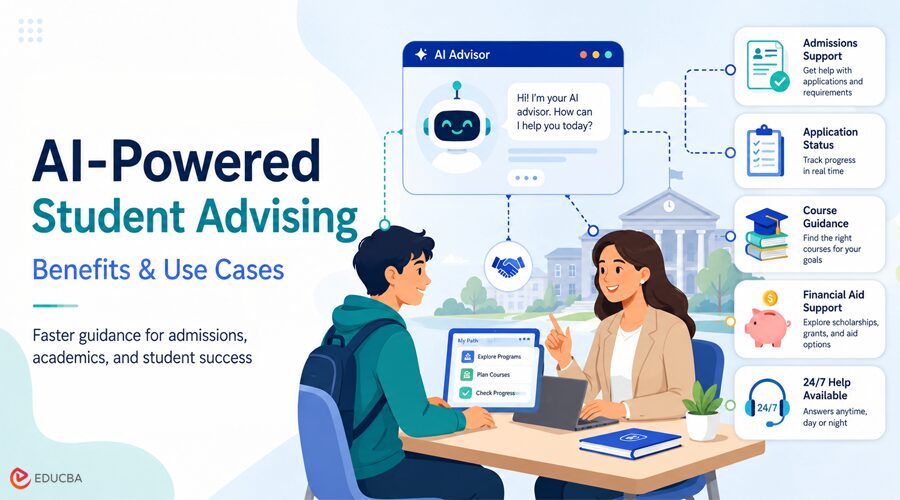
Students have many questions before they join a college or university. Even after they enroll, they continue to need guidance throughout their academic journey.
Some of the most common questions include:
- Which program should I choose?
- What documents do I need to submit?
- Has my application been received?
- When is the application deadline?
- How can I apply for financial aid?
- What courses should I take next semester?
Traditionally, students contact an admissions or academic advisor to get these answers. Advisors do an excellent job supporting students, but they often spend much of their day answering the same questions. During the admissions season, the volume of emails, phone calls, and chat messages can increase significantly, making it difficult to respond to every student promptly.
This is where AI-powered student advising helps.
AI can answer common questions, guide students through different stages of their journey, and support advisors with routine work. It does not replace human advisors. Instead, it helps them spend more time on conversations that require experience, empathy, and personal guidance.
In this guide, you will learn what AI-powered student advising is, how it works, its benefits, common use cases, challenges, best practices, and why more colleges are adopting it.
What is AI-Powered Student Advising?
AI-powered student advising is the use of artificial intelligence to help students receive information, complete tasks, and find support throughout their education journey.
Instead of waiting for office hours or email replies, students can ask questions anytime through:
- University websites
- Live chat
- SMS
- Voice assistants
- Student portals.
The AI searches trusted university information and provides answers within seconds.
For example, students may ask:
- “Have you received my transcript?”
- “What documents are still missing?”
- “When is the application deadline?”
- “How do I apply for financial aid?”
- “Where can I upload my documents?”
- “Which courses should I register for?”
If the AI cannot answer a question or if the situation needs personal attention, it transfers the conversation to a human advisor.
Why Traditional Student Advising Faces Challenges?
Student advising has become more challenging over the years.
Many colleges are receiving more applications than before. At the same time, students expect quick responses because they are used to getting instant information through digital services.
Some common challenges include:
- Advisors spend a lot of time answering the same questions.
- Students sometimes wait several hours or days for a reply.
- Admissions seasons create a heavy workload for advising teams.
- Students from different countries may need support outside office hours.
- Advisors have less time to focus on students who need personal guidance.
AI helps solve many of these everyday challenges while allowing advisors to focus on work that requires human judgment.
How Does AI-Powered Student Advising Work?
AI-powered student advising follows a simple process. When a student asks a question, the AI understands what they are looking for, searches the university’s approved information, and provides the most relevant answer within seconds. If the request is more complex or requires personal guidance, the AI transfers the conversation to a human advisor. Here is how the process works:
Step 1: A Student Asks a Question
A student starts a conversation through a website, chatbot, WhatsApp, SMS, or voice assistant.
For example:
“How can I upload my transcript?”
Step 2: AI Understands the Question
The AI reads the question and understands what the student is asking.
For example, these questions all have the same meaning:
- When is the application deadline?
- What is the last date to apply?
- Can I still apply this month?
The AI understands that the student wants information about admission deadlines and finds the correct answer.
Step 3: AI Searches University Information
The AI checks trusted university information such as:
- Admission requirements
- Program details
- Course catalog
- Application checklist
- Scholarship information
- Financial aid information
- Student handbook
- Frequently Asked Questions (FAQs).
It only uses approved information provided by the institution.
Step 4: AI Responds to the Student
The AI provides a clear and simple answer.
If more information is needed, it asks follow-up questions before providing the next step.
Step 5: AI Transfers Complex Cases
Some situations require a human advisor.
Examples include:
- Transfer credit decisions
- Admission appeals
- Visa-related questions
- Personal counselling
- Special accommodations.
In these situations, the AI transfers the conversation to the right advisor.
Traditional Student Advising vs AI-Powered Student Advising
While both traditional and AI-powered advising aim to support students, the ways they deliver that support differ significantly. Traditional advising depends on advisors being available during working hours, whereas AI can provide instant assistance at any time. The table below highlights some of the key differences between the two approaches.
| Traditional Advising | AI-Powered Advising |
| Available only during office hours | Available 24/7 |
| Students may wait for replies | Students receive instant answers |
| Advisors answer the same questions repeatedly | AI handles routine questions automatically |
| One advisor supports one student at a time | AI can assist many students at the same time |
| Manual updates | Quick access to approved university information |
| Advisors spend time on simple tasks | Advisors focus on complex student needs |
Benefits of AI-Powered Student Advising
AI-powered student advising does much more than automate routine questions. It helps institutions provide faster support, improve communication, reduce advisors’ workload, and create a better experience for students from application through graduation. Below are some of the key benefits of using AI-powered student advising.
1. Faster Responses
Students no longer have to wait for office hours or email replies for routine questions.
Quick responses help students complete applications faster and reduce frustration.
2. Support Anytime
Students often work on applications in the evenings, on weekends, or during holidays.
AI is available all day, every day, making support accessible whenever students need it.
3. Less Repetitive Work for Advisors
Many students ask the same questions repeatedly, such as:
- What documents are required?
- When is the deadline?
- Have you received my application?
- How do I pay tuition?
AI answers these routine questions so advisors can spend more time helping students with complex situations.
4. Consistent Information
Different staff members may explain policies in different ways.
AI uses approved university information, helping ensure students receive consistent answers every time.
5. More Personalized Support
AI can provide answers based on a student’s situation.
For example:
One student may receive a reminder to upload missing documents, while another may receive information about the next step after completing their application.
6. Better Productivity for Advisors
AI can summarize conversations, organize student information, and suggest the next steps.
This helps advisors prepare for meetings more quickly and spend more time supporting students.
Common Uses of AI-Powered Student Advising
AI-powered student advising can support students at every stage of their journey, from their first inquiry to graduation. It helps answer questions, provides timely updates, and guides students through important processes. Colleges and universities use AI in many ways to improve communication, reduce manual work, and deliver better support. Here are some of the most common use cases.
1. Admissions Support
AI answers questions about:
- Admission requirements
- Deadlines
- Required documents
- Program eligibility
- Application process
2. Application Status
Students often ask:
- Is my application complete?
- Have my documents been received?
- What should I do next?
AI provides updates within seconds using the Application Evaluator.
3. Academic Advising
Students can receive guidance about:
- Course registration
- Degree requirements
- Graduation rules
- Academic policies.
4. Financial Aid
AI helps explain:
- Scholarships
- Tuition fees
- Financial aid deadlines
- Required documents.
5. Campus Services
Students can also ask about:
- Housing
- Library services
- Parking
- Health services
- Campus events
- Student support offices.
AI Supports Advisors; It Does Not Replace Them
One of the biggest misconceptions is that AI replaces advisors.
That is not true.
AI is designed to handle simple, repetitive questions.
Human advisors continue to make important decisions, provide emotional support, solve complex problems, and guide students through situations that require personal understanding.
Think of AI as a helpful assistant that reduces routine work while allowing advisors to focus on what matters most.
Challenges to Keep in Mind
AI-powered student advising offers many benefits, but it also comes with a few challenges. Colleges and universities need to plan carefully to make sure the system provides accurate information, protects student data, and delivers a positive experience. Understanding these challenges can help institutions use AI more effectively and avoid common issues.
- Keeping Information Updated: If admission requirements or deadlines change, the AI should be updated immediately. Outdated information can confuse students.
- Protecting Student Information: Student records should always be stored securely and handled in accordance with privacy policies.
- Knowing When to Transfer to a Human Advisor: AI works well for routine questions, but students should always be able to speak with a real advisor when needed.
- Building Student Trust: Students should know when they are talking to AI and when they are speaking with a human advisor. Being transparent helps build trust.
The Future of AI Student Advising
AI is improving every year.
In the future, it will do much more than answer questions.
It may:
- Remind students about important deadlines.
- Notify students about missing documents.
- Recommend scholarships based on their profile.
- Suggest useful campus services.
- Help advisors identify students who may need extra support.
- Communicate in multiple languages.
- Work with university systems to provide real-time updates.
Instead of waiting for students to ask for help, AI will increasingly reach out first when it detects that a student may need assistance.
Final Thoughts
AI-powered student advising is changing how colleges and universities support students.
It helps students receive answers faster, gives advisors more time to focus on meaningful conversations, and improves the overall student experience.
The best results come when AI and human advisors work together. AI handles routine questions, while advisors provide the guidance, experience, and personal support that students value most.
As higher education continues to evolve, AI-powered student advising will play an increasingly important role in making student support faster, smarter, and more accessible for everyone.
Recommended Articles
We hope this guide helps you understand how AI-powered student advising improves admissions, academic support, and the overall student experience. Explore these recommended articles for more insights into educational technology, student engagement, digital transformation in higher education, and AI-driven learning solutions.


