


Updated August 31, 2026
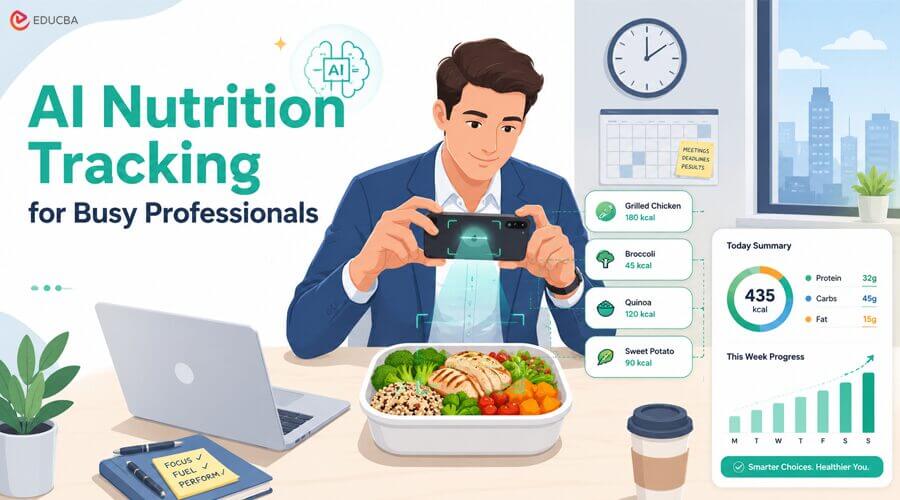
Most professionals do not skip healthy eating out of indifference. They skip it because the day does not leave room for it. Back-to-back meetings push lunch to 3 PM, a client dinner replaces a planned home-cooked meal, and by the time there is a free ten minutes, logging what you ate feels like one more task on a list that’s already too long.
This is usually where nutrition tracking quietly falls apart, not because people lack discipline, but because manual tracking was never designed for a packed calendar. Typing every ingredient into an app, weighing portions, and scrolling a food database mid-workday is not realistic for most people with a full-time job. Which is exactly the gap that AI nutrition-tracking tools were built to close.
Why Manual Tracking Doesn’t Survive a Busy Week?
Traditional calorie and macro tracking asks for a level of manual effort that’s hard to sustain once real work pressure kicks in. Searching for the right food entry, estimating portion sizes, and remembering to log a meal before it is forgotten all add friction at the exact moments professionals have the least time to spare.
The result is a familiar pattern: someone diligently tracks for a few days, then a heavy workweek hits and the habit disappears. It is rarely a nutrition problem. It is a workflow problem: the tool requires more attention than the day could give it. This is why AI nutrition tracking is becoming a practical alternative for busy professionals.
How AI Nutrition Tracking Actually Simplifies the Process?
AI nutrition tracking removes most of the manual work entirely. Instead of typing out a meal, you take a photo of your plate. The app identifies what is on it, estimates the portion size, and returns calorie and macro values in a few seconds no searching a database, no measuring cups at your desk.
Under the hood, this relies on computer vision: the app detects each food item in the photo, classifies it, and estimates volume using reference points or learned patterns from thousands of training images. It is worth being realistic about what this can and cannot do. Estimates are typically close for simple meals and less precise for mixed dishes with sauces or hidden oils. Since a camera cannot see calories, it cannot detect them visually. This breakdown of how AI calorie tracking actually works covers the mechanics and accuracy trade-offs in more depth for anyone who wants the full picture before relying on one.
For a professional, that trade-off is usually a good one. Perfect accuracy on every meal matters far less than being able to log consistently without it becoming a second job. A tool that takes five seconds at lunch and one that takes five minutes are not competing on precision; they are competing on which one you will actually keep using in week three. That is the biggest advantage of AI nutrition tracking.
Where This Fits Into an Actual Workday?
The practical value of AI nutrition tracking shows up in the moments where tracking usually breaks down:
- Business lunches and client dinners: instead of trying to recall the ingredients later, take a quick photo before the meal to capture the moment.
- Back-to-back meeting days: logging takes seconds, so it still works even on days with no real breaks.
- Travel and conferences: unfamiliar menus and hotel breakfasts are hard to log manually but easy to snap a photo of.
- Desk lunches: a habit that would normally get skipped when someone is eating while reading email becomes a five-second task instead.
None of this requires more willpower. It just requires less friction, which is usually the actual barrier for people with demanding schedules.
Is an App Enough, or Do You Need More?
It is worth being honest here: an AI tracker is very good at the mechanical parts of nutrition logging, calorie and macro targets, and spotting weekly trends. What it does not do is replace judgment, accountability, or a real conversation about why a habit is not sticking.
For most healthy professionals whose goal is general awareness or steady progress, that is not a problem; the app covers what they actually need. However, for people who have tried tracking before and consistently fall off within a couple of weeks, or who are managing a medical condition, the missing piece usually is not a better app; it is a person. This comparison of online nutrition coaching and AI tracking lays out where each holds up and where it does not, including cost differences worth knowing before committing to either.
The two are not really competitors. A lot of people end up using AI nutrition tracking for daily logging and occasionally checking in with a coach or a knowledgeable colleague for adjustments, getting the consistency of the app without paying for daily human attention they do not need.
Making It Work Without Adding to Your Workload
A few things make AI nutrition tracking more likely to stick for someone with a full schedule:
- Log in the moment, not after: A photo taken right before eating takes less time than trying to reconstruct the day’s meals from memory that evening.
- Do not chase precision: Weekly trends matter more than any single meal being exact. Consistency beats accuracy here.
- Set the target once, then let the app handle the daily load: Most tools calculate a reasonable calorie or macro target up front, so the ongoing effort is just the photo, not the math.
- Treat it as awareness, not a diet: The goal for most professionals is not a strict plan; it is simply knowing what a normal day of eating looks like, which is often the first thing to change once someone starts tracking at all.
Final Thoughts
Nutrition tracking has not traditionally failed because professionals do not want to eat better. It has failed because the tools asked for more time and attention than a demanding job leaves available. AI nutrition tracking does not remove the need for good habits. However, it does remove the friction that usually kills them before they start, which, for most busy professionals, is the part that was actually getting in the way. As AI continues to improve, AI nutrition tracking is making healthy eating more accessible by helping professionals monitor their meals quickly, consistently, and with minimal effort, even during the busiest workweeks.
Recommended Articles
We hope this guide helps you understand how AI nutrition tracking makes healthy eating easier for busy professionals. Explore these recommended articles for more insights into AI nutrition, calorie tracking, meal planning, and healthy lifestyle tips.


