


Updated July 28, 2026
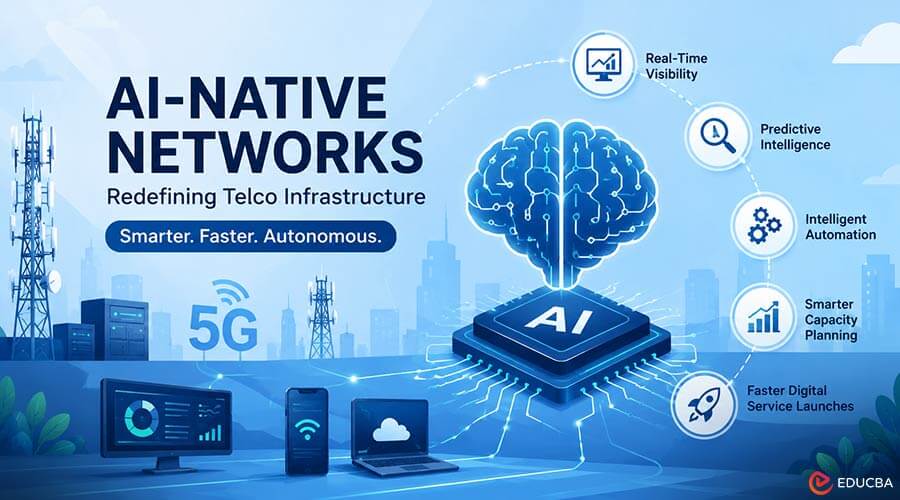
The rise of AI-Native networks signals a shift away from reactive telecom operations toward networks that can learn, adjust, and respond almost instantly. This shift is redefining telco infrastructure in five practical ways: live network analysis, earlier risk detection, routine automation, smarter capacity scaling, and faster digital service launches. In this article, you will learn how these networks work, why operators are investing in them, and what they mean for the future of telco transformation.
What Makes AI-Native Networks Different?
Most telecom networks still rely on fixed rules, manual checks, and teams stepping in only when performance starts to drop. AI-Native networks change that by helping the network read live conditions, recognize unusual patterns, and respond before small issues become customer complaints. That flexibility is becoming increasingly important for operators managing modern digital services. A sudden spike in video traffic, gaming activity, or enterprise usage can quickly put pressure on networks, especially in dense 5G environments.
The pressure is not always obvious at first. It might appear as slightly slower app loading, more failed sessions in one location, or uneven performance between customer groups using the same service. This is where AI-Native networks become useful, as they help operators connect these small signals before they become a broader service problem. That is the real difference for operators. You get infrastructure that can support 5G, IoT, digital brands, and heavier data demand without treating every new layer of complexity as another operational burden.
5 Ways AI-Native Networks Are Changing Telco Infrastructure
AI-Native networks are redefining telco infrastructure by moving decision-making closer to the network itself, enabling operators to detect pressure, adjust resources, and improve services while customers are still using them.
Below are the five shifts that make the biggest difference:
1. Real-Time Visibility Replaces Delayed Reporting
Delayed reports can tell you where the network struggled yesterday, but they rarely help when customers are dropping video calls right now. AI-Native networks give operators a live view of traffic spikes, latency changes, failed sessions, and pressure across specific cells, locations, or customer groups.
That matters in the moments traditional planning often misses, like a stadium emptying after a match, a train station filling during rush hour, or a business district hitting peak video-call traffic. Instead of waiting for complaints or post-event reports, your team can see where the strain is building and act while the experience can still be protected.
2. Prediction Becomes Part of Operations
Network issues rarely arrive out of nowhere. Before customers complain, there are usually small signs hidden in the data, such as repeated session drops, slower speeds in one area, unusual traffic buildup, or equipment starting to behave outside its normal range.
AI-Native networks help your team spot those signs earlier and connect them before they become a larger service problem. That gives operators more room to act during busy periods, when one overloaded cell or unstable connection can quickly affect thousands of users.
3. Automation Handles the Repetitive Work
Many network decisions are important, but not all of them need to wait in a manual queue. AI-Native networks can help with repeatable tasks such as shifting traffic, balancing capacity, adjusting resources, and easing congestion as demand changes.
Automation still needs human judgment from your engineering team. It gives them fewer routine fires to chase, so they can spend more time improving service quality, planning upgrades, and supporting new digital services.
4. Capacity Planning Gets Closer to Reality
Capacity planning used to depend heavily on forecasts, but real demand rarely follows a clean spreadsheet. AI-Native networks help operators see where usage is actually growing, whether it is streaming in residential areas, mobile payments in retail zones, or enterprise apps in business districts.
Scaling becomes more precise when it follows real demand. Instead of spreading capacity across the network “just in case”, your team can direct resources to the places where customers are already showing demand.
5. Digital Brands Can Move Faster
Digital telco brands cannot wait months to learn what customers like, ignore, or struggle to use. AI-Native networks help operators read live behavior across app onboarding, data bundle usage, payment flows, service upgrades, and support touchpoints.
That makes each launch easier to improve once real customers are using it. Instead of treating a new digital offer as finished on launch day, your team can refine the experience while demand, feedback, and network patterns are still fresh. These 5 shifts show why AI in telecom is becoming essential for modern infrastructure, enabling networks to adapt, learn, and respond in real time.
How Real-Time Data Improves Network Responsiveness?
Real-time data improves responsiveness by giving operators a live read of where demand is moving, not just where the network struggled yesterday. With AI-Native networks, signals such as latency, failed sessions, device movement, and traffic load can indicate when one area is starting to behave differently from the rest. That difference matters in very practical moments. A transport hub may suddenly see more mobile payments, a business district may hit peak video-call traffic, or a residential area may overload during a major live stream.
Instead of treating these as isolated spikes, the network helps your team understand where attention is needed first. That could mean adjusting routing, shifting capacity, or protecting service quality where customers are most likely to notice disruption. It also helps operators separate noise from real pressure. A short traffic jump may not require action, but a spike paired with rising latency, failed sessions, and heavier app usage can indicate that the customer experience is starting to weaken. The real win is not just speed. It is giving operators better timing, so decisions are based on what customers are doing now rather than what yesterday’s report already missed.
How Predictive Capabilities Reduce Service Risk?
Predictive capabilities reduce service risk by helping you catch small network behaviors that often appear before customers notice anything wrong. In a telco network, that might mean repeated session drops, rising latency, unstable handovers, or equipment behaving outside its normal range. AI-Native networks are useful because they do not look at these signals in isolation. They compare live behavior with past patterns and flag when a site, route, or service starts to look risky.
For example, one overloaded cell may not trigger alarm bells on its own. But when slower response times, failed connections, and heavier evening traffic start showing up in the same area, the network is no longer dealing with random noise. This is where prediction becomes practical. Your team can then decide the next best move, whether that is easing traffic away from the cell, checking the equipment, or adding capacity before the issue spills into nearby areas or critical services. That gives your team time to step in while the risk is still local, visible, and easier to manage. Instead of only protecting uptime, predictive capabilities help safeguard the customer experience before it breaks down.
How AI-Native Networks Support Scalable Telco Growth?
Growth gets messy when every new offer needs another workaround, another manual check, or another team meeting. AI-Native networks help telcos scale without making the operating model heavier each time the business adds a product, brand, or customer segment.
Below are the ways this supports scalable telco growth:
- Growth follows actual customer behavior: You can see which plans, locations, apps, or customer groups are driving demand, and then scale around what people are really using.
- Digital brands become easier to run: A youth brand may bring heavier video use, more frequent top-ups, and faster app interactions than a traditional mobile plan.
- Operations do not have to grow at the same pace as traffic: As usage increases, your team should not need to repeat every check, adjustment, or service review manually.
- Investment becomes more targeted: You can allocate capacity and improvement work where growth is already showing up, rather than spreading spend too evenly.
- The telco-to-techco shift becomes more practical: You have more room to launch app-led services, segmented offers, and digital journeys without legacy processes slowing down every idea.
This is where scalable growth goes beyond adding customers. It enables support for different usage habits, product experiments, and customer journeys without forcing the whole network team to rebuild the process each time demand changes.
Final Thoughts
The real pressure on telcos now comes after launch, when customer habits, app usage, and service demand start to outpace traditional planning cycles. AI-Native networks help the network read those shifts earlier, so operators can manage pressure while customers are still using the service, not after reports arrive. That gives telcos more room to scale digital brands, app-led journeys, and new services without turning every growth moment into another operational bottleneck. The real opportunity is to build infrastructure that becomes more useful, more responsive, and easier to scale as customer behavior becomes less predictable.
Recommended Articles
We hope this guide to AI-Native networks helps you understand their role in transforming modern telecom infrastructure. Explore these recommended articles for more insights into AI, networking, and digital transformation.


