


Updated May 8, 2026
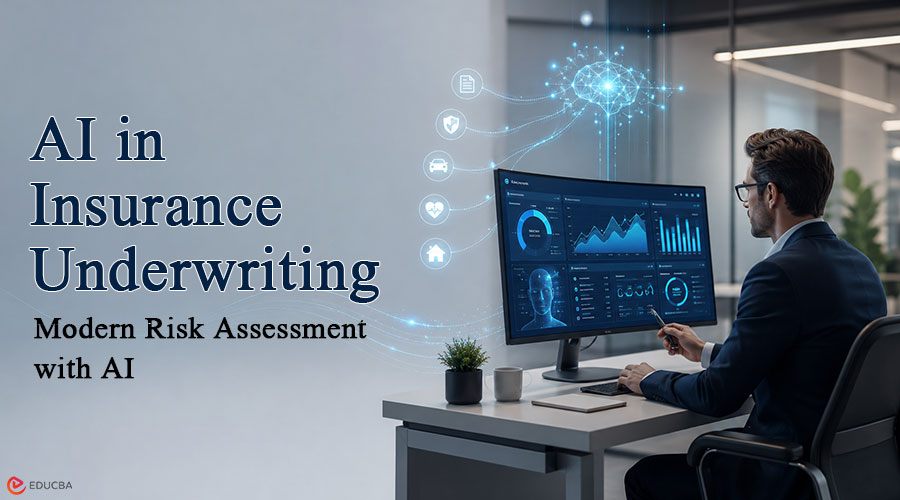
Insurance underwriting is built around assessing risk and deciding policy terms. Earlier, this process depended on manual work, limited datasets, and fixed rules. This slowed underwriting and limited the amount of information that could be analyzed.
Artificial intelligence is changing this. AI is transforming Insurance Underwriting by helping insurers process large volumes of data, reduce manual effort, and make faster, more accurate decisions. The goal is not to replace underwriters, but to improve decision-making.
How AI in Insurance Underwriting Is Transforming the Underwriting Process?
Underwriting still focuses on risk, pricing, and coverage. However, AI for Insurance Underwriting has changed the way insurers handle data. Insurers now use AI to access multiple data sources instead of relying only on basic inputs. These sources include internal records, claims history, financial data, and external signals. AI organizes and analyzes data in a structured manner, making it easier for insurers to interpret and use effectively. This leads to more informed underwriting decisions, particularly in life insurance, where insurers evaluate multiple personal and financial factors together.
Shift from Reactive to Predictive Approach in AI in Insurance Underwriting
Traditional underwriting worked after the data was collected and reviewed. Artificial intelligence adds a predictive layer to the underwriting process. It analyses past data and current inputs to identify risk patterns early. This helps insurers move from reacting to risks to anticipating them. This approach supports better planning and reduces future uncertainty.
Where AI fits in the Insurance Underwriting Process?
AI works across different stages of underwriting, not just one step.
Data Collection and Application Review
AI systems can gather information from various sources and automatically fill out application forms, helping minimize manual effort and accelerating the early stages of the process.
Data Analysis and Risk Evaluation
Machine learning models process both structured and unstructured information, including documents and images, to detect patterns and uncover potential risk indicators.
Pricing and Decision Support
AI supports pricing models by linking risk insights to premium calculations. It also provides recommendations for underwriters to review.
Policy Issuance and Renewal
AI helps speed up approvals and supports better decisions during renewals by leveraging updated risk data in Insurance Underwriting systems.
Key Areas Where AI is Already Used
AI in Insurance Underwriting is already part of underwriting workflows today.
- Faster application processing: Data extraction and validation are automated, reducing delays.
- Property and asset assessment: Satellite imagery and video inputs help evaluate property risks without physical visits.
- Risk scoring: AI models generate dynamic risk scores using multiple data points.
- Document analysis: Large files can be scanned, and key details are extracted automatically.
Impact on Speed and Efficiency in AI in Insurance Underwriting
AI in Insurance Underwriting reduces the time taken for underwriting decisions.
Tasks that earlier required several days can now be completed much faster. This is because data is already structured and analyzed.
Automation also reduces dependency on manual workflows. Teams can handle more cases without increasing effort.
Improvement in Accuracy and Consistency
AI improves accuracy by analyzing large datasets and identifying patterns. It reduces manual errors in data entry and validation. It also ensures that decisions follow consistent logic across cases. This improves the reliability of AI-based underwriting outcomes in Insurance Underwriting systems.
Better Risk Assessment with AI in Insurance Underwriting
AI expands the way insurers evaluate risk in underwriting.
- Use of multiple data sources: Risk assessment includes historical claims, behavioral data, and external indicators.
- Continuous updates: Risk profiles can change as new data becomes available.
- Detailed risk insights: AI helps build a more complete picture of risk, rather than relying on limited inputs.
Role of Human Underwriters
AI supports underwriting but does not replace human expertise. Underwriters handle complex cases, ensure compliance, and apply judgment where needed. AI in Insurance Underwriting reduces repetitive work and provides better inputs. A balanced approach works best. Technology handles speed and scale, while humans ensure accuracy and fairness.
Changes in Pricing and Customer Experience
Customer experience also improves in AI in Insurance Underwriting. Faster approvals reduce waiting time. Data-backed decisions improve clarity and transparency. These improvements are important for products like life insurance plans, where customers expect clarity, speed, and consistency in decision-making.
Continuous Underwriting and Lifecycle Monitoring
Underwriting is no longer limited to policy issuance. AI enables ongoing risk monitoring in Insurance Underwriting systems.
- Real-time updates: Changes in behavior or external conditions can be tracked.
- Dynamic adjustments: Policies can be reviewed and updated in response to new risk signals.
Challenges in AI in Insurance Underwriting
The adoption of AI also requires careful management of certain risks and operational challenges:
- Data quality: Incorrect data can lead to wrong decisions.
- Bias and fairness: AI models must be trained on diverse data to avoid unfair outcomes.
- Compliance and transparency: Decisions must be explainable and aligned with regulatory requirements.
Human oversight remains important in all cases.
What does the Future Look Like?
AI in Insurance Underwriting is moving towards more connected systems.
- Context-aware systems: AI can integrate data from multiple sources and support decision-making across workflows.
- Agent-based systems: AI agents can assist in multiple steps, from data collection to decision support.
- Real-time underwriting: Faster systems can enable near-real-time policy decisions.
Final Thoughts
AI in Insurance Underwriting is transforming the process by improving speed, accuracy, and data use. It reduces manual effort and strengthens risk assessment. At the same time, human judgment remains essential. The most effective strategy blends AI capabilities with human expertise. This combination enables insurers to create a streamlined and dependable process that supports sustainable, long-term risk management.
Recommended Articles
We hope this guide on AI in Insurance Underwriting has given you clear insights into how automation is transforming risk evaluation and decision-making across the insurance sector. Explore these recommended articles for additional insights and strategies to strengthen your knowledge of AI-driven underwriting systems and digital transformation in insurance.


