


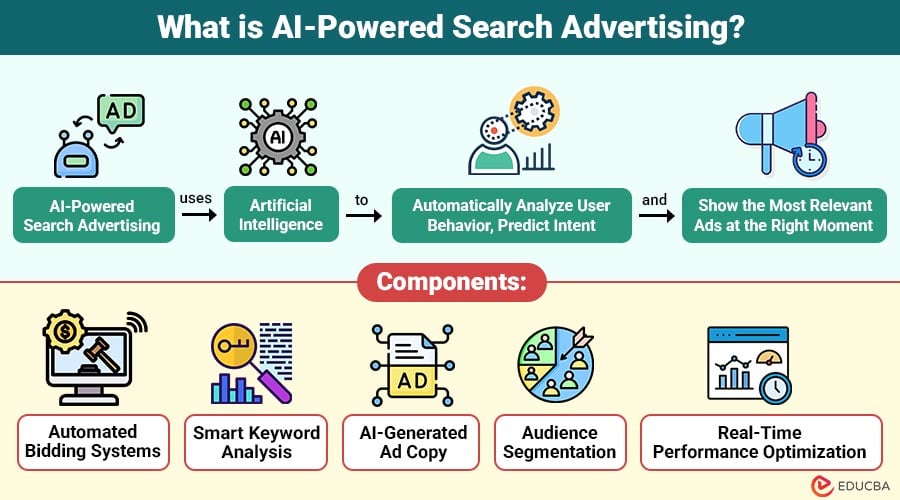
What is AI‑Powered search advertising?
AI‑Powered search advertising uses artificial intelligence to automatically analyze user behavior, predict intent, and show the most relevant ads at the right moment. It helps marketers make smarter decisions by optimizing keywords, targeting, and bids without manual work.
For example, if someone searches “budget smartphones,” AI instantly identifies their interest and shows an ad for an affordable phone model. This makes the ad more useful for the user and more effective for the business.
Table of Content:
- What is AI‑Powered search advertising?
- How AI Works in Search Advertising
- Core Components
- How to Implement AI in Your Search Ad Strategy
- Tools and Platforms
- Practical Use Cases and Examples
- Benefits
Key Takeaways
- AI‑Powered search advertising uses machine learning to improve targeting, bidding, and ad relevance, helping businesses reach the right users at the right time.
- It automates manual tasks like keyword selection, ad testing, and budget adjustments, saving time and reducing errors.
- AI tools enhance performance by analyzing real-time data, predicting user behavior, and constantly optimizing campaigns.
- Using AI in search advertising leads to higher engagement, better conversions, and more efficient use of marketing budgets.
How AI Works in Search Advertising
AI helps search ads become smarter, faster, and more accurate by analyzing data and predicting user preferences.
- Understands User Intent: AI analyzes search queries, past behavior, and browsing patterns to comprehend a user’s intent. This helps show ads that match their needs more accurately.
- Automates Bidding: AI adjusts bids in real time based on competition, user behavior, and conversion likelihood. This ensures you spend money wisely and get the best results.
- Improves Keyword Targeting: AI identifies the best keywords by analyzing trends and user interests. It also finds new keyword opportunities that humans might miss.
- Creates and Tests Ad Copy: AI generates multiple versions of ad text and tests which one performs best. It keeps the top performer and removes ineffective versions.
- Optimizes Audience Targeting: AI segments users based on behavior, location, interests, and device. This helps deliver ads to people who are more likely to take action.
Core Components of AI‑Powered search advertising
These components enable AI to enhance ad targeting, bidding, and performance with increased speed and accuracy.
- Automated Bidding Systems: AI adjusts bids automatically based on user behavior, device, time, and conversion chances. This helps your budget work more efficiently, delivering the best results with minimal manual effort.
- Smart Keyword Analysis: AI studies search trends, user intent, and competition to find effective keywords. It also suggests new keyword opportunities and removes low-performing ones to keep ads more relevant.
- AI-Generated Ad Copy: AI creates multiple versions of ad text and automatically tests them. It identifies which message performs best and keeps improving the ad over time.
- Audience Segmentation: AI categorizes users based on their behavior, interests, and online activities. This helps show ads to the right people who are more likely to click or convert.
- Real-Time Performance Optimization: AI continually monitors data and adjusts settings instantly. This enables your ads to remain relevant and perform well, even as user behavior evolves.
How to Implement AI in Your Search Ad Strategy
Integrating AI into your search ads can enhance performance, save time, and boost ROI when implemented strategically.
- Choose the Right AI Tools: Select platforms or software that specialize in AI-powered advertising. Ensure they offer features like automated bidding, audience targeting, and ad optimization.
- Prepare High-Quality Data: Feed your AI system with accurate data on user behavior, past campaigns, and keywords. Good data enables AI to make more informed predictions and provide more precise recommendations.
- Set Clear Goals: Define objectives such as increasing clicks, conversions, or ROI. Clear goals guide AI in making decisions that align with your business priorities.
- Test and Refine Ads: Use AI to create multiple ad versions and test which performs best. Continuously refine ad copy, images, and keywords based on results.
- Monitor Performance Metrics: Monitor essential metrics like click-through rates, conversion rates, and cost per acquisition. AI can suggest real-time adjustments to improve campaign results.
- Combine AI With Human Expertise: Let AI handle automation and predictions, but keep humans involved for strategy, creativity, and final decision-making to achieve optimal results.
Tools & Platforms for AI‑Powered search advertising
These tools use AI to help marketers create, optimize, and manage search ad campaigns more efficiently.
- Google Ads Smart Bidding: Google Ads uses AI to automatically set bids based on user intent, device, location, and conversion likelihood. It helps businesses maximize ROI without manually adjusting bids.
- Microsoft Advertising (Bing Ads): Microsoft’s AI-driven platform optimizes keyword targeting, ad delivery, and audience segmentation. It also provides insights to improve campaign performance and reach the right audience.
- Adzooma: Adzooma leverages AI to monitor ad performance, suggest improvements, and automate tasks like bid adjustments and ad copy testing. It simplifies campaign management for businesses of all sizes.
- WordStream Advisor: This platform uses AI to optimize search campaigns across Google, Bing, and social media. It identifies underperforming ads, recommends keywords, and helps improve targeting efficiency.
- Albert AI: Albert uses AI to autonomously manage campaigns, analyze data, and make real-time adjustments. It enables marketers to concentrate on strategy while the AI takes care of optimization and testing.
Practical Use Cases and Examples
AI improves search advertising by making ads more relevant, timely, and effective across different industries.
- E-commerce Product Recommendations: AI analyzes user search queries and recommends products that match their interests. For example, if someone searches “men’s running shoes,” AI shows ads for the latest discounted models based on their browsing history.
- Local Business Promotions: AI identifies users searching for nearby services and shows location-based ads. A user searching “best salons near me” may see a nearby salon offering a special discount.
- Dynamic Ad Personalization: AI customizes ad messages for different users. For example, someone searching repeatedly for “budget laptops” may see an ad with a price-focused message.
- Automated A/B Testing: AI tests multiple ad versions automatically and promotes the best-performing one. This helps businesses improve engagement without manual testing.
- Predictive Targeting: AI predicts which users are likely to convert and shows them the most relevant ads. This increases sales and reduces wasted ad spend.
Benefits of Using AI in Search Advertising
AI makes search advertising more efficient, precise, and profitable for businesses of all sizes.
- Higher Ad Relevance: AI analyzes user behavior and search intent to show ads that match what people are looking for. This increases engagement and click-through rates.
- Improved Conversion Rates: By targeting the right audience with the right message at the right time, AI increases the chances that users will take action, like making a purchase or signing up.
- Time and Cost Efficiency: AI automates tasks like bidding, keyword selection, and ad testing. This minimizes manual labor, saves time, and ensures that your budget is utilized efficiently.
- Data-Driven Decisions: AI continuously analyzes large amounts of data to identify trends and optimize campaigns. This helps marketers make smarter decisions based on real performance insights.
- Continuous Campaign Optimization: AI monitors campaigns in real-time and makes automatic adjustments. Ads stay relevant and effective even as user behavior or market conditions change.
Final Thoughts
AI-powered search advertising is becoming essential for businesses seeking smarter, more efficient campaigns. By analyzing data, predicting user intent, and automating key tasks, AI helps deliver more relevant ads and better results. As digital competition grows, using AI keeps your search ads optimized, effective, and aligned with evolving user behavior.
Frequently Asked Questions
1. How does AI reduce advertising costs?
Answer:- AI reduces costs by automatically optimizing bids and avoiding spending on low-performing keywords.
2. Is AI-powered search advertising suitable for small businesses?
Answer:- Yes, AI tools help small businesses run effective campaigns even with limited budgets and minimal expertise.
3. Do AI search ads require constant monitoring?
Answer:- No, AI handles most adjustments automatically, but occasional review ensures campaigns align with business goals.
4. Can AI improve ad quality scores?
Answer:- Yes, AI enhances relevance, keyword accuracy, and user experience, which helps improve overall quality scores.
Recommended Articles
We hope this guide on AI-Powered Search Advertising helped you understand smart ad optimization. For more insights, explore these recommended articles below:


