
What is Ad Copy?
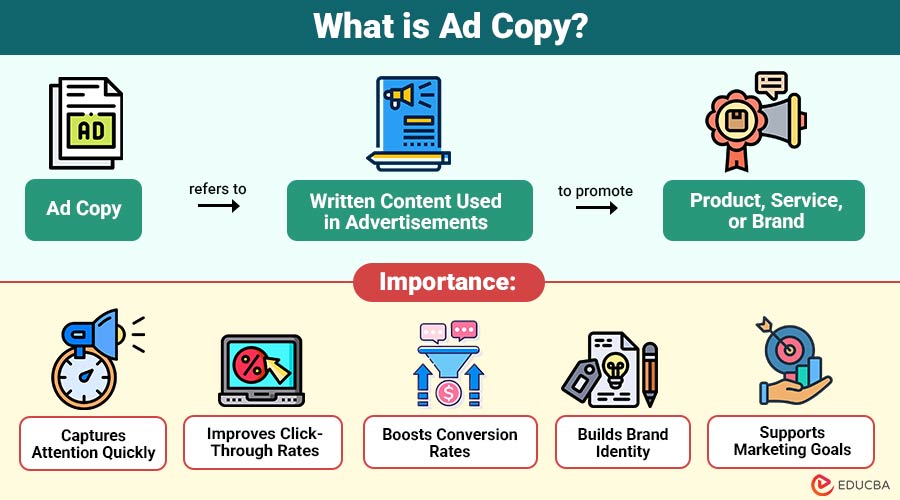
Ad copy refers to written content used in advertisements to promote product, service, or brand. Its main purpose is to attract attention, generate interest, and encourage users to take a specific action.
Ad copy is used across multiple platforms, such as:
- Google Ads (search ads)
- Social media ads (Facebook, Instagram, LinkedIn)
- Display/banner ads
- Email marketing campaigns
- Landing pages and sales pages
A strong ad copy communicates the value proposition clearly and quickly, often within a few seconds of user attention.
Table of Contents:
- Meaning
- Importance
- Key Elements
- Types
- How to Write Effective Ad Copy?
- Difference
- Examples
- Common Mistakes to Avoid
Key Takeaways:
- Ad copy drives engagement by capturing attention quickly and encouraging users to take specific actions.
- Clear, concise, and benefit-focused messaging significantly improves click-through rates and overall conversion performance.
- Understanding audience needs helps create relevant, persuasive ad copy that connects emotionally with potential customers.
- Strong headlines and compelling calls-to-action are essential for guiding users toward desired outcomes effectively.
Importance of Ad Copy
It is one of the most important elements of digital marketing campaigns. Here is why it matters:
- Captures Attention Quickly: Effective ad copy instantly grabs user attention in crowded digital spaces, preventing scrolling and encouraging engagement with your message.
- Improves Click-Through Rates: Well-crafted ad copy consistently increases user interest, leading to higher click-through rates and improved performance across digital marketing campaigns.
- Boosts Conversion Rates: Persuasive ad copy motivates users to take desired actions, such as purchasing products, subscribing, or downloading valuable resources online.
- Builds Brand Identity: Consistent ad copy tone and messaging strengthen brand identity, making your business more recognizable, trustworthy, and memorable to audiences.
- Supports Marketing Goals: Strategic ad copy aligns with campaign objectives, helping achieve goals like lead generation, brand awareness, customer engagement, and sales growth.
Key Elements of Effective Ad Copy
A successful ad copy contains several important key elements:
- Headline: A compelling headline immediately captures user attention, clearly communicates the core message, and encourages further engagement with the advertisement.
- Value Proposition: A strong value proposition highlights unique benefits, clearly showing why the product or service stands out from competitors.
- Emotional Appeal: Connects emotionally with users by triggering feelings like happiness, urgency, fear, or curiosity to influence decisions.
- Call-to-Action: A clear call-to-action guides users toward desired actions, such as purchasing, signing up, or exploring more about offerings online.
- Clarity: Simple, concise language ensures the message is easily understood, helping users quickly grasp benefits without confusion or unnecessary complexity.
Types of Ad Copy
Different ad copy formats are used depending on the platform and goal.
- Search Ad Copy: Appears in search results, using targeted keywords and intent-driven messaging to attract users actively searching online. Example – “Buy Affordable Running Shoes – Free Delivery Available Today”
- Display Ad Copy: Uses short, visually compelling text in banners to capture attention quickly and drive user interest. Example – “Upgrade Your Skills with Online Courses – Start Learning Now”
- Social Media Ad Copy: Conversational and engaging, crafted to connect emotionally with audiences across platforms like Instagram and Facebook. Example – “Ready for glowing skin? Try our natural skincare range today!
- Email Ad Copy: Written to persuade recipients and encourage clicks, conversions, or purchases through personalized, compelling promotional messaging. Example – “Exclusive 30% Off Just for You – Limited Time Offer!”
- Video Ad Copy: Uses script-based storytelling to engage viewers visually and emotionally while delivering persuasive marketing messages. Example -“Transform Your Life Today – Watch How Our Program Changes Everything!”
How to Write Effective Ad Copy?
Here are the steps you can follow to create compelling and high-converting ad copy:
- Step 1 – Understand the Audience: Identify your target audience, including their needs, preferences, pain points, and behaviors, to craft relevant and appealing messaging.
- Step 2 – Define the Objective: Clearly define your campaign objective, whether it focuses on generating sales, leads, website traffic, or increasing brand awareness effectively.
- Step 3 – Highlight Benefits Over Features: Instead of focusing only on aspects that might not be of interest to them, highlight the advantages your product or service offers.
- Step 4 – Use Strong Headlines: Create powerful headlines that instantly capture attention, spark curiosity, and encourage users to read or engage further immediately.
- Step 5 – Add Emotional Triggers: Incorporate emotional triggers such as urgency, excitement, fear, or scarcity to influence users’ decisions and prompt quicker responses.
- Step 6 – Include a Clear CTA: Use a clear call-to-action that directs users to the next step to take to achieve the desired outcomes.
Differences Between Good and Bad Ad Copy
The table below highlights the key differences for better understanding.
| Aspect | Good Ad Copy | Bad Ad Copy |
| Clarity | Clear and simple | Confusing and vague |
| Focus | Benefits-driven | Feature-heavy |
| Tone | Engaging and persuasive | Boring and generic |
| CTA | Strong and direct | Weak or missing |
| Relevance | Matches audience needs | Irrelevant messaging |
Examples of Ad Copy
Here are some examples that demonstrate effective and engaging ad copy across different industries.
- E-commerce Ad: Discover stylish summer wear with amazing discounts of up to 50%. Shop your favorite outfits now before the limited offer ends.
- Online Course Ad: Learn digital marketing from industry experts and gain practical skills. Get certified within thirty days and boost your career opportunities
- Fitness Ad: Transform your body in just eight weeks with guided workouts and plans. Join our fitness program today and start achieving results.
Common Mistakes in Ad Copy Writing
Avoid these mistakes to improve ad performance:
- Using Too Many Complex Words: Using overly complex words makes it difficult to understand, reducing engagement and discouraging users from interacting with your message.
- Writing Vague or Unclear Messages: Vague or unclear messaging confuses users, making the offer difficult to understand and reducing the effectiveness of advertising campaigns.
- Ignoring Target Audience Needs: Ignoring the target audience’s needs leads to irrelevant messaging, which causes users to lose interest and significantly reduces overall campaign performance.
- Lack of Strong CTA: Absence of a strong call-to-action leaves users unsure about next steps, lowering conversions and limiting the effectiveness.
- Overloading with Information: Including too much information overwhelms users, making ads less engaging and harder to read, ultimately reducing their impact and performance.
- Not Focusing on Benefits: Focusing only on features rather than benefits fails to demonstrate value, making it harder for users to understand why they should choose it.
Final Thoughts
Ad copy is a vital digital marketing tool that shapes user behavior and campaign success. It blends creativity, psychology, and strategy to deliver compelling messages. Clear, concise, and benefit-driven copy attracts attention and drives conversions. Understanding audience needs and using strong calls-to-action helps create impactful ads that effectively turn potential users into loyal customers.
Frequently Asked Questions (FAQs)
Q1. Why is a call-to-action important in ad copy?
Answer: A call-to-action guides users toward desired actions, significantly increasing engagement, conversions, and overall campaign effectiveness.
Q2. Where is ad copy used?
Answer: It is used in search ads, social media ads, display ads, emails, and landing pages.
Q3. How long should ad copy be?
Answer: It should be short, typically ranging from a few words to a few sentences, depending on the platform.
Q4. How can I test if my ad copy is effective?
Answer: You can use A/B testing by creating several versions of ad copy and comparing their performance based on metrics like click-through rate, conversions, and engagement levels.
Recommended Articles
We hope that this EDUCBA information on “Ad Copy” was beneficial to you. You can view EDUCBA’s recommended articles for more information.

