

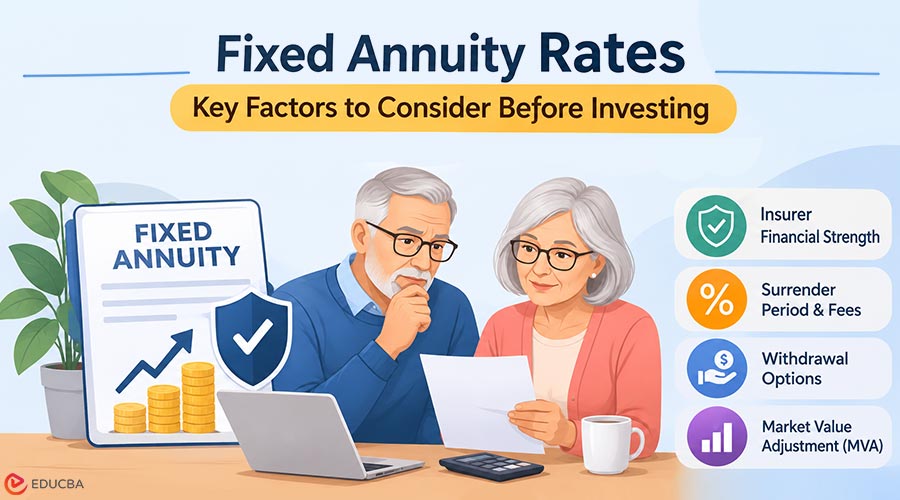
A high Fixed annuity rate is appealing, but the underlying structure determines its true strength, according to a retirement income industry contributor.
You may see attractive Fixed Annuity Rates for a financial product and consider it a safe place for your money in an uncertain market. The number is simple, guaranteed, and looks good. But that single percentage is just the headline. The real story is in the contract details. These details decide if the product is right for you. If you look only at the rate, you could face surprises later.
A lot is at stake, as people are putting a very large amount of money into these products. According to LIMRA, sales of fixed-rate deferred products reached $165.3 billion in 2025. With so much money involved, compare your options carefully. You can find lists of the best fixed annuity rates, but those numbers are only the first step.
A lower rate from a top-rated company with good terms can be a better choice than a higher rate from a less stable company with strict contract terms. To judge a fixed retirement product fairly, look past the interest rate. The insurance company’s financial health is key. So are the rules for taking your money out early. These factors matter as much as the guaranteed return.
What Determines the Interest Rate an Insurer Offers?
The rate is based on what the insurance company expects to earn from its investments. They subtract their business costs and profit. This type of product is a contract. The company’s ability to pay you depends on how well its own money performs. Think of an insurance company like a big, safe investment manager. They take the money you pay them and invest it in a large fund called a “general account.” This fund is usually full of safe, high-quality bonds from companies and the government.
The average return the company earns on these bonds is the main factor that sets the rates it can offer you. When interest rates in the economy go up, the company can buy new bonds that pay more. This lets them offer better rates on new contracts. The opposite is also true. The size of this market shows how many people want this kind of safety.
In 2025 alone, sales of fixed-rate deferred products reached $165.3 billion, a 6% increase from the previous year, according to LIMRA. With so much money going into these contracts, insurance companies compete for your business. They change their rates based on how well their investments are doing and how well they run their business. A large, well-run company with a good bond portfolio may be able to offer a better rate than a smaller one.
An insurer’s goal is to match how long its investments last with the length of the contracts it sells. If they offer a popular 5-year fixed product, their investment managers are buying bonds that will be paid back in about five years. This “asset-liability matching” is how they can guarantee your rate.
This also explains why a company might offer a great 3-year rate but a so-so 7-year rate. Their investment team may see better deals in short-term bonds, or they may be managing their funds to match a certain timeline. This does not mean the company is bad. It just shows their investment plan at the time.
Fixed Annuity Rates: Three Questions to Ask Before You Commit
A high rate is good only if the company can pay you and the contract fits your life. Before you sign a multi-year contract, ask some basic questions about the company and the product. These details matter much more than a small difference in the interest rate.
1. How Financially Strong Is the Insurance Company?
This product is a promise from an insurance company to pay you later. That promise is only as strong as the company’s finances. You can check its financial health by looking at ratings from independent groups. These groups study a company’s finances and its ability to pay its long-term debts. The main insurance rating groups are A.M. Best, Standard & Poor’s (S&P), and Moody’s. Each group uses a different scale, but they all give a fair grade for financial strength.
You can usually find these ratings on the company’s website or on the rating agency’s own site. You can also confirm the insurer’s exact legal name and find your state insurance department with the Consumer Insurance Search from the National Association of Insurance Commissioners (NAIC). Look for companies with ratings like “Superior” or “Excellent.”
| Rating Agency | Highest | Strong | Adequate |
| A.M. Best | A++, A+ (Superior) | A, A- (Excellent) | B++, B+ (Good) |
| S&P | AAA, AA | A | BBB |
| Moody’s | Aaa, Aa | A | Baa |
A company with a lower rating might offer a higher rate to get your business, but it is riskier. This product is meant to be safe. Choosing a top-rated company is a smart move.
2. What Are the Exact Terms of the Surrender Period?
You get a guaranteed interest rate because you agree to leave your money with the company for a set time. This is called the surrender period. If you take out too much money during this period, you will pay a fee called a surrender charge. This fee is not a hidden trick. It is a key part of the deal.
It lets the company invest your money in bonds that match your contract’s length. The contract should clearly show the surrender charge schedule. The fee usually goes down each year. For example, a 7-year contract might have a 9% charge in year one, 8% in year two, and so on, until it is gone after year seven. Ask the agent to show you this schedule in the contract.
To get a higher rate, you often have to accept a longer surrender period. A 7-year product will almost always offer a better rate than a 3-year product from the same company. Think about how long you can really leave the money untouched. A high rate is no good if you have to break the contract and pay a penalty.
3. What Are My Options for Penalty-Free Withdrawals?
Most fixed-rate products let you get to some of your money during the surrender period. They often have rules that let you withdraw part of your funds without a fee. The most common rule lets you withdraw up to 10% of your account value each year, after the first year.
Many contracts also include waivers for certain life events. These let you get your money without a fee if you get a terminal illness or have to go into a nursing home. These features vary by contract, so check what’s included. Knowing these options helps you decide if a contract is flexible enough for you.
Are Higher Fixed Annuity Rates Always a Red Flag?
Not always, but a very high rate often means there is a catch you need to understand. Competition can make rates vary a little. But if an offer looks much better than all the others, take a closer look at the fine print. A higher return may come with less-friendly terms, such as a longer surrender period or a feature called a Market Value Adjustment (MVA).
An MVA can raise or lower your cash surrender value if you take out more than the penalty-free amount during the surrender period. It protects the insurance company if interest rates change. If you buy a 5-year contract and rates rise sharply in year two, the insurer’s existing bonds are worth less. If you surrender early, the MVA lets the insurer pass that loss on to you by reducing your payout.
A Market Value Adjustment adds a kind of interest rate risk to an otherwise predictable product. The “guaranteed” rate applies only if you hold the contract to the end of its term. If you need to get out early, you could get back less if rates have gone up.
On the other hand, if interest rates fall after you buy, the MVA could increase your payout when you surrender. Still, its main job is to protect the insurer. Always ask if a contract includes an MVA and ask for a clear explanation of how it is calculated. Some states require a specific disclosure document for MVA products. Another detail to look for is a “bailout” or “escape” clause. This feature can be valuable. It lets you surrender the contract without penalty if the insurer’s renewal rate falls below a set limit.
This protects you from being stuck with a poor rate later. Finally, be careful with “two-tier” contracts. These may advertise a high rate, but it applies only if you annuitize, meaning you turn the lump sum into a stream of income payments. If you take your money as a lump sum instead, a lower rate is applied after the fact, which can sharply reduce your return.
Fixed Annuity Rates: The Rate is Just the Starting Point
Looking for competitive fixed annuity rates is a good first step, but it shouldn’t be the last. Focusing only on the highest advertised number can hide the factors that decide whether a contract is a truly safe part of your retirement plan. The real work begins after you find a few high-paying options. It means carefully checking the company making the promise and the contract behind it. In the end, you are not just buying a rate.
You are entering a long-term agreement with an insurance company. The company’s strength, the flexibility of the withdrawal rules, and the fairness of the surrender terms give the guaranteed rate its real value. A slightly lower rate from a top-rated insurer with clear terms is often a better deal than a chart-topping rate from a less stable company with strict conditions.
Your goal is to find the best promise, not just the highest percentage. By asking detailed questions about ratings, surrender schedules, and possible adjustments, you shift the focus from a single number to the long-term security the product is meant to provide.
About the Author
This article is from a contributor at AnnuityAdvantage, an online marketplace for retirement income products. The company offers helpful learning materials and tools to help users compare different financial products.
Frequently Asked Questions (FAQs)
Q1. Who has the best fixed annuity rates right now?
Answer: Rates change daily, so the “best” rate is a moving target. It depends on the term you choose, since one company’s 3-year rate might beat its 7-year rate while the reverse is true for another. The highest number is not always the best choice if it comes from a lower-rated insurer or has strict terms. A better approach is to compare top-rated companies for the term you need.
Q2. How much will a $100,000 fixed annuity pay monthly?
Answer: A fixed deferred annuity does not make monthly payments during its guarantee period. Its purpose is to build value at a guaranteed interest rate. After the surrender period ends, you can choose to “annuitize” the full value, which turns it into a stream of guaranteed income. The income amount depends on your age, gender, the payout option you choose, and the rates at that future time.
Q3. Are the earnings in a fixed annuity taxable?
Answer: The growth inside an annuity is tax-deferred. You do not pay taxes on the interest each year as it compounds. You pay taxes only when you withdraw money. The interest portion of a withdrawal is taxed as ordinary income, while your original premium in a non-qualified contract comes back to you tax-free.
Q4. What happens to my annuity if I die?
Answer: If you pass away before annuitizing the contract, the full account value is usually paid directly to your named beneficiary. This typically happens outside of probate, the legal process for settling an estate, which can save your heirs time and money. Your beneficiary can usually choose a lump sum or a series of payments.
Recommended Articles
We hope this comprehensive guide to Fixed annuity rates helps you make informed retirement planning decisions and choose the right annuity product. Check out these recommended articles for more insights and strategies to strengthen your financial future.