


What is Stakeholder Mapping?
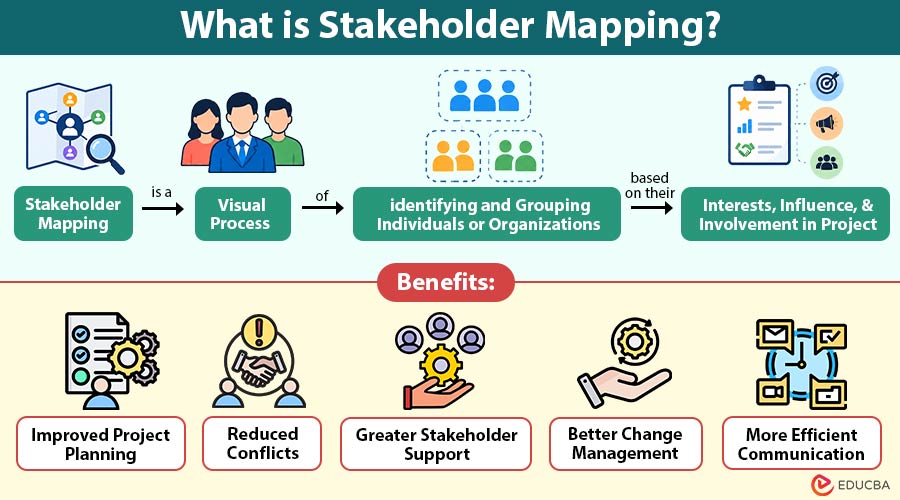
Stakeholder mapping is a visual process of identifying and grouping individuals or organizations based on their interests, influence, and involvement in a project.
Imagine a company planning to introduce a new software system. The management team approves the project, developers build the software, employees use it, and customers may experience changes in service. Although everyone is connected to the same project, their concerns are different.
Management wants the project completed within budget. Employees expect the software to make their work easier, while developers focus on technical requirements.
Now imagine that the company introduces the software without consulting employees. The system may work correctly, but employees might struggle to use it because their actual requirements were overlooked. This situation highlights why understanding stakeholders matters.
Stakeholder mapping helps organizations identify people who can influence a project or experience its outcomes. It also helps teams understand stakeholder expectations, organize them into suitable categories, and plan effective communication.
Table of Contents:
Key Takeaways:
- Stakeholder mapping identifies individuals and groups who influence projects or experience their outcomes.
- It evaluates stakeholder power, interest, expectations, influence, and relationships to establish engagement priorities.
- Stakeholder mapping helps project managers allocate resources effectively and address potential risks before they escalate.
- Regularly updating stakeholder maps improves communication, reduces conflicts, strengthens relationships, and supports successful project execution.
Why is Stakeholder Mapping Important?
Every project involves different people who may influence its progress or experience changes because of its outcomes. Understanding their interests and expectations helps organizations manage relationships and make informed decisions.
1. Clear Communication
Stakeholder mapping helps project teams identify who needs updates, what information matters to them, and how frequently communication should take place.
2. Better Decision-Making
Understanding stakeholder expectations allows project managers to consider different viewpoints before making decisions that may affect project activities or business operations.
3. Early Risk Identification
Identifying stakeholders who may oppose certain changes helps organizations recognize potential concerns and address them before they create serious project challenges.
4. Effective Resource Planning
By identifying the stakeholders who need additional help, involvement, or attention, project managers can better deploy their time and resources.
5. Stronger Working Relationships
Regular communication and meaningful participation help organizations develop trust, improve cooperation, and maintain positive relationships with stakeholders throughout the project.
Key Components of Stakeholder Mapping
Stakeholder mapping involves several important components that help organizations understand stakeholder relationships and priorities.
1. Stakeholder Identification
This involves identifying individuals, departments, organizations, or external groups that can influence a project or be affected by its outcomes.
2. Stakeholder Interest
Interest describes how strongly stakeholders care about a project, including its objectives, expected outcomes, and potential effects on their responsibilities.
3. Stakeholder Influence
Influence refers to a stakeholder’s ability to affect project decisions, approve changes, provide resources, or influence other people involved.
4. Stakeholder Expectations
Different stakeholders may have different priorities. Understanding their expectations helps teams manage concerns and develop suitable communication strategies.
5. Stakeholder Categorization
Stakeholders are organized into groups based on factors such as power, interest, influence, impact, or their relationships with the project.
Types of Stakeholder Mapping
Organizations use different stakeholder mapping techniques depending on project requirements, stakeholder relationships, and management priorities.
1. Power-Interest Grid
The power-interest grid is a widely used stakeholder mapping technique. It categorizes stakeholders based on their level of power over a project and their interest in its outcomes.
The grid includes four categories:
- High Power, High Interest: Manage these stakeholders closely because they have significant influence over project decisions and actively follow project progress.
- High Power, Low Interest: Keep these stakeholders satisfied by sharing important information without involving them in unnecessary operational discussions.
- Low Power, High Interest: Keep these stakeholders informed because project outcomes may significantly affect their responsibilities or daily activities.
- Low Power, Low Interest: Monitor these stakeholders periodically and provide relevant updates when project developments affect their interests.
2. Influence-Impact Matrix
The influence-impact matrix evaluates stakeholders based on their ability to influence a project and the extent to which its outcomes affect them.
For example, employees may have limited decision-making authority but experience significant changes when their organization introduces new technology.
3. Stakeholder Salience Model
The stakeholder salience model helps organizations prioritize stakeholders using three characteristics:
- Power: The ability to influence decisions or project outcomes.
- Legitimacy: The appropriateness or recognized validity of stakeholder involvement and claims.
- Urgency: The degree to which stakeholder concerns require immediate attention.
This approach helps project managers identify stakeholders whose needs may require greater consideration.
4. Stakeholder Relationship Mapping
Stakeholder relationship mapping visually represents connections between different individuals, departments, or organizations involved in a project. It helps teams understand communication patterns, working relationships, and how stakeholders influence one another.
How Does Stakeholder Mapping Work?
Stakeholder mapping follows a structured process that helps organizations identify stakeholders, understand their expectations, and represent their relationships visually.
Step 1: Identify Stakeholders
Begin by listing individuals, departments, organizations, and external groups that can influence the project or experience its outcomes. These may include employees, managers, customers, suppliers, investors, regulatory authorities, and business partners.
Step 2: Understand Stakeholder Interests
Determine what each stakeholder expects from the project. Some stakeholders may prioritize cost savings, while others focus on quality, delivery schedules, operational efficiency, or customer satisfaction.
Step 3: Evaluate Stakeholder Influence
Assess how much authority or influence each stakeholder has over project decisions. For example, a project sponsor may approve budgets, while employees may provide valuable feedback about operational requirements.
Step 4: Categorize Stakeholders
Group stakeholders according to their power, interest, influence, impact, or other relevant characteristics. A power-interest grid can help teams organize these groups visually and understand their engagement priorities.
Step 5: Create a Stakeholder Map
Represent the identified stakeholders using a suitable diagram, grid, matrix, or visual chart. Place stakeholders in appropriate categories so the project team can quickly understand their relative importance and engagement requirements.
Step 6: Develop an Engagement Plan
Decide how stakeholders should receive information, participate in discussions, and provide feedback. Senior management may prefer monthly progress reports, while operational teams might require weekly meetings.
Step 7: Review and Update the Map
Stakeholder interests, responsibilities, and influence may change during project execution. Review the stakeholder map regularly to ensure it reflects current project conditions and stakeholder expectations.
Example of Stakeholder Mapping
Consider manufacturing company planning to launch a new household cleaning product. The initiative involves several stakeholders, including the marketing team, production department, suppliers, distributors, and retailers.
Each stakeholder has different responsibilities and interests. The marketing team focuses on product promotion, the production department manages manufacturing, suppliers provide raw materials, distributors handle product delivery, and retailers focus on selling the product.
The company can use a power-interest grid to categorize these stakeholders according to their influence and interest in the product launch.
| Stakeholder | Power | Interest | Mapping Category |
| Company Management | High | High | Manage Closely |
| Raw Material Suppliers | High | Low | Keep Satisfied |
| Marketing Team | Low | High | Keep Informed |
| Retailers | Low | Low | Monitor |
Based on this mapping:
- Company Management: Involve them in major launch decisions and provide regular performance updates.
- Raw Material Suppliers: Maintain good relationships and ensure the timely availability of required materials.
- Marketing Team: Share product information, campaign objectives, and promotional guidelines.
- Retailers: Monitor their feedback and provide relevant product information to support sales.
Benefits of Stakeholder Mapping
Stakeholder mapping offers several advantages for organizations managing projects, business changes, or important initiatives.
1. Improved Project Planning
Understanding stakeholder requirements early helps project managers establish realistic priorities, develop suitable plans, and reduce confusion during project execution.
2. Reduced Conflicts
Recognizing different stakeholder expectations allows teams to discuss concerns early and identify practical solutions before disagreements affect project progress.
3. Greater Stakeholder Support
Involving relevant stakeholders throughout the project encourages cooperation, improves understanding, and builds support for proposed changes or important decisions.
4. Better Change Management
Stakeholder mapping helps organizations identify people affected by changes and provide appropriate communication, training, and support during implementation.
5. More Efficient Communication
Project teams can share relevant information with appropriate stakeholders instead of sending identical updates to everyone involved in the project.
Challenges of Stakeholder Mapping
Although stakeholder mapping is useful, organizations may experience difficulties when identifying and managing different stakeholder groups.
1. Identifying Every Stakeholder
Large projects may involve numerous departments, customers, suppliers, and external organizations, making it difficult to identify everyone affected.
2. Changing Stakeholder Priorities
Stakeholder interests and influence can change during project execution, requiring teams to review classifications and adjust communication strategies.
3. Conflicting Expectations
Different stakeholders may have competing priorities, making it challenging to balance their requirements while maintaining project objectives and deadlines.
4. Incorrect Stakeholder Classification
Misjudging stakeholder power, interest, or influence may result in poor engagement decisions and overlooked concerns that affect project performance.
5. Limited Stakeholder Participation
Some stakeholders may not actively participate in discussions, making it difficult to understand their expectations or gather meaningful feedback.
Difference Between Stakeholder Mapping and Stakeholder Analysis
The table below highlights the key differences between the two:
| Stakeholder Mapping | Stakeholder Analysis |
| Focuses on visually organizing and categorizing stakeholders. | Focuses on examining stakeholder characteristics and expectations. |
| Uses grids, matrices, diagrams, or visual charts. | Uses interviews, assessments, discussions, and project records. |
| Highlights stakeholder influence, interest, and relationships. | Examines stakeholder needs, concerns, motivations, and possible reactions |
| Helps prioritize stakeholder engagement and communication. | Provides detailed information for stakeholder management decisions. |
Final Thoughts
Stakeholder mapping helps organizations identify, categorize, and understand people or groups involved in a project. It highlights their interests, influence, and expectations, enabling better communication and decision-making. Regular updates help teams address changing priorities, reduce conflicts, strengthen relationships, and support successful project execution.
Frequently Asked Questions (FAQs)
Q1. Who is responsible for creating a stakeholder map?
Answer: A project manager or project management team usually prepares the stakeholder map with input from relevant departments and project members.
Q2. When should an organization create a stakeholder map?
Answer: Organizations should create a stakeholder map during the initial planning stage, before major project decisions and activities begin.
Q3. Can stakeholder mapping be used for small projects?
Answer: Yes, stakeholder mapping is useful for small projects because it helps teams understand responsibilities, identify important relationships, and avoid overlooking affected individuals.
Q4. What information should a stakeholder register contain?
Answer: A stakeholder register typically includes stakeholder names, roles, contact details, organizational affiliations, expectations, and other relevant project information.
Recommended Articles
We hope that this EDUCBA information on “Stakeholder Mapping” was beneficial to you. You can view EDUCBA’s recommended articles for more information –

