

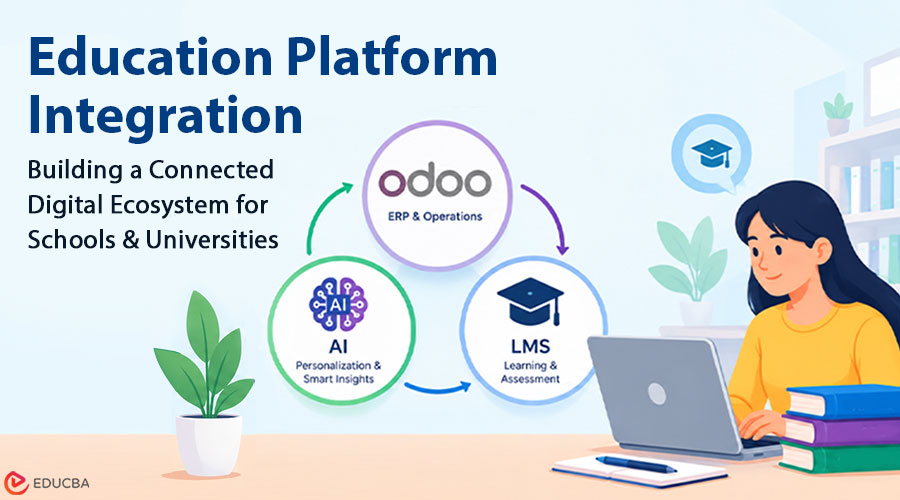
Educational institutions depend more than ever on digital platforms to manage student records, admissions, financial operations, and online learning. However, when these systems operate independently, staff often face duplicate data entry, fragmented records, and delays in administrative processes. A Learning Management System (LMS) supports course delivery and learning activities, but it may not address every operational requirement of a school, college, or university. This is where an Odoo education management system can help connect essential administrative workflows within a broader digital ecosystem. Effective education platform integration combines Odoo, artificial intelligence (AI), and existing educational platforms to support coordinated operations and reduce repetitive manual work. The real opportunity is not adopting more software; it is making existing systems work together to create a more connected, efficient educational environment.
Why Disconnected Systems Create Challenges for Educational Institutions?
Educational institutions often rely on separate applications for admissions, student records, accounting, communication, and online learning. Although each tool serves a specific purpose, disconnected systems can create operational challenges that affect staff productivity and information accuracy.
Common challenges include:
- Duplicate data entry: Staff must enter the same student information into multiple systems, increasing administrative workload.
- Inconsistent records: Student details, enrollment information, and financial records may not match across platforms.
- Delayed financial updates: Separate accounting and student management systems can complicate fee reconciliation and payment tracking.
- Limited operational visibility: Administrators may struggle to obtain a unified view of enrollment, outstanding payments, and departmental performance.
- Increasing complexity: As institutions grow and adopt more digital tools, managing disconnected applications can create additional work instead of improving efficiency.
These problems highlight why educational institutions should evaluate how their systems exchange information before investing in additional software. Instead of replacing every existing application, they can identify process gaps, reduce manual intervention, and connect systems where integration delivers practical value.
How Odoo Supports Education Platform Integration?
An integrated ERP system can help educational institutions coordinate administrative activities without relying on disconnected applications for every process. Odoo offers modular business applications that institutions can configure to support their operational requirements, from financial management to human resources.
Odoo Education Management System: Connecting Administrative Operations
An Odoo education management system can help institutions organize administrative workflows and improve access to operational information. Depending on the implementation, relevant capabilities may include:
- Student and admission records: Organize applicant information and coordinate administrative activities throughout the enrollment process.
- Fee and financial management: Connect accounting workflows with relevant student or payment records to improve financial visibility.
- Human resources and administration: Manage employee information, recruitment, leave, and other internal processes through appropriate Odoo applications.
- Centralized reporting: Bring relevant operational data together to help administrators monitor activities and make informed decisions.
The main advantage is coordination. When departments work with consistent information, staff can spend less time reconciling records and more time supporting students and institutional priorities.
However, Odoo should not automatically replace every education platform. Institutions may still need a dedicated Learning Management System (LMS) for course delivery, assessments, and learning activities. The right configuration depends on institutional requirements and the systems already in use.
How Can AI Improve Education Administration?
Educational institutions handle large volumes of information, from admission inquiries and application documents to student records and administrative requests. Managing these activities manually can increase staff workloads and delay responses. Artificial intelligence (AI) can streamline routine tasks, helping administrative teams work more efficiently while maintaining personal support for students.
Odoo Artificial Intelligence: Supporting Smarter Education Workflows
When integrated into the right Odoo workflows, AI can support several administrative activities. Techvoot’s Odoo artificial intelligence solutions can help educational institutions explore AI-powered assistants for routine inquiries, document processing, and information retrieval. For example, an AI assistant can answer questions about admission procedures, application deadlines, fee policies, and campus services using approved institutional information, letting staff focus on inquiries that require individual attention.
AI can also support document processing by extracting relevant information from application forms and supporting documents, reducing repetitive data entry. With suitable integrations and access controls, AI assistants can help authorized staff retrieve information from institutional policies, internal documents, and knowledge resources. AI-powered reporting tools can also summarize operational data and highlight patterns that administrators may want to investigate further.
However, AI should complement human expertise, not replace it. Educational institutions must protect sensitive student information, verify AI-generated outputs, and establish clear access permissions. Decisions involving admissions, academic assessments, or student eligibility should retain appropriate human oversight.
The most effective approach is to start with a clearly defined administrative challenge, evaluate whether AI can address it reliably, and measure the results. This helps institutions adopt useful AI capabilities without adding unnecessary complexity to their existing systems.
Why Multi-Platform Integration Matters in Education?
Educational institutions often use separate platforms for learning management, admissions, fee collection, and student communication. When these systems operate independently, staff may need to enter the same information multiple times, increasing administrative work and the risk of inconsistent records.
Integrating Odoo with existing platforms helps information move between systems more efficiently. For example, student enrollment updates can sync with connected administrative systems, reducing manual data entry and improving accuracy.
A well-planned integration strategy also lets institutions keep the tools that already meet their needs instead of replacing every platform. By addressing API compatibility, data synchronization, and access permissions, educational institutions can build a more connected technology environment that supports smoother day-to-day operations.
A Practical Example: Connecting the Student Journey
Consider a college that manages admissions, fee payments, and online learning through separate platforms. When a student registers, administrative staff may have to input the same details across several platforms, increasing their workload and the likelihood of errors.
With an integrated setup, the college can connect Odoo with its existing applications to streamline the process. Student details can flow into relevant administrative workflows, payment updates can support fee tracking, and enrollment information can be shared with connected learning platforms where appropriate.
AI tools can further assist by answering routine admission questions and helping staff retrieve relevant information. Human oversight remains essential, particularly when handling sensitive student data or making admission-related decisions. This approach lets educational institutions improve coordination across the student journey without replacing every system they already use.
Key Considerations Before Implementing an Integrated Education System
Before connecting Odoo, AI tools, and existing education platforms, institutions should evaluate a few important factors:
- Existing infrastructure: Identify which systems should be retained, integrated, or replaced based on institutional needs.
- Data security and privacy: Protect sensitive student and financial information through appropriate access controls and data-handling policies.
- Integration compatibility: Check whether existing platforms support reliable data exchange through APIs or other integration methods.
- Staff training: Prepare administrative teams to use new workflows effectively and reduce resistance to change.
- Scalability: Choose an approach that can accommodate future enrollment growth, additional applications, and changing operational requirements.
A phased implementation can help institutions address these considerations, test improvements, and resolve issues before expanding the solution. Starting with high-impact workflows also makes it easier to evaluate whether the investment is delivering measurable benefits.
Final Thoughts
Building a connected education ecosystem starts with identifying gaps in existing workflows and choosing technologies that address them. By combining Odoo, AI, and existing learning platforms, educational institutions can improve education platform integration, reduce repetitive administrative work, improve information sharing, and create a smoother experience for students and staff.
For example, institutions looking to connect their ERP with learning management systems, payment platforms, and other educational applications may benefit from understanding how Odoo multi-platform integration services support connections between different business applications. The right approach depends on each institution’s existing infrastructure, operational priorities, and long-term goals.
Recommended Articles
We hope this guide to education platform integration helps you streamline educational operations. Explore these recommended articles for more insights into education technology and digital transformation.