


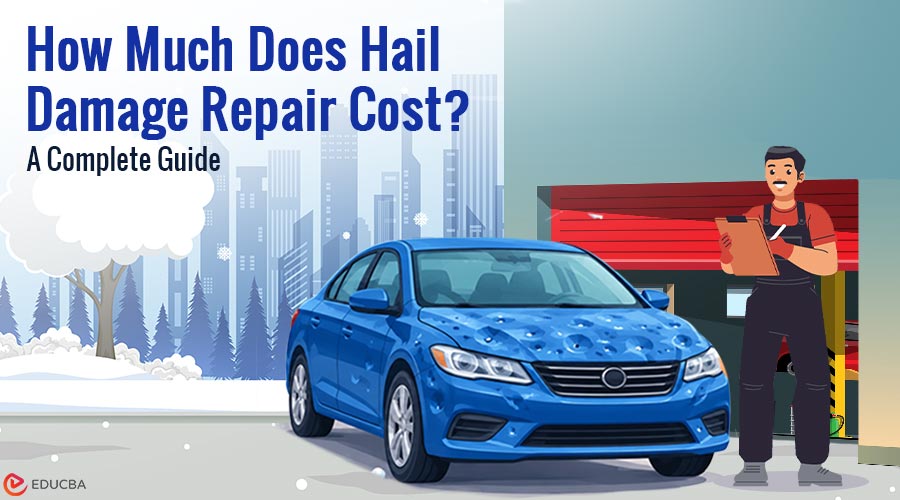
Seeing a car covered in dents after a hailstorm is uniquely frustrating. Your first thought is likely about the repair bill. Hail damage is serious: the average homeowner’s hail claim reaches about $17,000, according to State Farm data reported by United Policyholders. While that figure includes roof and property damage, it shows the sheer financial power of a single storm. For your vehicle, the final hail damage repair cost depends on several factors, including the extent of the damage, the repair method, and your insurance coverage. Understanding the cost to fix hail damaged car is less about a single price tag and more about navigating the repair and insurance process correctly.
The primary driver of that cost is highly skilled labor. Technicians who perform paintless dent repair, or PDR, spend years mastering the craft of meticulously massaging metal back to its original form. This is reflected in the profession’s wages. The U.S. Bureau of Labor reported a median annual salary of $52,530 for automotive body and glass repairers in 2025. That is what you are paying for: a flawless finish without fillers or new paint.
Your biggest financial risk is not the dents themselves, but the procedural missteps in the days after the storm. A few key errors can lead to higher out-of-pocket costs, a subpar repair, or even an insurer incorrectly declaring your vehicle a total loss. This guide focuses on those critical mistakes and how to avoid them.
Quick Answer:
Hail damage repair costs can vary from under $1,000 for minor dents to over $15,000 for severe damage, depending on the dents’ size, quantity, and location on the vehicle. The biggest factor in your final out-of-pocket cost is how you manage your insurance claim and choose a repair method.
How Does the Repair Method Affect Hail Damage Repair Cost?
Choosing between paintless dent repair and traditional bodywork most affects repair costs, turnaround time, and the vehicle’s resale value.
Paintless dent repair, or PDR, requires a high level of skill. Technicians use specialized equipment to reach the underside of dented panels and carefully reshape the metal to restore its original form. This process avoids sanding, body filler, and repainting. When done correctly, the repair is undetectable and, most importantly, it preserves your vehicle’s factory paint finish. This approach is generally quicker and more affordable for repairing numerous shallow dents caused by a typical hailstorm.
The alternative is conventional body repair. This involves grinding the paint off the damaged area, pulling the dent out as much as possible, and then applying a layer of body filler. The technician then sands the filler smooth, primes the area, and repaints the entire panel to ensure a color match. While necessary for severe damage where the metal is stretched, or the paint is broken, this process is far more invasive, time-consuming, and costly.
Ask a potential repair shop a direct question: “What is your threshold for switching from PDR to conventional repair?” A reputable shop will explain that if the paint is cracked or chipped, or if a dent is on a very sharp body crease or a double-thick panel edge, PDR may not be possible. Their answer reveals their expertise and honesty.
The cost difference is rooted in labor and materials. PDR is almost entirely labor, reflecting a technician’s years of practice. This specialized expertise is reflected in the median annual wage of $54,890 for automotive body and related repairers in May 2025, according to the U.S. Bureau of Labor Statistics. The Bureau also projects a 4% employment growth for these roles through 2035, indicating steady demand for this expertise. While conventional repair also requires skill, it adds significant material costs and hours for sanding, filling, and painting, which can easily double or triple the time a car spends in the shop.
How Do You Evaluate a Hail Repair Shop?
Focus on four key areas: technician certification, the shop’s process for handling insurance supplements, the warranty they offer, and the tools they use. A quality repair depends far more on the technician’s skill and the shop’s integrity than on a flashy waiting room or a low initial price.
Choosing the right provider matters because the quality of the work directly affects your vehicle’s resale value. A poor repair can leave behind faint waves in the metal, tool marks, or even cracked paint that can rust later. To avoid this, look for evidence of formal training. Ask if their technicians hold certifications from recognized industry bodies like Vale National or are affiliated with groups such as PDR Nation. These credentials signal a commitment to standardized, high-quality repair techniques.
Next, understand their process for working with your insurance company. The insurer’s first estimate is almost always preliminary. A professional shop will do its own detailed inspection, then submit a “supplement” to the insurer for any additional damage it finds. This is a normal and necessary part of the process.
A shop that pressures you to start work based only on the insurer’s initial, low estimate may be planning to cut corners. A reputable shop will explain the supplement process upfront and negotiate directly with the adjuster on your behalf. Your only responsibility should be your deductible.
Finally, scrutinize the warranty. A “lifetime warranty” is standard for PDR, but you need to know what it covers. It should guarantee that the repaired dents will not return and that the paint will not peel or crack as a result of the repair. It does not cover new damage. Request a written warranty and confirm it transfers to future owners to help protect the car’s resale value.
Hail Damage Repair Shop: What to Look For?
Here is a quick comparison of what to look for versus what to avoid:
| Feature | High-Quality Shop | Red Flag / Low-Quality Shop |
| Technicians | Can show proof of certification (e.g., Vale). | Vague about training or experience. |
| Estimate | Explains the supplement process clearly. | Pushes to start work on a low initial estimate. |
| Warranty | Provides a written, transferable lifetime warranty. | Offers a verbal promise or a limited warranty. |
| Tools | Uses specialized PDR lighting for quality control. | Works under standard shop lights. |
By focusing on these tangible criteria, you can move beyond marketing claims and choose a shop based on their proven ability to deliver a flawless, lasting repair.
What Happens if Your Insurer Declares Your Car a Total Loss?
An insurer may declare a vehicle a total loss when the estimated repair expenses reach or exceed a threshold based on the vehicle’s value or applicable state rules. This decision is primarily a financial calculation; it does not necessarily mean that the vehicle is undrivable or physically beyond repair. Understanding this calculation is critical to protecting your interests. Insurers determine a total loss using two key numbers: the Actual Cash Value (ACV) and the repair estimate.
ACV is what your specific car was worth on the open market just before the hailstorm hit. This figure is based on its year, make, model, mileage, options, and overall condition. It is not what you paid for it or what you owe on your loan. The insurer compares this ACV to the repair estimate. Most states have a “Total Loss Threshold,” a legally set percentage. If repair costs exceed this threshold (typically 70% to 80% of the ACV), the insurer must declare the vehicle a total loss. The formula they often use is: If (Cost of Repair + Salvage Value) is greater than the ACV, it is a total loss.
The most important variable in that equation is the repair estimate. An estimate from a shop that defaults to replacing panels and repainting will be much higher than one from a shop specializing in paintless dent repair. Before you accept a total loss decision, always get a second opinion from a PDR-focused shop. Their ability to save original panels can sometimes bring the estimate below the threshold, saving your car from a salvage title.
Understand Your Options if Your Car Is Declared a Total Loss
If your car is declared a total loss, you have options. You are not obligated to simply hand over the keys.
- Accept the Payout: You can accept the insurer’s ACV payment, minus your deductible. The insurance company then takes possession of your car and sells it for its salvage value.
- Retain and Repair: You can choose to keep your vehicle. In this case, the insurer pays you the ACV minus your deductible and the car’s salvage value. You can then use those funds to repair the car. Keeping the vehicle after a total-loss claim may result in the state issuing a salvage title, which can make the car harder to insure and significantly lower its resale value. Colorado exempts hail-only total losses from this requirement.
Navigating a total loss scenario requires a clear understanding of the numbers. Understanding your options helps you make the best financial decision for your situation.
Making the Right Call on Hail Damage
The final hail damage repair cost is not just the number on an invoice. It is measured in your vehicle’s future resale value. The most critical decision you will make is not about the initial price, but the repair method. Choosing paintless dent repair whenever possible preserves your car’s factory finish, its single most important surface. This approach protects your asset’s integrity and value long after the dents are gone. Your insurance company’s initial estimate is simply the beginning of a conversation.
A low number does not mean you are stuck with a cheap, corner-cutting repair. Your role is to find a skilled technician who can properly assess the full extent of the damage and advocate for a complete restoration. The shop you choose determines the quality of your negotiation with your insurer and, ultimately, the quality of the final result. Ultimately, guide every decision with one principle: protect the original paint.
That factory finish is more durable and valuable than any aftermarket paint job. By choosing a method and partner that keep that finish intact, you move beyond simply fixing dents and toward truly restoring your vehicle. This focus helps you choose the best option for both the car’s appearance and its long-term value.
Frequently Asked Questions (FAQs)
Q1. How is the final repair cost calculated?
Answer: The cost is not arbitrary. Technicians use a standardized pricing matrix that accounts for the number and size of dents on each panel. A panel with 20 quarter-sized dents will cost more to repair than a panel with 20 dime-sized dents. The panel’s material also matters, as aluminum is harder to work with than steel and takes more time and skill.
Q2. Does repaired hail damage hurt my car’s resale value?
Answer: When done correctly with paintless dent repair, it does not. PDR preserves your vehicle’s original factory paint, which is a major factor in its value. Because there is no repainting, there is typically no report to vehicle history services. Buyers can detect conventional repairs that use body filler and new paint, which may lower the car’s resale value.
Q3. What if the hail also broke my windshield or cracked a taillight?
Answer: Your comprehensive insurance policy should cover all damage from a single event like a hailstorm. This includes broken glass, cracked lights, and damaged trim or moldings. The repair shop will list these items on the estimate, and the insurer will cover the replacement cost alongside the dent repair, subject to your single deductible.
Q4. Do I have to use the body shop my insurance company suggests?
Answer: No. In most states, you have the legal right to choose your own repair facility. While an insurer’s “preferred” shop can be convenient, an independent shop specializing in PDR may advocate better for you. They work to ensure they find and properly repair all damage, rather than just working to the insurer’s initial, often incomplete, estimate.
Q5. How long will the repairs take?
Answer: For moderate hail damage, paintless dent repair (PDR) typically takes 1–3 days to complete. However, the total time your car is at the shop can be longer. After a major storm, a significant backlog of vehicles can make it hard to schedule an appointment with a quality technician, and it may take a week or more.
Recommended Articles
We hope this guide to hail damage repair costs helps you navigate repair options, insurance claims, and ways to protect your vehicle’s value. Explore these articles for more tips on car maintenance and repairs.

