


What is Contingency Cost?
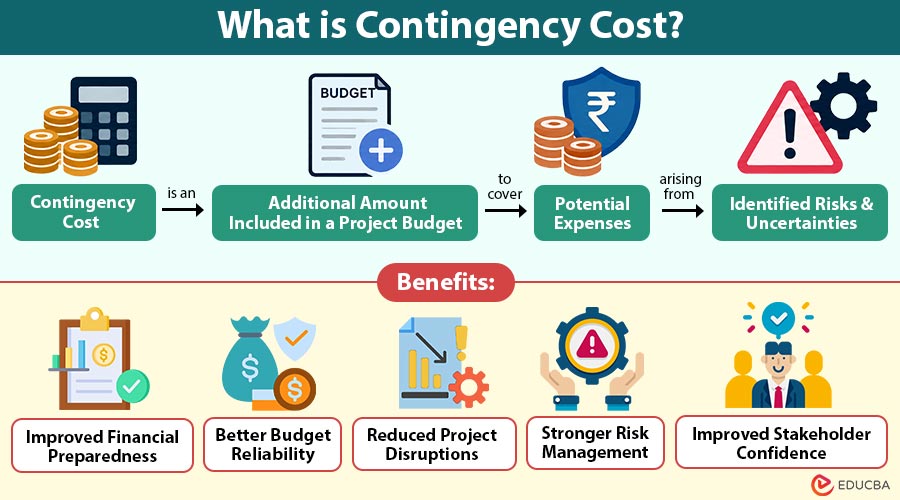
Contingency cost is an additional amount included in a project budget to cover potential expenses arising from identified risks and uncertainties.
It acts as a financial reserve that helps businesses and project managers address unexpected situations without significantly disrupting planned activities. These situations may include material price fluctuations, equipment failures, labor shortages, design modifications, or unforeseen operational challenges.
For example, a construction company estimates a project cost of ₹20 lakh and allocates an additional ₹2 lakh as contingency. The total budget becomes ₹22 lakh, providing financial flexibility to manage potential cost increases.
Contingency costs are commonly used in construction, manufacturing, engineering, information technology, infrastructure development, and business operations. Effective contingency planning improves financial preparedness, supports risk management, and helps organizations maintain better control over project expenditures.
Table of Contents:
- Meaning
- Working
- Types
- Examples
- How to Calculate Contingency Cost?
- Factors
- Benefits
- Limitations
- How to Manage Contingency Costs Effectively?
- Applications
Key Takeaways:
- Contingency cost is a financial reserve set aside to cover potential expenses from identified project risks.
- Organizations calculate contingency costs using percentage-based methods, historical project data, and detailed financial risk assessments.
- Contingency reserves improve financial preparedness, strengthen budget reliability, reduce project disruptions, and support effective risk management.
- Effective contingency management requires accurate estimates, regular monitoring, clear financial controls, and periodic reviews of risk assessments.
How Does Contingency Cost Work?
Contingency cost works by allocating additional funds within a project budget to address potential financial risks.
The process generally involves the following steps:
1. Risk Identification
Project managers identify potential risks, including supply chain disruptions, technical failures, labor shortages, and unexpected events that could increase costs.
2. Risk Assessment
Teams assess the likelihood and potential financial impact of identified risks to determine their significance and prioritize appropriate contingency planning.
3. Cost Estimation
Organizations calculate the required contingency amount using historical data, risk analysis, statistical methods, and estimates of potential additional project expenses.
4. Budget Allocation
Project managers incorporate approved contingency reserves into the overall project cost baseline, ensuring sufficient funds remain available for identified risks.
5. Fund Utilization
Authorized personnel access allocated contingency funds when identified risks occur, covering unexpected expenses while maintaining established financial controls and accountability.
6. Continuous Monitoring
Managers regularly review contingency fund utilization, assess emerging risks, and update financial forecasts to maintain effective budget control throughout projects.
This structured approach helps organizations respond to uncertainty while maintaining financial accountability.
Types of Contingency Costs
Contingency costs can be categorized according to the risks they address and the activities they support.
1. Design Contingency
Design contingency covers potential cost increases arising from incomplete design information, developing specifications, or necessary design refinements.
For example, an engineering project may require additional materials after detailed technical drawings are completed.
2. Construction Contingency
Construction contingency covers potential expenses from site conditions, execution difficulties, and other identified construction-related risks.
For example, unexpected soil conditions may require additional foundation reinforcement during construction.
3. Technical Contingency
Technical contingency covers potential expenses resulting from identified technological uncertainties, integration challenges, or equipment performance issues.
For example, a software development project may require additional testing to resolve integration problems.
4. Procurement Contingency
Procurement contingency covers possible cost increases from material availability issues, supplier delays, transportation disruptions, and price fluctuations.
For example, a manufacturer may allocate additional funds to manage anticipated increases in raw material prices.
5. Schedule Contingency Costs
Schedule-related cost contingency covers potential financial consequences of identified delays, such as extended equipment rentals or additional labor expenses.
For example, delayed material deliveries may increase project supervision and machinery rental costs.
Examples of Contingency Cost
The following examples illustrate how contingency costs help businesses manage potential risks and unexpected expenses across different industries.
| Industry | Potential Risk | Contingency Cost Usage |
| Construction | Unexpected ground conditions | Additional excavation and reinforcement |
| Manufacturing | Equipment breakdown | Emergency repairs and replacement components |
| Information Technology | Software integration issues | Additional development and testing |
| Logistics | Transportation disruption | Alternative shipping arrangements |
| Event Management | Equipment malfunction | Replacement equipment and technical support |
| Infrastructure | Material price fluctuations | Additional procurement expenditure |
These examples demonstrate how contingency reserves help organizations prepare for financial uncertainties across different industries.
How to Calculate Contingency Cost?
Contingency cost can be calculated using a percentage of the estimated project cost or through detailed risk assessment.
Formula:

Example:
Suppose a construction project has an estimated cost of ₹20 lakh, with a contingency rate of 10%.
- Estimated Project Cost = ₹20,00,000
- Contingency Rate = 10%
- Contingency Cost = ₹2,00,000
- Total Project Budget = ₹22,00,000
Therefore, the company allocates ₹2 lakh as a contingency reserve to manage potential additional expenses.
Factors Affecting Contingency Cost
Several factors influence the contingency amount required for a project.
1. Project Complexity
Projects involving complex processes, multiple stakeholders, advanced technologies, and interconnected activities often require higher contingency reserves to address potential uncertainties.
2. Risk Exposure
Projects facing greater risks of financial losses, operational disruptions, technical failures, or unexpected events generally require larger contingency reserves for protection.
3. Project Duration
Longer projects typically face greater uncertainty around resource availability, labor costs, scheduling changes, and operational challenges throughout execution.
4. Historical Data
Historical project records help managers identify recurring risks, analyze previous cost variations, and estimate appropriate contingency reserves for similar future projects.
5. Market Conditions
Fluctuating material prices, supply chain disruptions, labor shortages, transportation costs, and changing market demand can significantly influence project contingency reserve requirements.
Benefits of Contingency Cost
Contingency planning provides several financial and operational benefits.
1. Improved Financial Preparedness
Contingency reserves help organizations manage identified financial risks, cover unexpected expenses, and maintain financial stability without immediately requiring additional funding.
2. Better Budget Reliability
Including contingency reserves in project budgets improves cost estimation accuracy, accounts for identified risks, and supports more realistic financial planning.
3. Reduced Project Disruptions
Contingency funds let project teams address anticipated challenges quickly, minimize operational delays, and stay on track toward established objectives.
4. Stronger Risk Management
Contingency planning encourages organizations to systematically identify, assess, monitor, and manage potential financial risks throughout the entire project execution lifecycle.
5. Improved Stakeholder Confidence
Well-structured contingency planning demonstrates financial responsibility, strengthens budget transparency, and reassures stakeholders about the organization’s ability to manage potential project uncertainties.
Limitations of Contingency Cost
Despite its advantages, contingency planning has certain limitations.
1. Estimation Inaccuracy
Contingency estimates may be inaccurate because of incomplete information, unreliable historical data, incorrect assumptions, or difficulty predicting potential financial risks.
2. Increased Project Budget
Allocating contingency reserves increases the overall project budget, potentially affecting financial approvals, investment decisions, and available funding for other organizational activities.
3. Limited Risk Coverage
Contingency reserves primarily address identified risks and may not adequately cover unforeseen events, major disruptions, or expenses exceeding estimated financial requirements.
4. Risk of Fund Misuse
Without proper financial controls, contingency funds may be used for unnecessary expenditures, inefficient resource allocation, or expenses unrelated to identified risks.
5. Continuous Monitoring Requirements
Effective contingency management requires regular risk assessments, financial reviews, expenditure tracking, and adjustments, increasing administrative responsibilities throughout the project lifecycle.
6. False Sense of Financial Security
Excessive reliance on contingency reserves may encourage inadequate risk prevention, poor cost management, or reduced attention to potential operational challenges.
How to Manage Contingency Costs Effectively?
Organizations can improve contingency management by following structured financial practices.
1. Identify Risks Early
Assess potential financial uncertainties during initial project planning to identify possible cost overruns and establish appropriate contingency reserves before budgeting.
2. Use Reliable Estimates
Combine historical project data, expert judgment, and quantitative risk analysis to develop realistic contingency estimates aligned with potential financial uncertainties.
3. Establish Clear Controls
Define specific responsibilities, approval procedures, spending limits, and documentation requirements to ensure contingency funds are utilized appropriately throughout project execution.
4. Track Fund Utilization
Maintain detailed records of contingency allocations, approved expenditures, withdrawals, and remaining balances to support financial transparency and effective budget monitoring processes.
5. Review Risks Regularly
Reassess potential financial risks whenever project scope, market conditions, resource requirements, or underlying assumptions change to maintain appropriate contingency levels.
6. Prevent Double Counting
Review contingency calculations carefully to ensure individual financial risks are not included across multiple categories, preventing unnecessary budget inflation and duplication.
Applications of Contingency Cost
The following are the major applications of contingency cost across different industries to manage financial uncertainties and unexpected expenses effectively.
1. Construction and Infrastructure
Construction companies allocate contingency funds to manage unexpected site conditions, design changes, material shortages, and potential execution challenges.
2. Information Technology
Technology companies use contingency reserves to address software development challenges, system integration issues, technical failures, and additional testing requirements effectively.
3. Manufacturing
Manufacturers allocate contingency funds to manage equipment breakdowns, production disruptions, raw material price fluctuations, and unexpected operational expenses during manufacturing.
4. Supply Chain and Logistics
Logistics companies maintain contingency reserves to address transportation delays, supply chain disruptions, alternative shipping arrangements, and unexpected handling expenses efficiently.
5. Business Expansion
Organizations allocate contingency funds to manage facility development challenges, unexpected operational expenses, resource shortages, and implementation risks during business expansion.
Final Thoughts
Contingency costs play an important role in financial planning by preparing organizations for identified project risks and uncertainties. Accurate estimation, systematic risk assessment, and effective monitoring help businesses manage unexpected expenses while maintaining budget control. A well-managed contingency reserve supports financial stability, informed decision-making, and successful project execution.
Frequently Asked Questions (FAQs)
Q1. Is contingency cost a direct or indirect cost?
Answer: Contingency cost is a budget reserve rather than a separate direct or indirect cost category. Its classification depends on the expenses incurred when the reserve is utilized.
Q2. Is contingency cost included in the project cost baseline?
Answer: Yes, approved contingency reserves are generally included in the project cost baseline. However, management reserves are maintained separately and are not included in the baseline.
Q3. Can unused contingency funds be returned?
Answer: Yes, unused contingency funds may be released, returned, or reallocated after project completion, depending on contractual agreements, organizational policies, and financial approval procedures.
Q4. Can contingency costs be included in client quotations?
Answer: Yes, businesses may incorporate contingency costs into client quotations to account for identified project risks, depending on contractual terms and pricing arrangements.
Recommended Articles
We hope that this EDUCBA information on “Contingency Cost” was beneficial to you. You can view EDUCBA’s recommended articles for more information.

