


What is a Contingency Plan?
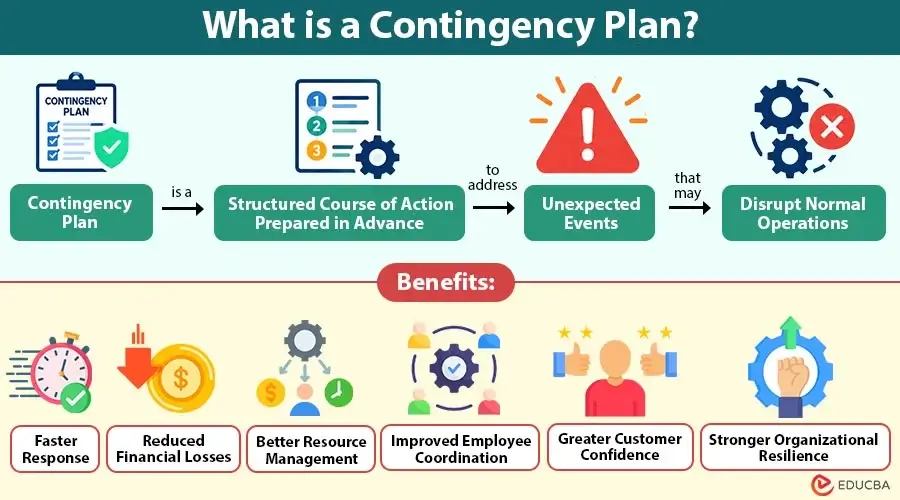
A contingency plan is a structured course of action prepared in advance to address unexpected events that may disrupt normal operations. It helps individuals and organizations respond quickly when risks, emergencies, or unforeseen circumstances occur.
Businesses may prepare contingency plans for situations such as system failures, cyberattacks, supply shortages, natural disasters, financial problems, equipment breakdowns, or sudden staff shortages. These plans identify possible disruptions, define responsibilities, and provide alternative actions to maintain essential activities.
A well-designed contingency plan reduces confusion during emergencies because employees already know what actions to take, whom to contact, and which resources to use.
Table of Contents:
- Meaning
- Importance
- Types
- Components
- How to Create a Contingency Plan?
- Example
- Benefits
- Limitations
- Applications
Key Takeaways:
- A contingency plan prepares an organization for unexpected disruptions and emergencies.
- It provides alternative actions when normal processes cannot continue.
- Risk assessment helps identify situations that require backup arrangements.
- Clear responsibilities and communication channels improve emergency response.
- Regular testing and updating keep contingency plans useful as business conditions change.
Importance of a Contingency Plan
Below are the key reasons why a contingency plan is important for organizations:
1. Reduces Operational Disruption
A backup plan helps organizations continue critical activities when regular processes are interrupted by emergencies, failures, or unexpected disruptions.
2. Improves Decision-Making
Predefined procedures help employees respond quickly and consistently, reducing confusion and saving valuable time during emergencies and unexpected situations.
3. Protects Critical Resources
Contingency planning helps protect employees, data, equipment, facilities, finances, and other essential resources through preventive and response measures.
4. Supports Business Continuity
Organizations can identify essential functions and create alternative processes that keep important operations running during unexpected disruptions.
5. Strengthens Risk Preparedness
Contingency planning helps organizations identify potential threats early, prepare necessary resources, and assign responsibilities before emergencies occur.
Types of Contingency Plans
Below are the common types of contingency plans organizations use to prepare for different disruptions and unexpected situations.
1. Business Contingency Plan
A business contingency plan focuses on maintaining important business activities during unexpected disruptions. It may address problems involving employees, facilities, suppliers, technology, or customers.
2. IT Contingency Plan
An IT contingency plan addresses disruptions affecting information technology systems. It may include data backups, alternative systems, recovery procedures, and technical support arrangements.
3. Financial Contingency Plan
This plan prepares an organization for financial difficulties such as unexpected expenses, declining revenue, delayed payments, or funding shortages. It may include emergency reserves and spending controls.
4. Supply Chain Contingency Plan
A supply chain contingency plan prepares businesses for supplier failures, transportation problems, shortages, or sudden changes in demand. Organizations may identify alternative suppliers and transportation routes.
5. Disaster Contingency Plan
A disaster contingency plan addresses major events such as floods, earthquakes, fires, storms, or other emergencies that can affect facilities and employees.
6. Project Contingency Plan
A project contingency plan prepares teams for events that could delay or change a project’s scope, resources, budget, or schedule.
Components of a Contingency Plan
A useful contingency plan should contain several important components.
1. Risk Identification
The organization first identifies events that could significantly affect its operations. These may include technology failures, supplier disruptions, security incidents, or natural disasters.
2. Impact Assessment
The organization assesses each identified risk based on its potential effect on operations, finances, employees, customers, and other key areas.
3. Response Procedures
The plan should outline the steps that staff members must take in the event of a particular circumstance. Procedures must to be understandable and practical.
4. Roles and Responsibilities
Specific employees or teams should be assigned responsibilities. This avoids uncertainty about who should make decisions or perform important tasks.
5. Communication Plan
The organization should establish communication channels for employees, customers, suppliers, emergency services, and other stakeholders when necessary.
6. Backup Resources
Alternative equipment, suppliers, facilities, systems, funds, or personnel may be identified to support operations during disruptions.
7. Recovery Procedures
The plan should explain how the organization will restore normal operations after the immediate problem has been controlled.
How to Create a Contingency Plan?
Organizations can follow a structured process to develop an effective contingency plan.
Step 1: Identify Potential Risks
Start by listing events that could interrupt important activities. Consider internal problems as well as external threats.
Step 2: Determine Critical Activities
Identify processes that must continue even during a disruption. These could include customer support, payment processing, production, data access, or order fulfillment.
Step 3: Assess Potential Impact
Estimate how each risk could affect operations. Consider factors such as financial loss, downtime, customer impact, regulatory requirements, and resource availability.
Step 4: Develop Alternative Actions
Create specific response strategies for significant risks. Each strategy should provide practical alternatives to the normal process.
Step 5: Assign Responsibilities
Identify the employees responsible for activating the plan, communicating information, managing resources, and restoring operations.
Step 6: Establish Communication Procedures
Define how information will be shared during an emergency. Include contact details, communication channels, escalation procedures, and backup methods.
Step 7: Test the Plan
Conduct simulations, drills, or scenario-based exercises to determine whether employees understand their responsibilities and whether the procedures work as expected.
Step 8: Review and Update
Contingency plans should be reviewed regularly. Changes in technology, employees, suppliers, facilities, regulations, and business objectives may require modifications.
Contingency Plan Example
Consider a manufacturing company that depends on one supplier for a critical production component. If that supplier suddenly experiences a major disruption, production could stop.
The company can prepare a contingency plan by identifying alternative suppliers, maintaining a reasonable inventory of critical components, establishing emergency purchasing procedures, and assigning employees to manage supplier disruptions.
If the primary supplier becomes unavailable, the company can activate the backup process, contact an approved alternative supplier, use available inventory, and inform relevant teams about expected changes.
This example shows how advance preparation can reduce the effect of an unexpected disruption.
Benefits of a Contingency Plan
Below are the key benefits of a contingency plan for improving organizational preparedness, response, and recovery during disruptions.
1. Faster Response
Employees can act quickly because response procedures and responsibilities are established beforehand.
2. Reduced Financial Losses
Alternative processes can help reduce downtime, missed orders, emergency expenses, and other costs associated with disruptions.
3. Better Resource Management
Organizations can identify critical resources and determine how they will be allocated during an emergency.
4. Improved Employee Coordination
Clearly defined responsibilities help different teams coordinate their activities when normal operations are interrupted.
5. Greater Customer Confidence
A business that can maintain essential services during disruptions may be better positioned to manage customer expectations and service commitments.
6. Stronger Organizational Resilience
Regular contingency planning helps organizations prepare for changing conditions and recover from disruptions more systematically.
Limitations of a Contingency Plan
Below are the key limitations of a contingency plan that organizations should consider when preparing for unexpected disruptions.
1. Incomplete Risk Coverage
Anticipating every possible disruption is difficult. An organization may encounter an event that was not included in its original plan.
2. Resource Requirements
Developing, testing, and maintaining contingency plans requires time, employees, technology, and financial resources.
3. Plans Can Become Outdated
Changes in employees, suppliers, technology, facilities, and business processes can make an old plan less useful.
4. Implementation Challenges
A well-written plan may not work effectively if employees are unfamiliar with it or if required resources are unavailable during an emergency.
5. Dependence on Assumptions
Some plans rely on assumptions about available resources, response times, or external support. These assumptions may change during an actual disruption.
Applications of Contingency Planning
Contingency planning is used across many areas, including:
1. Information Technology
Preparing backup systems and recovery procedures to manage outages, data loss, cybersecurity incidents, and other technology-related disruptions.
2. Finance
Developing financial reserves and alternative strategies to manage unexpected cash shortages, declining revenue, emergencies, and significant unplanned expenses.
3. Human Resources
Preparing staffing alternatives to address employee shortages, sudden departures, absenteeism, skill gaps, and the loss of critical personnel.
4. Supply Chain Management
Identifying alternative suppliers, transportation routes, and inventory sources to manage disruptions, shortages, delays, and supplier failures effectively.
5. Project Management
Preparing alternative schedules, resources, and processes to address project delays, unexpected scope changes, budget constraints, and resource shortages.
6. Healthcare
Establishing alternative procedures and resources to manage equipment failures, staffing shortages, emergencies, patient surges, and operational disruptions effectively.
7. Education
Developing backup arrangements for facilities, technology, teaching staff, and learning methods when unexpected disruptions affect regular educational delivery.
Final Thoughts
A contingency plan provides a structured approach for responding to unexpected events that may disrupt normal activities. By identifying important risks, preparing alternative actions, assigning responsibilities, and testing response procedures, organizations can reduce confusion during emergencies. Regular reviews ensure the plan remains relevant as business conditions, resources, technologies, and operational requirements change.
Frequently Asked Questions (FAQs)
Q1. Who is responsible for maintaining a contingency plan?
Answer: A designated manager, risk team, or business continuity team usually coordinates the plan, while different departments maintain their assigned procedures.
Q2. How often should a contingency plan be reviewed?
Answer: A contingency plan should be reviewed periodically and whenever major changes occur in technology, staffing, suppliers, facilities, regulations, or business operations.
Q3. Should employees receive training on contingency plans?
Answer: Yes. Training helps employees understand their responsibilities, reporting procedures, communication channels, and actions required during different disruption scenarios.
Q4. How can organizations prioritize risks in contingency planning?
Answer: Organizations can prioritize risks by considering factors such as likelihood, potential impact, recovery difficulty, affected stakeholders, and the importance of the activities involved.
Recommended Articles
We hope that this EDUCBA information on “Contingency Plan” was beneficial to you. You can view EDUCBA’s recommended articles for more information.

