


Updated October 14, 2026
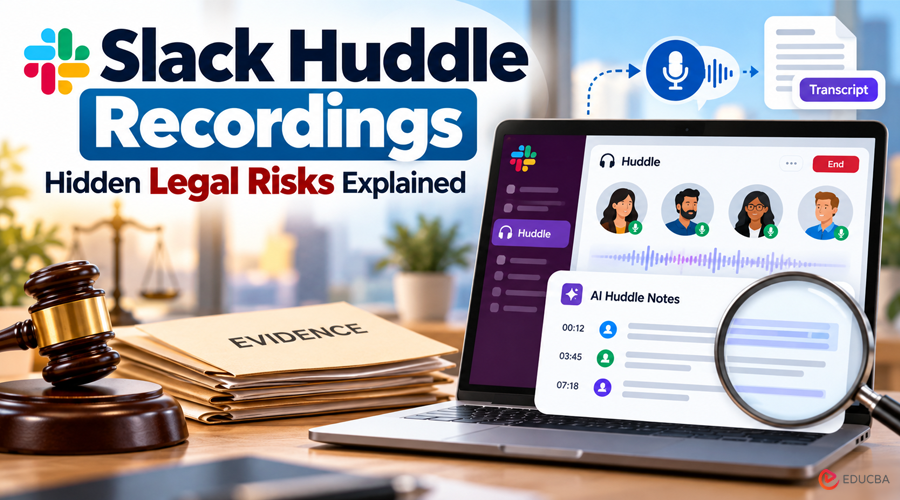
A single AI-generated huddle transcript sitting in a Slack channel can turn a routine internal review into a federal problem, and most employees on those calls have no idea the record exists. People treat a huddle like a hallway chat with a headset on, assuming Slack Huddle Recordings disappear once the conversation ends.
In a company that has switched on the newer AI features, or let any third-party notetaker into the call, that hallway chat is actually a searchable canvas of who said what, timestamped and attached to a channel a preservation letter can reach.
The myths around ephemeral voice channels get people in trouble, not the technology itself. Ask any white-collar defense attorney what surprises new clients most about a Slack subpoena, and the answer is usually the same: the huddle they thought was a phone call.
Here are the myths about Slack Huddle Recordings worth addressing before your next internal investigation.
Myth: A Huddle Vanishes When You Hang Up
The audio disappears. The written record around it often sticks. Slack’s own AI huddle notes feature writes the transcript and any action items into a notes canvas that lives with the channel or DM the huddle happened in, visible to anyone with access to that conversation.
That canvas is a document. It behaves like any other Slack artifact for retention, export, and legal hold.
Even with the native feature switched off, third-party notetakers dialed into the huddle are producing transcripts on their own servers, subject to their own retention defaults. A conversation your team believed had evaporated may be sitting in three different systems by the end of the workday.
Understanding how Slack Huddle Recordings differ from automatically generated transcripts is essential. A huddle does not necessarily create a conventional audio recording, but its written notes or transcripts may still preserve what participants said.
Myth: If It is Not in the Search Bar, It is Not Discoverable
Employees test whether something “still exists” by searching for it in Slack. If nothing comes up, they assume nothing survived. That test does not answer the legal question.
Huddle notes canvases may be excluded from ordinary Slack search, depending on the feature and workspace configuration. This can lead users to conclude that the notes are gone. However, discovery does not necessarily depend on the search bar. It may involve administrative exports, supported Discovery API capabilities on eligible plans, and requests to Slack itself.
Content a regular user cannot find may still be accessible to authorized administrators or subject to lawful preservation and production requests. The discoverability of Slack Huddle Recordings, transcripts, and notes depends on how the information was created, stored, retained, and managed.
Myth: Turning On Disappearing Settings Solves the Problem
Enabling short retention or an auto-delete window feels like risk management. Once an investigation is foreseeable, it starts to look like something else. Regulators have shown they will treat aggressive ephemeral defaults, and the deletion that follows, as sanctionable conduct rather than housekeeping.
A recent analysis of enforcement activity around disappearing-message tools puts it plainly: relaxing an ephemeral policy mid-inquiry, or leaving one in place after a duty to preserve attaches, invites exactly the sanctions the policy was meant to prevent. Once a matter is on the horizon, the safer move is a hold notice that specifically names huddle notes, transcripts, and any connected notetaker output, rather than a quiet tightening of the delete timer.
Myth: Prosecutors Only Care About Email
The Department of Justice has signaled the opposite. Its Evaluation of Corporate Compliance Programs includes guidance on how prosecutors should assess a company’s handling of ephemeral messaging applications, personal devices, and collaboration platforms.
A prosecutor may ask not just what the company’s email preservation process looks like. It also asks whether the company can identify and preserve relevant chats, huddle transcripts, notes, and channel content tied to business communications.
A company that produces a clean email archive but cannot explain how it preserves relevant Slack information may face additional questions about its compliance practices. Slack Huddle Recordings, transcripts, and notes can therefore become important considerations when organizations evaluate their document-retention policies and prepare for internal investigations.
Myth: The Employee on the Call Has Nothing to Worry About
Individual exposure is where these facts get uncomfortable. People on a huddle rarely control retention settings, rarely know which bots are in the channel, and are usually the last to hear that a hold has been issued. None of that helps them in an interview room; it sets the stage for a bad one.
A short list of things anyone on a sensitive huddle should know before the call, not after:
- Who is in the room, digitally: Check the participant list for notetaker bots and confirm whether AI notes are on before saying anything you would not put in writing.
- Where the notes land: If a canvas is being generated, it sits in the channel or DM the huddle came from and inherits that space’s access list.
- Who can pull it later: Admins on higher Slack tiers can export channel content, and outside counsel can subpoena what admins can reach.
- When to stop and get advice: If the topic drifts toward conduct that could draw a regulator’s attention, end the huddle and call a defense attorney before the next one starts.
Employees should not assume that Slack Huddle Recordings are automatically created, permanently stored, or completely erased when a call ends. The actual record depends on the tools in use, the organization’s settings, and the retention practices of any third-party services involved.
Recommended Articles
We hope this guide helps you understand Slack Huddle Recordings, their discoverability, data retention, and the legal implications of AI-generated transcripts during internal investigations. Explore our recommended articles for more insights on data privacy, corporate compliance, digital communications, legal discovery, and information governance.


