


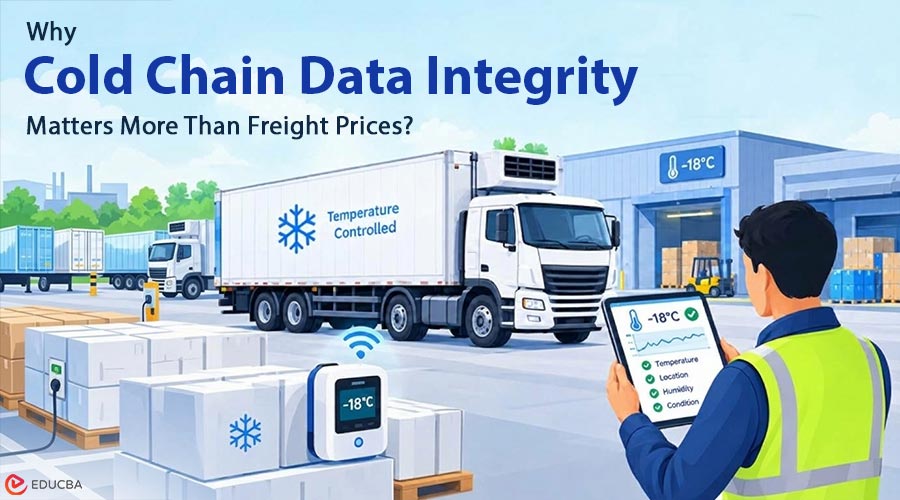
For cold chain shippers, choosing a carrier increasingly involves more than comparing rates, capacity, and delivery times. They also need to know whether the temperature data accompanying a shipment is complete, reliable, and ready to withstand scrutiny. Cold chain data integrity has therefore become an important factor in carrier selection, particularly for high-value and regulated shipments.
If a regulator or quality team asks when an excursion occurred, how long it lasted, or whether an alarm was acknowledged, the carrier needs records that can answer those questions. That has pushed data integrity to the forefront of the carrier-vetting process, particularly for high-value and regulated shipments.
Why Did Data Integrity Move Ahead of Price?
The math on a lost load has changed. Biologics, cell and gene therapies, and specialty injectables carry per-pallet values that make an old-school claims conversation look small. A single excursion can trigger quarantine, investigation, and product destruction that costs more than a year of the carrier’s freight spend.
When the exposure looks like that, the buyer’s job shifts. You are not really buying transportation. You are buying the evidence that the transportation was done correctly. Working with a national cold chain network that treats records as a deliverable, not an afterthought, has become the baseline expectation for shippers moving anything regulated.
What Do Auditors Look for in Cold Chain Data Integrity?
Auditors do not want a PDF summary. They want the underlying record, and they want it to survive scrutiny. That means a validated system, traceable calibration, and an audit trail nobody could have edited after the fact. These are not stretch goals. They are the working expectations behind current GDP monitoring rules and the electronic-records standards regulators apply to any digital system in the chain.
How Do You Vet a Carrier Before You Sign?
The excursion audit belongs in qualification, not in the after-action review of a bad shipment. Ask for a sample temperature record and trace it from pickup through delivery. Look for calibration records, timestamps, alarm history, and a clear record of how the carrier handled any excursion.
Then test the process behind the data. Ask who receives after-hours alerts, who can edit records, how the system tracks changes, and how quickly the carrier can retrieve a complete shipment file. The goal is to know before signing whether the carrier can produce a reliable record when something goes wrong.
Where Do Most Carriers Fall Short?
The common failure is governance around the data those sensors produce, not the sensors themselves. Files live on a laptop. Calibration certificates are scanned into a shared drive nobody has opened in a year. Alarms fire into an inbox no one is watching after hours.
None of that shows up in a rate quote. It shows up the first time a customer’s QA group asks for a full data package on a specific pro number and the carrier has to explain why the file is incomplete. By then, the shipper is exposed too, because they were responsible for qualifying the carrier.
Why Does Price Still Matter in Cold Chain Carrier Selection?
None of this means shippers have stopped caring about cost. Cold chain freight is expensive, capacity is uneven, and finance teams still expect competitive bids. What has changed is the order of operations. Data integrity is a gate. Carriers who pass the gate compete on price, service, and network fit. Carriers who do not pass never get scored on those things at all. For a shipper, the practical move is to write the excursion audit into the RFP itself. Ask for the artifacts up front, score them, and weight them.
Make it clear that the lowest bidder with a broken audit trail is not, in fact, the lowest bidder. They are the most expensive one, priced on a future loss nobody has booked yet. This approach makes cold chain data integrity a qualification requirement rather than a minor scoring factor. Carriers that meet the necessary standards can then compete on price, service quality, and network suitability.
Recommended Articles
We hope this comprehensive guide to cold chain data integrity helps you understand the importance of reliable temperature records and carrier compliance. Check out these recommended articles for more insights and strategies to strengthen your cold chain logistics operations.

