


What is Content Ecosystem?
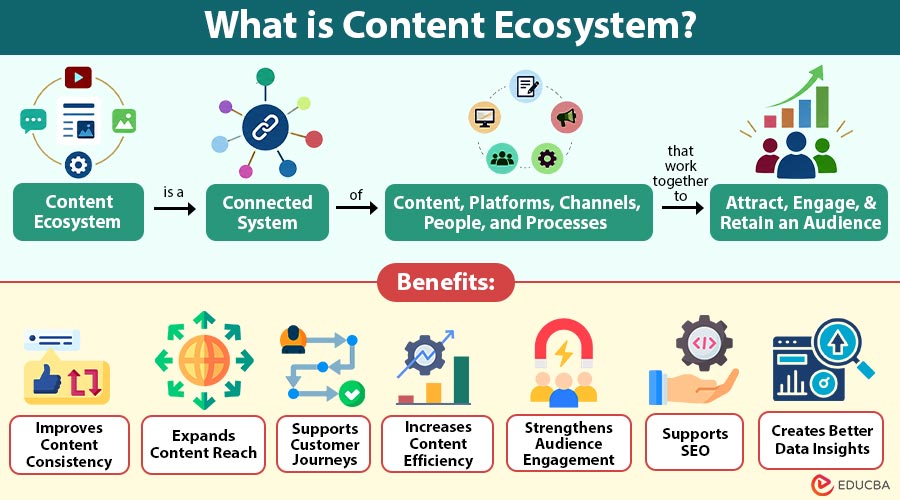
A content ecosystem is a connected system of content, platforms, channels, people, and processes that work together to attract, engage, and retain an audience.
It includes every piece of content a business creates and the channels people use to access it. These may include blog posts, social media posts, videos, podcasts, newsletters, websites, ebooks, webinars, and other digital resources.
Rather than treating each content format as a separate activity, a content ecosystem connects them around common business goals and audience needs. For example, a company may publish a detailed blog, turn its key points into social media posts, create a short video from the same topic, and include the blog in an email newsletter.
This approach helps businesses maintain consistency, improve content distribution, and create multiple opportunities for audiences to interact with the brand.
Table of Contents:
- Meaning
- Components
- Types
- How a Content Ecosystem Works?
- Example
- Benefits
- Challenges
- Difference
- How to Build an Effective Content System?
- Challenges
Key Takeaways:
- A content ecosystem connects content, channels, people, technology, and processes to support shared business objectives.
- Repurposing core content across multiple formats and platforms expands reach while improving content creation efficiency.
- Connected content helps guide audiences through different customer journey stages, from awareness to retention.
- Regular measurement and optimization help businesses maintain content quality, relevance, consistency, and overall ecosystem performance.
Components of a Content Ecosystem
A content ecosystem contains several interconnected elements that support content creation, distribution, and performance.
1. Content
Content includes articles, videos, podcasts, infographics, ebooks, newsletters, webinars, and social posts created to educate, engage, inform, and support marketing objectives.
2. Channels
Channels are platforms where audiences access content, including websites, search engines, social media, email, mobile applications, online communities, and video platforms.
3. Audience
The audience represents the people businesses target with content. Understanding their interests, needs, preferences, search behavior, and motivations helps you create useful, relevant content.
4. People and Teams
People and teams include writers, designers, editors, marketers, SEO specialists, video creators, subject-matter experts, and social media managers responsible for content activities.
5. Technology and Tools
Technology and tools include content management systems, analytics platforms, design software, automation tools, SEO tools, and social media platforms supporting efficient content management.
6. Processes
Processes establish how content moves through research, planning, creation, editing, approval, publishing, promotion, performance measurement, and updating to maintain quality and consistency.
Types of Content Ecosystems
Content ecosystems can be organized according to the primary purpose or environment in which they operate.
1. Owned Content Ecosystem
An owned content ecosystem uses business-controlled channels, including websites, blogs, newsletters, knowledge bases, and mobile applications, providing greater control.
2. Social Content Ecosystem
A social content ecosystem distributes related content across social platforms, using posts, videos, images, polls, and discussions to expand reach.
3. Multimedia Content Ecosystem
A multimedia content ecosystem combines articles, podcasts, videos, infographics, and guides around topics, letting audiences consume information in different formats.
4. Customer Journey Content Ecosystem
A customer journey content ecosystem aligns content with awareness, consideration, decision, onboarding, and retention stages to guide customers throughout their journey.
How Does a Content Ecosystem Work?
A content ecosystem works by connecting content assets so that one piece can support or lead to another.
For example, a business may publish an in-depth article about financial planning. The article can link to a downloadable checklist, while a social media post directs users to the article. An email newsletter can promote the article, and a short video can explain one of its important concepts.
The audience therefore encounters related information through multiple touchpoints.
The process generally involves:
1. Identify Audience Needs
Understand the target audience’s questions, challenges, interests, preferences, and information needs to create content that provides relevant and meaningful value.
2. Set Objectives
Establish clear objectives for your content, such as raising brand awareness, generating leads, enhancing engagement, increasing sales, or fortifying customer retention.
3. Develop Core Content
Create valuable, informative, and relevant core content that addresses an important topic, answers audience questions, or solves a specific customer problem.
4. Repurpose Content
Adapt core content into different formats, such as social posts, videos, infographics, newsletters, podcasts, checklists, or downloadable resources for broader reach.
5. Distribute Content
Publish and promote content through relevant channels, including websites, search engines, social media, email, mobile applications, and online communities.
6. Connect Content
Link related content using internal links, calls to action, recommendations, and consistent messaging to guide audiences effectively between content assets.
7. Measure Performance
Track relevant metrics, including website traffic, engagement, conversions, search rankings, click-through rates, and other indicators to evaluate content performance and effectiveness.
8. Optimize
Use performance data to update successful content, improve weaker assets, address audience needs, and strengthen overall content effectiveness and ecosystem performance.
Example of a Content Ecosystem
Consider a software company launching a project management application.
The company could create a detailed blog explaining project management challenges. It could then produce a video demonstrating solutions, a downloadable project planning template, and several social media posts based on the article.
The website could direct visitors toward the template, while an email campaign could promote the resources to subscribers. Product pages could connect interested visitors to a free trial.
Each content asset plays a distinct role but supports the same marketing objective. The ecosystem creates multiple paths for users to learn about the topic, interact with the brand, and eventually consider the product.
Benefits of a Content Ecosystem
Below are some key benefits of a content ecosystem:
1. Improves Content Consistency
A connected content system helps businesses maintain consistent messaging, tone, visual identity, and information across websites, social platforms, emails, and other channels.
2. Expands Content Reach
Repurposing valuable content into different formats allows businesses to share core information across multiple platforms and reach broader audience segments.
3. Supports Customer Journeys
Connected content addresses customer questions at different stages, helping audiences move from initial awareness through evaluation, purchase decisions, and continued product use.
4. Increases Content Efficiency
Marketers can adapt existing high-value content into new formats instead of creating every asset from scratch, reducing effort and improving resource utilization.
5. Strengthens Audience Engagement
Offering content in multiple formats provides audiences with different ways to interact, whether they prefer articles, videos, podcasts, visuals, or other formats.
6. Supports SEO
Related articles, internal links, topic clusters, and useful resources strengthen topical coverage, help search engines understand content relationships, and improve overall discoverability.
7. Creates Better Data Insights
Tracking content performance across channels helps businesses identify topics, formats, and distribution methods that generate stronger audience engagement, responses, and conversions.
Challenges of Building a Content Ecosystem
Despite its benefits, developing a connected content system can create several challenges.
1. Content Duplication
Reusing the same information without meaningful adaptation can make content repetitive, reducing its value, freshness, and audience interest over time.
2. Poor Coordination
Separate teams may publish conflicting messages, overlapping topics, or duplicate content when communication and coordination between departments remain insufficient.
3. Resource Requirements
Managing multiple content formats and channels requires sufficient time, skilled professionals, appropriate technology, and ongoing planning and management.
4. Inconsistent Quality
Producing content at high volume can affect accuracy, originality, and usefulness when businesses lack effective quality checks and editorial standards.
5. Channel Fragmentation
Audiences may interact with brands across numerous platforms, making it challenging to maintain consistent messaging, branding, and experiences everywhere.
6. Measurement Complexity
Different channels use different performance metrics, making it difficult for businesses to accurately measure and compare overall content ecosystem performance.
Difference Between Content Ecosystem and Content Strategy
The table below highlights the key differences between the two:
| Basis | Content Ecosystem | Content Strategy |
| Meaning | A network of interconnected content, channels, people, tools, audiences, and processes. | A structured plan for creating, distributing, and managing content. |
| Focus | Focuses on how different content elements and resources work together. | Focuses on how content can achieve specific business objectives. |
| Scope | Broader and includes all elements surrounding content. | Narrower and primarily focuses on content planning and execution. |
| Purpose | Creates a connected content environment across different touchpoints. | Provides direction for achieving defined content and marketing goals. |
| Components | Includes content, channels, audience, teams, technology, and processes. | Includes goals, audience, topics, formats, channels, publishing plans, and metrics. |
| Example | Website articles, social posts, emails, videos, creators, tools, and audiences working together. | A plan to publish educational articles to increase organic search traffic. |
| Role | Shows how different elements interact within the overall content environment. | Determines what content should be created, why, when, and how. |
| Relationship | Provides the broader environment in which content activities take place. | Provides the direction that guides activities within the content ecosystem. |
How to Build an Effective Content Ecosystem?
Businesses can build an effective ecosystem by following a structured approach.
1. Understand the Audience
Research customer questions, pain points, interests, preferences, and behavior. Use these findings to identify valuable content opportunities.
2. Create Content Pillars
Select broad subjects that align with business expertise and audience needs. Develop supporting topics around each pillar to create connected content.
3. Choose Relevant Channels
Focus on channels where the target audience is most likely to engage. Businesses don’t need to maintain an active presence on every platform.
4. Develop a Repurposing System
Transform high-value content into different formats. For example, one research-based article can become a video script, infographic, email, social post, or downloadable resource.
5. Connect Related Assets
Use internal links, recommendations, calls to action, and consistent navigation to guide users between related content pieces.
6. Measure and Improve
Track metrics such as organic traffic, engagement rate, time on page, leads, conversions, email clicks, social interactions, and content-assisted revenue. Use the findings to improve future content.
Applications of a Content Ecosystem
A content ecosystem can support several business activities, including:
1. Brand Awareness
Consistent content across multiple channels helps businesses increase brand visibility, recognition, and familiarity among target audiences over time.
2. Lead Generation
Educational resources can attract potential customers, provide valuable information, build interest, and encourage visitors to share their contact details.
3. Customer Education
Tutorials, guides, webinars, and knowledge bases help customers better understand products, services, features, usage methods, and solutions.
4. SEO Marketing
Connected content strengthens topical coverage, supports internal linking, improves search engine understanding, and can increase organic visibility for relevant queries.
5. Product Marketing
Demonstrations, comparisons, case studies, and product guides provide useful information that helps potential customers evaluate offerings and make informed purchase decisions.
6. Customer Retention
Educational newsletters, support resources, tutorials, and ongoing content keep customers engaged and encourage continued product use after purchase.
Final Thoughts
A content ecosystem brings content, channels, people, technology, and processes together into a connected marketing system. It allows businesses to move beyond isolated content creation and build consistent experiences across multiple audience touchpoints. When organizations understand their audience, connect related content, repurpose valuable assets, and measure performance, they can run a more efficient, effective content operation. The strongest ecosystems stay flexible, updating content and channels regularly as audience expectations and business objectives change.
Frequently Asked Questions (FAQs)
Q1. Why is a content ecosystem important for small businesses?
Answer: A content ecosystem helps small businesses organize limited resources, maintain a consistent presence, and build stronger relationships with their target audience over time.
Q2. Who is responsible for managing a content ecosystem?
Answer: Responsibility may be shared among content managers, marketers, writers, designers, SEO professionals, subject-matter experts, and business leaders depending on the organization’s size.
Q3. How often should a content ecosystem be reviewed?
Answer: Businesses should review their ecosystem regularly, quarterly or twice a year, to identify outdated information, underperforming assets, broken connections, and changing audience needs.
Q4. What role does content governance play in an ecosystem?
Answer: Content governance establishes rules for ownership, approvals, publishing standards, brand consistency, accessibility, compliance, and ongoing content maintenance.
Recommended Articles
We hope that this EDUCBA information on “Content Ecosystem” was beneficial to you. You can view EDUCBA’s recommended articles for more information


