


Updated September 28, 2026
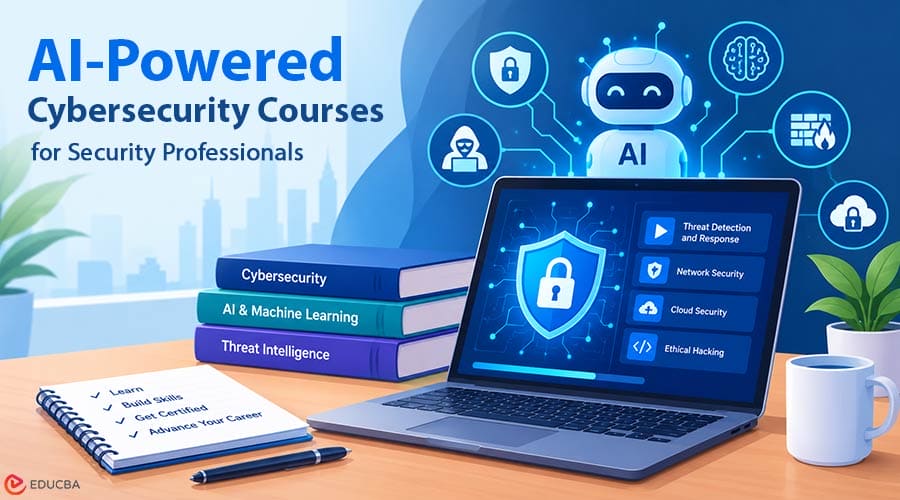
Not long ago, AI in cybersecurity mostly meant detection and triage support. Moving into 2027, the picture looks very different. AI systems inside organizations now act autonomously. Attackers use AI to scale up their attacks. Regulators have also set firm rules for how AI must be governed and used. All of that has changed what security professionals are expected to know, and what AI-powered cybersecurity training needs to cover. The course areas below are the ones tied most closely to these changes. For professionals looking to build these skills, AI-powered cybersecurity courses can provide a structured way to understand AI technologies and their security implications.
Why 2027 is a Turning Point?
Regulation now has a deadline. Under the EU AI Act, the obligations for high-risk AI systems listed in Annex III apply from 2 December 2027, after the Digital Omnibus on AI moved the original date. That leaves a little over a year to get ready.
Autonomous AI has its own security guidance too. The UK’s National Cyber Security Centre has issued interim guidance on managing agentic AI risks, including limiting agent access and enabling rapid shutdowns. And AI attacks are well documented by now. Prompt injection ranks first in the OWASP Top 10 for LLM Applications (2025), while MITRE ATLAS, modeled after ATT&CK, documents adversarial techniques targeting AI systems.
AI Foundations for Security Professionals
Every other AI security skill rests on this one. It covers how AI systems work, from machine learning and deep learning to how large language models produce output, retrieval pipelines access company data, and agents use tools. The aim is not to turn you into a data scientist, but to help you see where the risk really sits.
Learning with InfosecTrain
That foundation is exactly where InfosecTrain’s Artificial Intelligence and GenAI programs begin, and they carry on through every area covered in this guide. The Cybersecurity AI Foundation Program runs for 40 hours and is the starting point for security professionals with no AI background. The Practical AI Security Engineering Program, also 40 hours, takes a build, attack, and defend approach to securing AI systems. Offensive work is covered by AI Penetration Testing Training at 24 hours, the AI Powered Web Application Pentester at 40 hours, the Certified AI Powered Network Pentester at 32 hours, and CEH v13 AI at 40 hours. For operations, the Certified AI SOC Analyst Training runs for 48 hours.
Governance is covered just as thoroughly. The Certified AI Governance Specialist program runs for 48 hours; ISO/IEC 42001 Lead Implementer for 32 hours; Lead Auditor for 40 hours; IAPP AIGP for 24 hours, and ISACA’s AAIA and AAISM for 30 hours each. CompTIA SecAI+ training runs for 40 hours, and the Certified Cloud AI Specialist covers AI workloads in the cloud in 32 hours. Every program is live and instructor-led with hands-on sessions.
Batches run on weekdays and weekends, one-on-one training is available on request, and learners earn CPE credits and keep access to recordings. Each program includes an InfosecTrain course completion certificate, and some prepare you for an external credential, such as IAPP AIGP, ISO/IEC 42001, ISACA AAIA, or CEH v13 AI; the certification body awards the credential after its own exam.
Most In-Demand AI-Powered Cybersecurity Courses
InfosecTrain offers several programs covering different areas of AI and cybersecurity. The programs range from foundational AI security training to specialized courses in penetration testing, security operations, governance, auditing, and cloud security.
1. AI Security Engineering
As organizations roll out chatbots, copilots, and AI agents, someone has to secure them. On the attack side, that means prompt injection, jailbreaking, training data poisoning, and model extraction. On the defense side, it means guardrails, AI gateways, secure retrieval design, access controls on what an agent can reach, and checks on the models and datasets brought in from outside. This one suits security engineers along with AppSec and DevSecOps professionals.
2. AI Penetration Testing
Testing AI systems differs from traditional testing in two ways. Results are not always consistent, so an attack that works only some of the time still counts as a finding. And the weaknesses often sit in prompts, retrieved data, and tool integrations rather than in code. Testers need a strong understanding of the OWASP LLM Top 10 and MITRE ATLAS because they widely use both frameworks for scoping and reporting.
3. AI-Powered Security Operations
Inside the SOC, AI now helps summarise alerts, enrich indicators, and draft reports. The analyst spends less time gathering information and more time checking whether the summary is right. There is a new monitoring problem too. Many detection tools are tuned to spot unusual human behavior, but an AI agent can repeat the same action thousands of times without triggering those patterns.
4. AI Governance and Compliance
With the 2027 date approaching, organizations need people who can run AI risk assessments, impact assessments, and model inventories. ISO/IEC 42001 is the international standard for AI management systems, with training typically covering implementation and auditing. The NIST AI Risk Management Framework is widely used alongside it. For privacy and regulatory roles, IAPP’s AIGP credential focuses on AI governance with strong coverage of the EU AI Act.
5. AI Audit and Security Management
As AI moves into regulated processes, organizations need senior people who can audit it and manage its security. ISACA’s advanced AI credentials reflect that. AAIA focuses on auditing AI systems and requires an active audit certification such as CISA. AAISM focuses on managing AI security across an enterprise and requires an active CISM or CISSP. Both are progression credentials rather than entry points.
6. Vendor-Neutral AI Security Certification
CompTIA launched SecAI+ (exam code CY0-001) in 2026 as a vendor-neutral credential for people with existing cybersecurity experience.
How to Choose the Right Course?
Start with the role you are in today. If AI is new to you, begin with foundations, if you are technical, move toward engineering or penetration testing. If you work in a SOC, focus on AI-powered operations, if you work in GRC, audit, or privacy, look at governance and audit credentials. And if you lead security teams and already hold CISM or CISSP, AAISM is the natural next step.
Final Thoughts
AI sits on both sides of cybersecurity: organizations use it to strengthen defenses, while attackers find ways to use it for attacks. At the same time, regulators are establishing firm rules for AI use. Moving forward, in 2027, AI will continue to change how systems work, how they fail, and what it takes to secure, test, and govern them. For professionals, staying relevant in this field depends on their willingness to adapt and keep building new skills.
No single course works for everyone. A practical starting point is to consider the work you already perform. From there, identify the AI security area that naturally builds on your existing experience and select AI-powered cybersecurity courses that help you develop deeper, job-relevant expertise.
Recommended Articles
We hope this comprehensive guide to AI-powered cybersecurity courses helps you build relevant skills and stay prepared for the evolving cybersecurity landscape. Check out these recommended articles for more insights into AI, cybersecurity, and emerging technology trends.


