
What is Escrow Analysis?
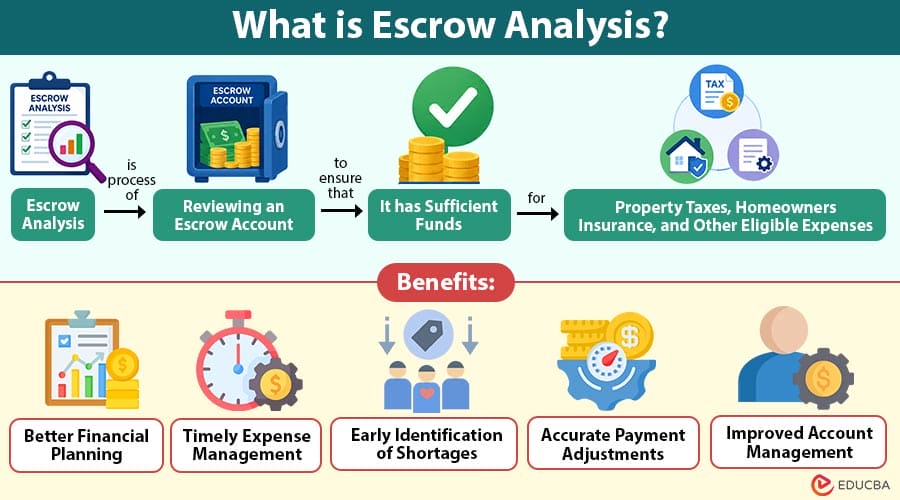
Escrow analysis is the process of reviewing an escrow account to ensure that it has sufficient funds for property taxes, homeowners insurance, and other eligible expenses.
Mortgage lenders or loan servicers generally collect escrow payments from borrowers along with their monthly mortgage payments. They deposit these amounts into an escrow account and later use them to pay expenses such as property taxes and insurance premiums.
An escrow analysis estimates the expected expenses for the upcoming year and compares them with the current account balance and projected deposits. Based on this review, the monthly escrow payment may increase, decrease, or stay the same.
Table of Contents:
Key Takeaways:
- Escrow analysis reviews account balances and projected expenses for upcoming property taxes and insurance payments.
- Mortgage servicers use escrow analysis to calculate appropriate monthly contributions based on expected annual expenses.
- Changes in property taxes, insurance premiums, or shortages can increase or decrease monthly escrow payments.
- Regular escrow analysis helps identify shortages, surpluses, and funding requirements before property expenses become due.
Why is Escrow Analysis Important?
Escrow analysis helps borrowers and mortgage servicers manage recurring property expenses more effectively. Its importance includes:
1. Ensures Timely Payments
An adequately funded escrow account helps ensure property taxes and insurance premiums are paid when due.
2. Reduces Payment Surprises
Regular analysis can identify expense changes before they create significant funding problems in the escrow account.
3. Adjusts for Changing Costs
Insurance rates and property taxes are subject to vary over time. Escrow analysis allows the monthly payment to reflect these changes.
4. Supports Accurate Mortgage Payments
The escrow portion of a mortgage payment is based on expected expenses. Reviewing the account helps align monthly collections with projected obligations.
5. Identifies Shortages and Surpluses
The analysis helps identify whether the account contains insufficient or excess funds based on projected expenses and required balances.
How Does Escrow Analysis Work?
Escrow analysis estimates future expenses and determines how much the servicer should collect from the borrower each month. The process generally includes the following steps:
1. Reviewing the Escrow Account
The mortgage servicer first reviews the current escrow balance, previous deposits, withdrawals, and payments made for property-related expenses.
2. Estimating Future Expenses
The servicer estimates upcoming property taxes, homeowners insurance premiums, and other expenses that are paid through the escrow account. Recent bills and available information may be used to make these estimates.
3. Calculating Required Monthly Contributions
The estimated annual expenses are divided across the required payment period to determine the escrow portion of the monthly mortgage payment.
4. Maintaining a Required Reserve
Depending on the loan and applicable rules, the servicer may maintain a reserve or cushion in the escrow account to help manage unexpected increases in expenses.
5. Identifying a Shortage or Surplus
The servicer compares the projected account balance with the amount needed to make future payments and maintain the required balance. This determines whether the account has a shortage, surplus, or adequate funding.
6. Adjusting the Monthly Payment
If the analysis shows that more money is needed, the monthly escrow contribution may increase. If fewer funds are required, the payment may decrease.
Escrow Analysis Example
Consider a homeowner with the following expected annual expenses:
| Expense | Annual Amount |
| Property Taxes | $4,800 |
| Homeowners Insurance | $1,200 |
| Total | $6,000 |
The expected annual escrow requirement is $6,000.
The monthly escrow contribution would be:
$6,000 ÷ 12 = $500
Therefore, approximately $500 per month would be collected for these expenses, excluding any additional amount required for an escrow cushion or shortage repayment.
Suppose property taxes later increase to $5,400, while insurance remains $1,200. The revised annual requirement becomes $6,600.
The estimated monthly contribution becomes:
$6,600 ÷ 12 = $550
As a result, the escrow portion of the mortgage payment could increase by approximately $50 per month, before considering other adjustments.
Difference Between Escrow Analysis and Escrow Account
The table below shows the key differences between the two:
| Basis | Escrow Analysis | Escrow Account |
| Meaning | Review and calculation of escrow requirements | Account used to hold collected funds |
| Purpose | Determine required funding | Store funds for future payments |
| Activity | Performed periodically | Maintained throughout the loan |
| Focus | Expected expenses and account balance | Collected money and payments |
| Outcome | May change monthly escrow payment | Used to pay eligible expenses |
Benefits of Escrow Analysis
Escrow analysis provides several benefits to borrowers and mortgage servicers.
1. Better Financial Planning
Borrowers can better understand how changing property taxes and insurance costs affect their monthly mortgage payments.
2. Timely Expense Management
Escrow accounts organize recurring property expenses, helping ensure taxes and insurance premiums are paid when due.
3. Early Identification of Shortages
Escrow analysis helps identify potential funding shortages before upcoming property tax or insurance payments become due.
4. Accurate Payment Adjustments
Monthly escrow contributions can be adjusted according to changes in projected property taxes, insurance premiums, and expenses.
5. Improved Account Management
Regular escrow reviews help align collected funds with projected property expenses and maintain sufficient balances for upcoming obligations.
Limitations of Escrow Analysis
Despite its usefulness, escrow analysis has some limitations.
1. Future Expenses Are Estimates
Property taxes and insurance premiums are estimates and may change after the escrow analysis has been completed.
2. Monthly Payments Can Change
Higher escrow requirements can increase the borrower’s total monthly mortgage payment, affecting household budgeting and cash flow.
3. Shortages May Create Additional Costs
An escrow shortage may require higher monthly payments or a separate repayment arrangement to restore sufficient funds.
4. Insurance Changes Can Be Unexpected
Unexpected increases in insurance premiums can significantly affect escrow calculations and raise required monthly contributions.
5. Calculations Can Be Complex
Borrowers may find it difficult to understand how expenses, balances, reserves, and shortages determine final payments.
Who Uses Escrow Analysis?
Below are the key individuals and professionals who use escrow analysis for managing and reviewing mortgage-related payments:
1. Homeowners with Mortgage Escrow Accounts
Homeowners use escrow analysis to understand payment changes and ensure sufficient funds cover property taxes and insurance.
2. Mortgage Borrowers
Mortgage borrowers review escrow analysis statements to understand how taxes, insurance, shortages, and adjustments affect monthly payments.
3. Mortgage Lenders
Mortgage lenders use escrow analysis to monitor account requirements and ensure borrowers maintain sufficient funds for property-related obligations.
4. Mortgage Servicers
Mortgage servicers conduct escrow analysis to calculate required payments, identify shortages, and adjust monthly escrow contributions for borrowers.
5. Real Estate Professionals
Real estate professionals may review escrow information to help clients understand mortgage payments, property expenses, and transaction-related costs.
6. Property Tax and Insurance Administrators
Property tax and insurance administrators use escrow information to coordinate payment amounts, due dates, and changes affecting borrowers’ accounts.
7. Financial Professionals Analyzing Mortgage Payments
Financial professionals use escrow analysis to evaluate mortgage payment changes, projected expenses, account balances, and borrowers’ financial obligations.
Final Thoughts
Escrow analysis is an important mortgage servicing process that evaluates whether an escrow account has sufficient funds to cover future property taxes, insurance premiums, and other eligible expenses. By comparing projected costs with account balances and expected contributions, it helps determine appropriate monthly escrow payments. Changes in taxes, insurance, or previous account balances can create shortages or surpluses and affect the borrower.
Frequently Asked Questions (FAQs)
Q1. How often is an escrow analysis performed?
Answer: Mortgage servicers generally perform escrow analysis periodically, often annually, to reassess projected expenses and determine future payment requirements.
Q2. Does escrow analysis affect the principal or interest portion of a mortgage?
Answer: No. Escrow analysis primarily affects the portion collected for property-related expenses, not the principal and interest components of the loan.
Q3. What documents can help verify an escrow analysis?
Answer: Property tax bills, insurance declarations, mortgage statements, escrow disclosures, payment records, and previous analysis statements can help verify the calculation.
Q4. Can escrow analysis affect the total monthly mortgage payment?
Answer: Yes. Changes in the escrow requirement can increase or decrease the total monthly mortgage payment even when loan terms remain unchanged.
Recommended Articles
We hope that this EDUCBA information on “Escrow Analysis” was beneficial to you. You can view EDUCBA’s recommended articles for more information.


