


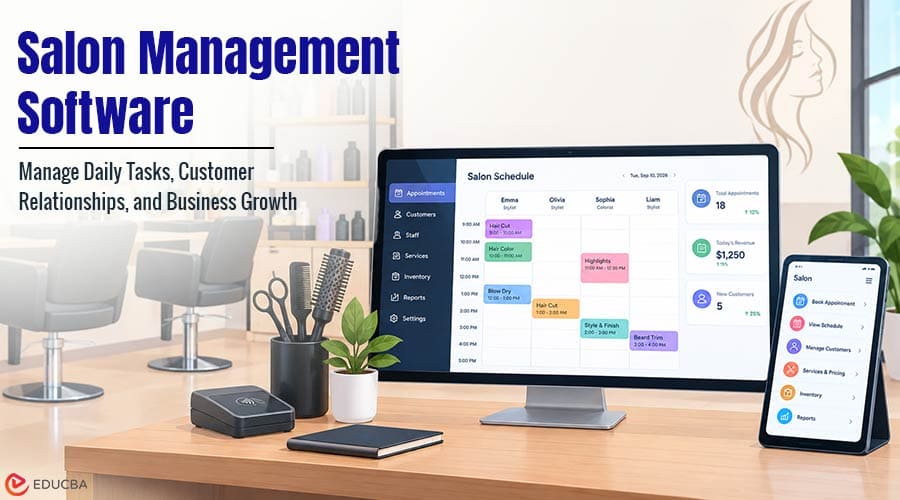
Running a salon is not just about the chair, the scissors, and a full appointment book. It is payroll on Friday, it is a supplier invoice you forgot about. It is the front desk answering phones while checking someone out. Most owners did not open a salon to manage software and spreadsheets. Somehow, that became half the job anyway. Appointment scheduling, staff coordination, payments, client retention, inventory, reporting. Each one is manageable on its own. Pile them together without a system tying them into one place, and they start eating into the week fast. That is where the best salon management software earns its place, not as a nice-to-have, but as the thing that keeps a growing salon from tripping over its own success. Salonist was built around that exact problem: giving salon owners one place to run the business instead of five disconnected ones.
Why Are Salon Management Processes Hard?
Without further ado, here are the challenges that secretly sabotage an owner’s week.
1. Managing Appointments via Multiple Channels
Clients make appointments in several ways. They may call, walk in directly, or message on Instagram. They use whatever online form is available.
- Phone bookings that interrupt whoever picks up
- Walk-ins that need slotting around existing appointments
- Online bookings sitting in a separate system from the in-salon calendar
- Reschedules and cancellations someone has to track down and update everywhere
None of this is hard on its own. It gets hard when it happens five times in one hour.
2. Keeping Staff Schedules Organized
A stylist calls in sick. Someone else has a color appointment at 2 PM that only they can handle. Multiply that across a team of ten or twenty, and a paper schedule stops holding up.
- Shifts and availability that shift week to week
- Appointments that need the right person, not just any open slot
- Conflicts that surface only after a client’s already been double-booked
3. Tracking Sales, Payments, and Daily Revenue
Ask an owner what yesterday’s revenue looked like, split between services and retail, and quite a few will need to check three different places before they can answer. Manual payment tracking, payment methods that do not line up neatly, and no clear read on daily or monthly performance all add up to the same headache: nobody’s really sure of the real number until much later.
4. Maintaining Customer Relationships
Retention quietly drives salon profitability, and it runs on details that are easy to lose without a system. A client’s preferred stylist. Their color formula. Suppose they need another visit but do not get one. Encouraging return visits is more than relying on clients to come back on their own.
Why Salon Management Software is Becoming Essential?
The shift underway across the industry is simple to describe, harder to pull off in practice: salons are moving away from spreadsheets and a pile of separate apps, toward one connected system.
1. A Single Platform for Everyday Salon Activities
With all salon appointments, clients, employees, sales, and reporting in one platform, the entire operation runs on information everyone can see, rather than what the most experienced person remembers. Owners get easier access to operational data and lean a lot less on manual processes that fall apart the moment someone’s out sick.
2. More Insight into Business Activity
An interconnected system helps the business owner get real-time insight into the income, appointments, employee performance, and customer activity. Not a version pieced together from three spreadsheets after the fact.
3. More Consistent Customer Experiences
Automated reminders, faster booking, a bit of personalization. On their own, small things. Over time, they add up. Clients notice when a salon remembers their visit history, and that is often what keeps them coming back.
Why Are Salon Owners Turning to Platforms Such as Salonist?
This is where Salonist fits into the picture, not as a cure-all, but as a platform built around the operational load described above.
1. Appointment Booking Made Easy
All appointment booking, scheduling, and reminders live in one place, minimizing no-shows and scheduling conflicts caused by using multiple platforms.
2. Streamlines Staff Management
Staff schedules, appointment assignments, performance monitoring, and commission management live in the same system the front desk already uses. Shift planning stops depending on a spreadsheet nobody remembers to update.
3. Makes Customer Management Easier
Customer profiles, appointment history, and preferences sit under one client name. Staff get the context to serve someone well, and owners get a foundation for real follow-up instead of guesswork.
4. Streamlines Payments and Sales
Billing, payment processing, service and product sales, and transaction tracking flow through the same platform, so owners get better financial visibility without reconciling numbers by hand at the end of the day.
5. Supports Inventory Management
This is also where retail comes in, and retail is where a lot of salons leave money on the table. Tracking salon products and monitoring stock levels through the same system used for bookings makes it easier to avoid shortages and overstocking, two problems that directly cap salon retail sales. A salon that knows exactly what is on the shelf is in a far better position to run a real salon retail strategy instead of an occasional one.
6. Gives Owners Better Business Insights
Reports and analytics covering revenue, customer trends, and staff performance turn salon management into a matter of data, not just gut instinct applied to a busy week.
How Salon Management Software Can Improve the Customer Experience?
Smoother back-end processes result in a better front-end customer experience, whether the client realizes it or not. Self-service online booking handles bookings outside business hours without waiting for a callback or an available receptionist. Text and email messages serve to remind clients about appointments and eliminate the number of vacant seats caused by no-shows.
Administrative tasks take less time, speeding up service and improving coordination between reception and the floor. The history of the customer can be used for even more personalized communication – promotions and loyalty programs, which would be virtually impossible to conduct without client records.
How Salonist Helps Salon Owners Save Time and Reduce Manual Work?
Once the system is implemented, notifications, appointments, client communication, and reports will be automated, so no one has to remind themselves to send them. Centralized, real-time calendars mean no more time-wasting double-bookings. And every minute not spent filling out paper is a minute being put to use for clients, training employees, or planning future growth. That is how you make money, not just stay in business.
Salon Management Software vs. Traditional Salon Management
The contrast is clear when you lay them side by side.
| Traditional Approach | With Salon Management Software |
| Manual appointment books | Digital appointment scheduling |
| Phone-based bookings | Online and automated bookings |
| Manual customer records | Centralized customer profiles |
| Spreadsheets for reporting | Automated reports and analytics |
| Manual reminders | Automated notifications |
| Separate operational processes | Centralized management |
Is Salonist the Right Salon Management Software for Your Business?
The fit depends less on salon size and more on where the operational pain actually sits. It tends to make sense for salons trying to cut down on administrative hours, businesses ready to get serious about customer retention, growing or multi-location salons where every scheduling problem multiplies with each new chair, and owners who want a straight answer to “how did we do this month” without digging through three spreadsheets first. Salon upselling and salon upsell ideas, in particular, only work when staff actually have the client history to act on. That is groundwork a connected system builds by default.
Final Thoughts
The salons managing their growth well are not necessarily the busiest ones. These are the ones who have quit seeing appointments, staff, billing, sales, and accounting as five distinct tasks. Integration is not just about using technology because it is new. It is about removing the friction that quietly caps how much a salon can grow.
Salon management software such as Salonist was built around that exact shift, connecting the day-to-day work of running a salon so owners spend less time chasing information and more time acting on it. For a closer look at another piece of the profitability puzzle, pricing your services correctly matters just as much as managing operations well.
Recommended Articles
We hope this comprehensive guide to salon management software helps you streamline your salon operations and improve business efficiency. Check out these recommended articles for more insights and strategies to grow and manage your salon successfully.

