


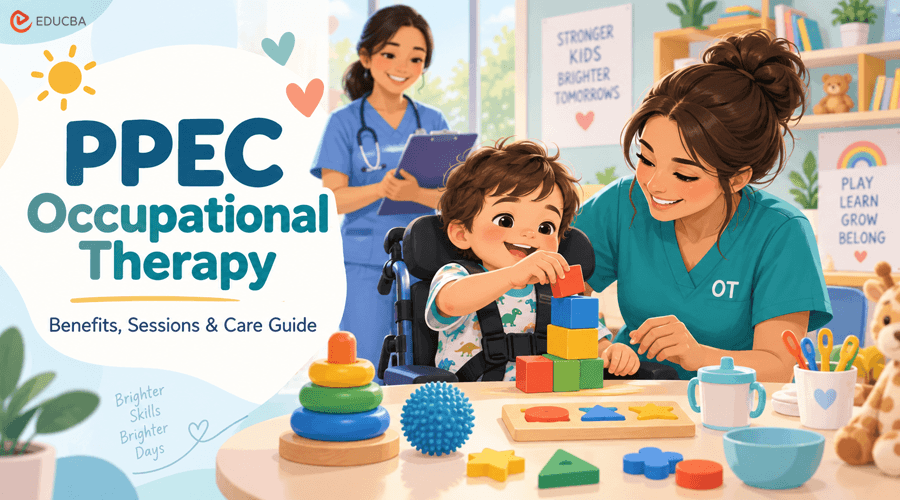
For children with complex medical needs, PPEC occupational therapy is often more than another appointment added to an already demanding schedule. Inside a PPEC program, occupational therapy becomes part of the child’s day rather than an outside obligation. Therapists can work closely with the nursing team and stay informed about the child’s medical history, daily routine, and changing needs.
Why PPEC Occupational Therapy Matters for Medically Complex Children?
Occupational therapy focuses on the skills children need for daily life: feeding, dressing, fine motor coordination, sensory processing, and the small physical tasks that build independence over time. For children with conditions like cerebral palsy, chronic lung disease related to premature birth, or developmental delays tied to a genetic syndrome, these skills often develop more slowly or require more deliberate support than they would for a typically developing child.
PPEC occupational therapy considers these developmental goals while also accounting for the child’s medical needs. An occupational therapist working with a medically complex child may need to account for factors that a general OT session might not, such as a feeding tube alongside oral feeding goals, limited range of motion tied to equipment like a tracheostomy collar, or sensory sensitivities connected to a neurological condition. A PPEC setting supports this combination of clinical complexity and developmental focus.
How PPEC Occupational Therapy Integrates With Nursing Care?
The advantage of receiving PPEC occupational therapy within a PPEC program, rather than through a separate outpatient clinic, comes down to coordination. A therapist in the same building as a child’s nursing team can adjust a session around medication schedules, respiratory treatment, or feeding times without disrupting either.
When a nurse notices a change in a child’s hand strength or feeding tolerance, the nurse can inform the therapist the same day instead of waiting weeks for a scheduled report.
This kind of real-time communication also works in the other direction. A therapist who notices a child struggling with a new skill, such as holding a spoon or tolerating a new food texture, can flag that observation to the nursing team immediately, so feeding plans and clinical care stay aligned with developmental progress rather than operating on separate tracks.
What a Typical PPEC Occupational Therapy Session Includes?
Sessions are built around each child’s individual goals. However, common areas of focus include fine motor skill development through play-based activities, feeding therapy to build tolerance for new textures or improve oral motor coordination, sensory integration activities for children who are over- or under-responsive to touch, sound, or movement, and self-care skills such as assisted dressing or hand-washing routines adapted to a child’s physical abilities.
Because PPEC occupational therapy takes place during the PPEC day, therapists can incorporate it into the child’s regular schedule without requiring a separate trip or disrupting their routine.
How Progress in PPEC Occupational Therapy is Tracked and Adjusted?
A strong PPEC program treats occupational therapy as an ongoing, evolving process rather than a fixed set of exercises. Goals are typically reviewed regularly, with input from the child’s nursing team, prescribing physician, and family. As a result, the plan reflects both developmental progress and any changes in the child’s medical status. Families should receive regular updates on their child’s progress and clear explanations of how therapists adjust goals over time, rather than vague assurances that therapy is “going well.”
Florida Medicaid may cover PPEC occupational therapy delivered within a licensed program when a physician prescribes the therapy as medically necessary. However, authorization requirements and covered frequency vary by plan, so confirming specifics directly with a program’s intake team remains the most reliable approach.
Questions Worth Asking About a Program’s Therapy Services
Families evaluating a PPEC program should ask how the program staffs its occupational therapy services, whether therapists have specialized training in pediatric complex care, how often therapists conduct sessions, and how the team communicates therapy goals to families. A program that can describe its therapy approach in specific, concrete terms, rather than listing it as a generic feature, is usually delivering a more substantive service.
Angels of Care operates PPEC centers across Florida that integrate occupational therapy directly into each child’s daily program, alongside skilled nursing, physical and speech therapy, and family coordination. Families can call (855) 45-ANGEL to ask about therapy services at a nearby center.
Recommended Articles
We hope this guide helps you understand PPEC occupational therapy and how it supports the developmental and daily living needs of medically complex children. Explore our recommended articles for more insights on pediatric therapy, PPEC care, occupational therapy, child development, and specialized healthcare services.

