


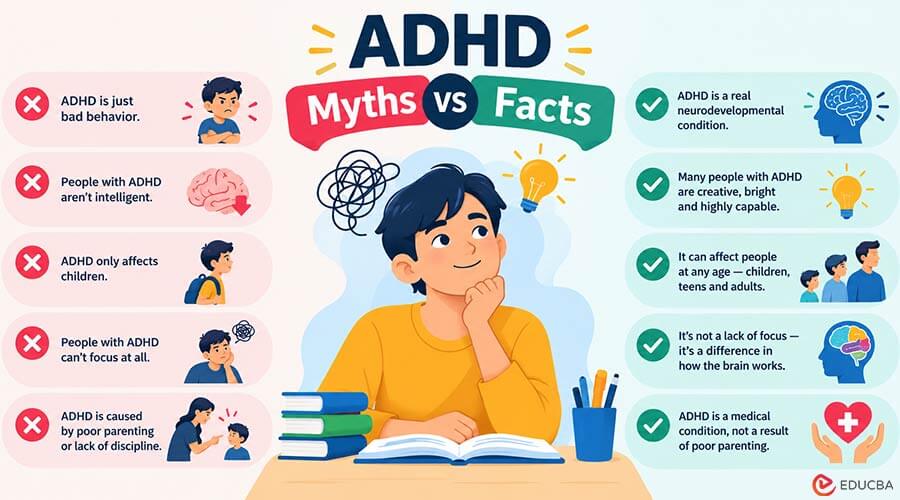
One of the most researched and often misdiagnosed mental health disorders is Attention-Deficit/Hyperactivity Disorder (ADHD). Despite decades of scientific evidence, ADHD myths vs facts continue to be confused in classrooms, workplaces, healthcare settings, and online discussions.
These misconceptions can delay diagnosis, discourage people from seeking help, and reinforce stigma around mental health care. Understanding what science actually says about ADHD helps individuals, parents, and educators recognize symptoms earlier and support effective treatment. Separating fact from fiction is an important first step toward raising awareness and supporting better care.
What is ADHD?
ADHD, a neurodevelopmental disorder that can impact executive functioning, attention, and impulse control. The CDC reports that millions of children and adults in the United States have been diagnosed with ADHD. The condition typically begins in childhood but often continues into adulthood.
ADHD affects brain systems responsible for:
- Sustained attention
- Emotional regulation
- Planning and organization
- Impulse control
Research shows that ADHD is strongly linked to genetics, brain chemistry, and neurological development. It is not the result of poor parenting, laziness, or a lack of discipline.
Why ADHD Misconceptions Persist?
ADHD symptoms can vary widely between individuals. Some people appear restless and impulsive, while others struggle mainly with attention and organization. Because symptoms do not always look the same, ADHD is often misunderstood or dismissed.
Media portrayals and outdated stereotypes have also contributed to confusion about what ADHD actually involves. Modern neuroscience, however, clearly identifies ADHD as a biologically based condition affecting brain function.
ADHD Myths vs Facts
Understanding common myths can help reduce stigma and improve awareness.
| Myth | Scientific Fact |
| ADHD is caused by bad parenting | Research shows that ADHD has strong genetic and neurological components. |
| Only children have ADHD | Many adults continue to experience ADHD symptoms later in their lives. |
| People with ADHD cannot focus | Many individuals experience hyperfocus on tasks they find engaging. |
| ADHD medication is harmful | When prescribed appropriately, medication and therapy are evidence-based treatments. |
| ADHD is overdiagnosed | Studies suggest ADHD is frequently underdiagnosed, particularly in adults and women. |
| ADHD is simply a behavioral problem | ADHD is associated with differences in brain networks involved in attention and impulse control. |
Scientific evidence consistently supports ADHD as a legitimate medical condition.
What Science Says About ADHD Causes?
Researchers agree that ADHD develops from a combination of biological and environmental factors.
1. Genetics
Genetic studies show ADHD often runs in families. Children are far more likely to get ADHD if they have a parent with the disorder.
2. Brain Chemistry
Variations in neurotransmitters like dopamine and norepinephrine impact motivation and attention control.
3. Brain Development
Imaging studies show variations in brain areas involved in executive functioning, including the prefrontal cortex.
4. Environmental Influences
Certain factors may contribute to symptom development or severity, including:
- Prenatal exposure to toxins
- Premature birth
- Early childhood stress
These influences interact with genetics but do not independently cause ADHD.
How ADHD Appears in Daily Life?
ADHD symptoms typically fall into three categories.
Attention Challenges
- Difficulty maintaining focus on tasks
- Forgetfulness and disorganization
- Trouble completing projects
Impulsivity
- Interrupting conversations
- Acting before thinking
- Difficulty waiting
Hyperactivity
- Restlessness or fidgeting
- Difficulty remaining seated
- Constant movement or activity
In adults, ADHD may appear as chronic procrastination, time management difficulties, or emotional dysregulation. Recognizing these different presentations is another important part of understanding ADHD myths vs facts.
Why Early Diagnosis Matters?
Undiagnosed ADHD can affect academic performance, workplace productivity, and relationships. Early recognition allows individuals to access tools that support better focus, organization, and emotional regulation.
Treatment plans often include:
- Behavioral therapy
- Skill-building strategies
- Medication when appropriate
- Lifestyle adjustments
For some individuals, accessing online ADHD treatment has made evaluations and follow-up care more convenient, especially for those with busy schedules or limited access to specialists.
Modern Approaches to ADHD Care
ADHD management usually combines multiple approaches to address both behavioral patterns and neurological factors.
Evidence-based strategies include:
- Cognitive Behavioral Therapy (CBT)
- Executive function coaching
- Medication management
- Structured routines and behavioral strategies
In addition to traditional clinical care, many healthcare providers now offer virtual mental health treatment, allowing patients to connect with licensed clinicians through secure telehealth platforms.
Strengths Often Associated With ADHD
Although ADHD presents challenges, many individuals develop valuable strengths.
Common positive traits include:
- Creative thinking
- High energy and enthusiasm
- Strong problem-solving abilities
- Ability to think quickly under pressure
With proper support and understanding, individuals with ADHD can thrive academically, professionally, and socially.
Frequently Asked Questions (FAQs)
Q1. Is ADHD a real medical condition?
Answer: Yes. ADHD is recognized by major medical organizations such as the CDC and the American Psychiatric Association.
Q2. Can adults have ADHD?
Answer: Yes. Many adults live with ADHD symptoms, even if they were not diagnosed during childhood.
Q3. What causes ADHD?
Answer: ADHD is primarily influenced by genetics and differences in brain chemistry that affect attention regulation and impulse control.
Q4. Are ADHD medications safe?
Answer: When prescribed and monitored by healthcare professionals, ADHD medications are considered safe and effective for many individuals.
Q5. Can therapy help manage ADHD?
Answer: Yes. Behavioral therapy and executive-functioning strategies help individuals develop skills in organization, focus, and emotional regulation.
Q6. Does ADHD affect intelligence?
Answer: No. ADHD does not affect intelligence. People with ADHD often show strong creativity and problem-solving skills.
Recommended Articles
We hope this guide to ADHD myths vs facts helps you better understand the condition and separate common misconceptions from scientific evidence. Check out these recommended articles for more insights into mental health, and effective care approaches.

