


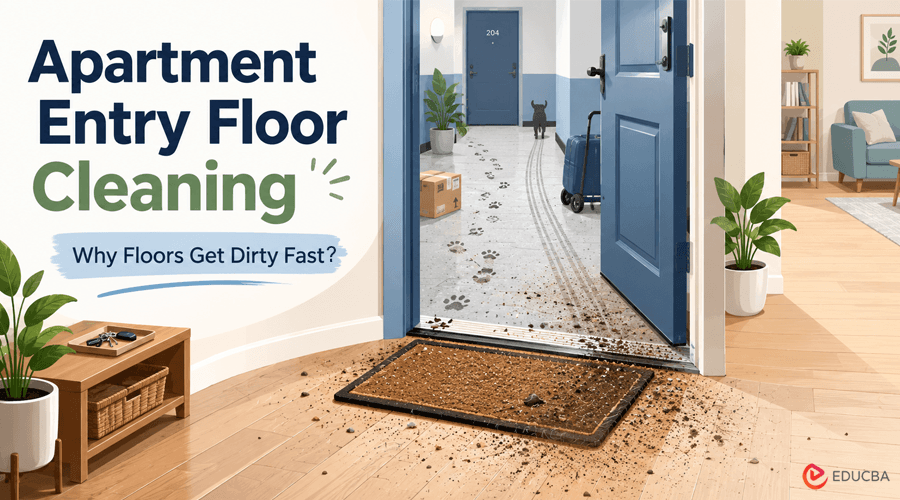
Apartment entry floors can seem frustratingly difficult to keep clean. The rest of the home may still look fine, yet the first few feet inside the door develop grit, hair, dust, or dark specks only a short time after vacuuming.
The reason often starts outside the apartment.
Residents, visitors, delivery workers, pets, building staff, carts, and luggage constantly use a shared hallway. Each trip adds or moves small amounts of debris. The doorway then becomes the point where that common-area traffic begins crossing into private space.
Rather than treating the entry as ordinary flooring, it helps to read it as a transition zone. The way dirt appears there can show how far hallway activity is reaching into private space. Understanding this pattern can also make apartment entry floor cleaning more targeted and effective.
Hallway Traffic Creates a Constant Supply
A private corridor may see the same few people each day. A shared building hallway can have activity from morning until night.
Shoes bring in dried soil and sidewalk grit. Wheels from carts and strollers carry material from lobbies, elevators, garages, and loading areas. Pets contribute hair and particles from both indoors and outdoors.
Most of this material is too small to notice individually.
It settles across the common floor until another footstep, wheel, or burst of air moves it again.
SQKY Cleaning may therefore find that the floor just inside an apartment needs attention sooner than quieter rooms even when the resident has not changed any cleaning habits.
This is why apartment entry floor cleaning often requires more frequent attention than cleaning floors in bedrooms or other low-traffic areas.
The First Few Feet Act Like a Dirt Gradient
Hallway debris rarely spreads evenly through the apartment.
The heaviest concentration is usually closest to the threshold. From there, it becomes lighter as people walk farther inside.
That creates a useful pattern.
If grit is obvious beside the door but disappears after three or four feet, the problem is still fairly contained. If the same material shows up beside the sofa or along a hallway deeper inside the unit, the transfer path has widened.
Watching where that dirty band ends is more informative than simply deciding the entire floor needs cleaning.
For apartment entry floor cleaning, this dirt gradient can help identify the areas that need the most attention. Instead of cleaning every part of the floor at the same frequency, residents can focus on the areas where hallway debris is actually accumulating.
Elevators and Stairwells Change the Amount Arriving at the Door
Two apartments on the same floor may not collect dirt at the same rate.
A unit beside an elevator receives more passing traffic than one at the far end of a quiet corridor. Stairwell doors can have a similar effect, especially where residents use them frequently.
Carts, luggage, grocery deliveries, and maintenance equipment often pause near these locations.
That creates repeated movement in a small section of hallway.
Air pressure from opening elevator or stair doors can also disturb lightweight dust and push it toward nearby apartments.
Position within the building can therefore influence entry-floor cleaning needs as much as what happens inside the home. Apartments near elevators, stairwells, or busy common areas may benefit from a more consistent apartment entry floor cleaning routine.
Packages Can Bypass the Mat Completely
Delivery boxes introduce a different path.
A package may sit on a loading dock, vehicle floor, lobby, elevator, or shared corridor before reaching the apartment.
Setting that box directly on an interior floor can bring some of that material past the normal shoe-removal point.
Opening packages near the entrance can help keep cardboard fragments, dust, and packing debris from traveling deeper inside.
This is also a useful place for a NYC cleaning service to focus when the visible dirty band extends beyond the mat, because the cleaner can follow the actual transfer path rather than assuming all floor soil came from ordinary foot traffic.
The doorway tells you where the common-area mess stopped being common-area mess.
A Mat Can Become Part of the Problem
Entry mats help only while they are still trapping debris.
Once the fibers are loaded with grit and hair, every step can release some of that material back onto the surrounding floor.
Lift the mat occasionally.
Vacuum underneath it and along the edges, where fine particles often collect in a narrow ring.
If the mat itself stays dirty for too long, cleaning the floor around it will have only a short-lived effect.
The same principle applies to shoe trays. Material knocked from soles can accumulate inside them and then spill back onto the floor.
As part of regular apartment entry floor cleaning, cleaning the mat and the area underneath it is just as important as vacuuming or mopping the visible flooring.
Socks and Indoor Slippers Can Continue the Transfer
Removing shoes at the door reduces outdoor dirt, but it does not stop everything.
If the entry floor already contains fine grit, socks or indoor slippers can pick it up and carry it farther into the apartment.
That is why the cleanliness of the transition zone matters.
A shoe-free household can still develop a trail from the doorway to the kitchen or living room if that first patch of floor is neglected.
Keeping the immediate entry cleaner often does more than repeatedly vacuuming distant rooms after the particles have already traveled.
A consistent apartment entry floor cleaning routine can therefore help prevent small amounts of grit from becoming a larger indoor cleaning problem.
Pets Create Their Own Route
Pets add another layer because they cross the threshold differently from people.
Paws may collect moisture or grit, while fur can carry fine dust from shared corridors. Once inside, those particles can transfer to rugs, pet beds, upholstery, and flooring.
A towel near the door can help after wet walks.
For dry everyday traffic, pay attention to the path from the entrance to the animal’s usual resting spot.
That route may form its own narrow extension of the entry dirt gradient.
Baseboards Show Where Lightweight Material Ends Up
Not all hallway debris stays in the center of the floor.
Air movement and foot traffic push lighter material outward toward walls.
A dusty baseboard beside the entrance can therefore reveal repeated movement even when the open floor has just been cleaned.
Compare the trim near the doorway with trim farther inside.
If the difference is obvious, the entry is still acting as the main collection point.
Vacuuming loose material from those edges is usually cleaner than immediately wiping it into the paint.
Including baseboards, corners, and floor edges in apartment entry floor cleaning can help remove particles that would otherwise remain around the main traffic area.
Clean the Path According to How Far It Reaches
The first traffic route does not need the same schedule as the entire apartment.
Some weeks, only the threshold and mat may need attention. At other times, delivery traffic, wet weather, pets, or building activity may push debris farther.
Follow what is actually there.
SQKY Cleaning can also focus on the section where the hallway-to-apartment transfer is most noticeable, instead of giving equal attention to flooring that is already staying clean.
That keeps the cleaning proportional to the problem.
Treat the Doorway as a Boundary You Maintain
Residents cannot control how often the shared hallway is used.
They can control what happens once that material reaches the apartment.
A maintained mat, contained shoes, packages handled near the door, and a cleaner first walking path all reduce how far common-area dirt travels.
The important clue is the gradient from the threshold inward.
When the dirty band stays short, the rest of the apartment is easier to maintain. When it keeps extending, the entry routine needs attention before the debris becomes a whole-home floor problem.
Ultimately, apartment entry floor cleaning works best when you treat the doorway as a maintained boundary between the shared building environment and the private living space. By watching where dirt collects and addressing the main transfer points, residents can keep entry floors cleaner for longer.
Recommended Articles
We hope this guide helps you understand apartment entry floor cleaning, from managing hallway dirt and traffic to keeping mats, doorways, and high-traffic areas cleaner for longer. Explore these recommended articles for more insights on apartment cleaning, entryway maintenance, floor care, and practical cleaning tips.

