


What is Per Diem?
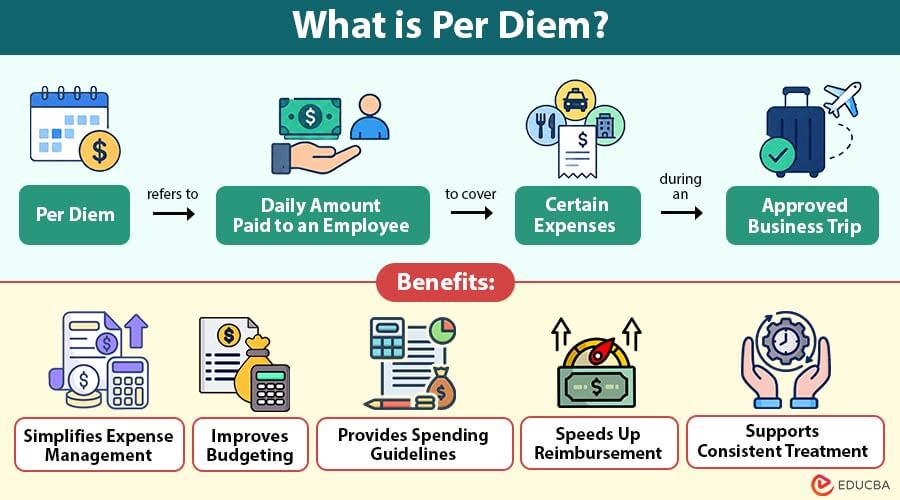
Per diem refers to a daily amount paid to an employee to cover certain expenses during an approved business trip. The term comes from Latin and means “per day.”
Instead of reimbursing every individual expense, an employer may provide a predetermined daily allowance for costs such as meals, lodging, transportation, and incidental expenses. The exact amount and expenses covered depend on the company’s travel policy, destination, and applicable regulations.
For example, if an employee travels to another city for five days and the company’s approved per diem rate is ₹3,000 per day for meals and incidental expenses, the employee may receive ₹15,000 for the trip.
Per diem simplifies expense management because employees know how much they can spend, while businesses can forecast travel expenses more easily.
Table of Contents:
- Meaning
- Working
- What Expenses Does Per Diem Cover?
- Types
- Benefits
- Challenges
- How Companies Determine Per Diem Rates?
- Example
Key Takeaways:
- Per diem provides employees with predetermined daily allowances for eligible business travel expenses.
- Companies use standardized per diem rates to simplify budgeting and manage travel expenses efficiently.
- Clear policies define eligible expenses, rates, partial-day allowances, documentation, and reimbursement procedures for employees.
- Regularly reviewing per diem rates helps organizations maintain fair allowances while controlling business travel costs.
How Does Per Diem Work?
A company generally sets per diem rates based on the destination, expense type, and trip length. Before traveling, an employee may receive the applicable allowance or have the amount calculated for reimbursement.
The process typically involves several steps:
1. Travel Approval
The employee obtains approval for the business trip, confirming the destination, travel dates, purpose, and expected duration.
2. Rate Determination
The company identifies the appropriate daily allowance based on destination, expense category, travel policy, and applicable reimbursement limits.
3. Allowance Calculation
The company calculates the total per diem by multiplying the approved daily rate by eligible travel days.
4. Payment or Reimbursement
The employee receives the approved per diem allowance before, during, or after the business trip, according to company policy.
5. Expense Review
The company reviews the payment or reimbursement to ensure expenses comply with internal policies and applicable regulations.
What Expenses Does Per Diem Cover?
Per diem policies vary between organizations. Common eligible expenses include:
1. Meals
A meal allowance can cover breakfast, lunch, dinner, and other reasonable food expenses incurred during business travel.
2. Lodging
Some per diem programs include accommodation costs. The employer may establish a separate lodging rate based on the destination.
3. Transportation
Depending on the policy, certain local transportation expenses may be covered, including taxis, public transportation, or other approved travel within the business destination.
4. Incidental Expenses
Incidental costs may include small expenses associated with business travel, such as tips or other minor approved costs.
Types of Per Diem
Per diem can be structured in different ways depending on an organization’s requirements.
1. Meals and Incidental Expenses
This type covers food and small incidental costs while an employee is traveling for work. It is commonly separated from accommodation expenses.
2. Lodging Per Diem
Lodging per diem provides a daily allowance specifically for accommodation. Rates vary significantly by destination.
3. Full Per Diem
A full per diem may combine multiple eligible travel expenses into one daily allowance. This approach can simplify budgeting and administration.
4. Partial Per Diem
Employees may receive a reduced allowance when some expenses are already covered. For example, if a conference provides lunch and dinner, the employee’s meal allowance may be adjusted according to company policy.
Benefits of Per Diem
Per diem can benefit both employers and employees.
1. Simplifies Expense Management
A fixed daily allowance reduces the need to process numerous small expense claims. This can save finance and accounting teams administrative time.
2. Improves Budgeting
Companies can estimate travel expenses more easily with standardized daily rates. This supports more predictable travel budgets.
3. Provides Spending Guidelines
Employees clearly understand how much they can spend on eligible expenses. This can reduce confusion during business trips.
4. Speeds Up Reimbursement
When employees do not need to submit detailed receipts for every eligible expense, organizations can process travel-related payments more efficiently.
5. Supports Consistent Treatment
Standardized rates help organizations apply similar travel policies to employees traveling to the same destinations under similar circumstances.
Challenges of Per Diem
Although per diem can simplify travel management, it also has potential challenges.
1. Rates May Not Match Actual Costs
A fixed allowance may be higher or lower than an employee’s actual expenses. In expensive destinations, employees may find the allowance insufficient, while in lower-cost locations, they may spend less than the available amount.
2. Policy Complexity
Companies must clearly define eligible expenses, daily rates, partial-day rules, and exceptions. Poorly written policies can create confusion.
3. Compliance Requirements
Per diem payments may have accounting, tax, or regulatory implications depending on the country, jurisdiction, and circumstances. Organizations should review applicable requirements when designing their policies.
4. Employee Disputes
Employees may question rates when costs vary significantly between locations or when unexpected expenses arise during travel.
How Companies Determine Per Diem Rates?
Organizations consider several factors when establishing appropriate per diem rates.
1. Destination
Major cities and expensive locations generally require higher allowances because employees face greater daily travel expenses there.
2. Travel Purpose
Conferences, client meetings, training programs, and other business trips may require different spending levels.
3. Company Budget
Organizations balance reasonable employee allowances with available budgets to maintain cost control and financial efficiency.
4. Historical Expenses
Reviewing previous travel expenses helps companies establish realistic per diem rates based on actual employee spending patterns.
5. Local Costs
Companies consider local food, accommodation, transportation, and other expenses when determining suitable daily allowance amounts.
Per Diem Example
Consider an employee traveling from Mumbai to Bengaluru for four business days.
Suppose the company provides a daily meal and incidental allowance of ₹2,000.
The employee’s allowance would be:
₹2,000 × 4 days = ₹8,000
If the company reimburses accommodation separately, it may handle the lodging expense independently.
If the employee receives a company-provided lunch on one day, the company’s policy may require reducing the applicable meal allowance for that day.
This example shows why clear rules matter when calculating per diem.
Final Thoughts
Per diem simplifies employee travel expense management by providing predetermined daily allowances for eligible costs. Clear policies covering rates, expenses, partial days, documentation, and exceptions improve consistency and control. Regular rate reviews and expense management technology can reduce administrative work while balancing employee convenience, budgeting needs, and efficient business travel management.
Frequently Asked Questions (FAQs)
Q1. Can freelancers or contractors receive per diem?
Answer: Yes. A business may provide travel allowances to freelancers or contractors when their work requires approved business travel, subject to the terms of their agreement.
Q2. Can per diem be provided for international business trips?
Answer: Yes. Companies can establish separate rates for international travel to account for differences in local costs, currencies, and travel requirements.
Q3. What happens to unused per diem money?
Answer: The treatment of unused funds depends on the company’s policy. Employees may be allowed to retain the difference, return excess funds, or follow a specified reconciliation process.
Q4. Can an employee receive per diem for a same-day business trip?
Answer: Some companies provide a reduced allowance for same-day travel, while others may not provide per diem unless the employee meets specific travel-duration or distance requirements.
Recommended Articles
We hope that this EDUCBA information on “Per Diem” was beneficial to you. You can view EDUCBA’s recommended articles for more information.


