


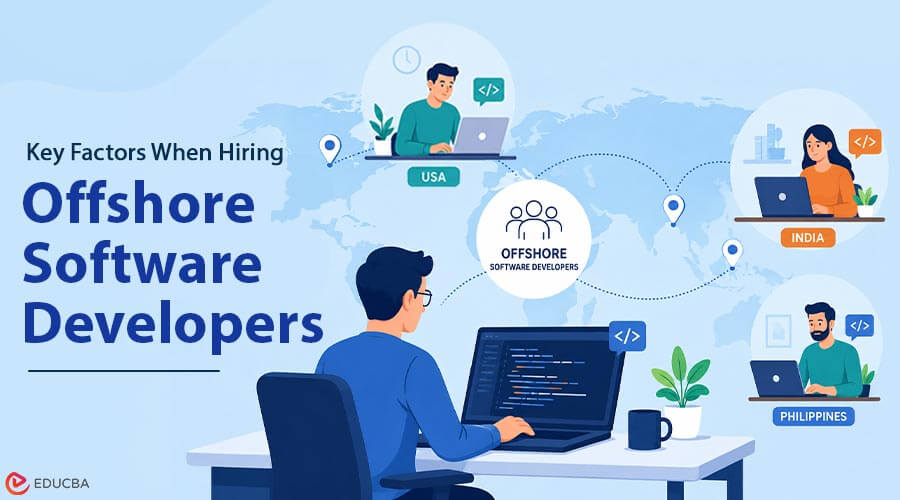
Hiring offshore software developers can widen your access to talent and give your product team more flexibility as priorities change. The harder part is not finding developers who know the right frameworks. It is finding people who can become dependable contributors once the initial onboarding period is over. That makes long-term offshore hiring a question of judgment, ownership, and working style as much as technical ability. The strongest developers do not simply complete assigned tickets. They learn the product, understand trade-offs, and gradually reduce the supervision your internal team needs to provide.
Define the Ownership Gap Before Hiring Offshore Software Developers
Before reviewing profiles, decide what problem the new developer should solve. A team that needs additional execution capacity should hire differently from one that also needs stronger ownership around delivery.
Use the role definition to establish expectations early:
- Execution-focused roles need strong implementation skills within a defined stack.
- Service ownership roles require better architectural judgment and decision-making.
- Distributed team roles need developers who can clearly communicate progress and blockers.
- Higher-autonomy roles require people who know when to act independently and when to escalate.
This distinction matters because adding developers does not automatically reduce pressure on engineering managers. The right hire should match the level of responsibility your organization actually needs.
Test How They Think When the Answer is Not Obvious
A resume can confirm that a developer has used React, Python, or AWS. It cannot tell you how that person will respond when the safest technical choice conflicts with the fastest one. Use interview scenarios that resemble real product decisions.
Ask how the candidate would:
- Modify a feature connected to a legacy service
- Handle a requirement that conflicts with the current architecture
- Respond when the quickest implementation creates maintenance concerns
- Decide when technical debt is acceptable
- Raise concerns about an unrealistic delivery expectation
Pay particular attention to what happens before the answer. Developers who ask about constraints, existing architecture, and business impact usually reveal more useful engineering judgment than candidates who immediately prescribe a solution.
Replace Artificial Coding Tests With Work That Resembles the Job
Technical assessments work best when they reflect the decisions the developer will make after joining. Algorithm exercises can test fundamentals, but often reveal less about maintaining a real codebase, working through ambiguity, or responding to review. A practical assessment can show much more.
Consider evaluating:
- Requirement interpretation
- Code structure and readability
- Testing choices
- Assumptions and trade-offs
- Response to review comments
- Ability to improve an initial solution
If you are assessing a managed team rather than individual developers, evaluate the structure around them too. Innostax, for example, organizes managed engineering teams around a Tech Lead who provides technical oversight and coordinates execution. Whatever provider you choose, clarify who reviews decisions and keeps delivery moving.
Treat Communication as Part of Technical Performance
Distributed engineering can quickly expose weak communication. A developer may be technically capable but still deliver slowly if every clarification requires another meeting or blockers remain invisible until a deadline is affected.
Ask candidates how they have handled:
- Technical disagreements
- Unclear requirements
- Production issues
- Escalations
- Cross-team dependencies
- Handoffs between time zones
Written communication deserves equal attention. Pull-request comments, documentation, and status updates often carry more context across an offshore team than meetings do. A developer who can clearly explain what changed, why it changed, and what remains unresolved is easier to work with at scale.
Review Code as Though You Will Maintain It Next Year
Code should not be judged only on whether it produces the expected output. Long-term hiring requires you to consider what happens after other developers, integrations, and users begin depending on it.
When reviewing a candidate’s work, look at:
- Error handling
- Testability
- Dependency choices
- Security considerations
- Maintainability
- Readability
- Behavior under failure or increased load
Then ask the developer to explain those decisions. The conversation often matters more than the code itself because it shows whether the candidate understands the operational consequences of what they build.
Use the First 90 Days to Test Growing Independence
Do not treat the hiring decision as complete on the developer’s first day. The first 90 days provide a better view of long-term fit than most interview processes can.
A useful progression may look like this:
- Start with contained work that exposes the developer to the product.
- Expand into ownership of a defined feature or service.
- Review communication and technical decisions regularly.
- Track how often routine questions still require internal escalation.
- Increase responsibility as product understanding improves.
The goal is not simply faster delivery by day 90. It is greater independence. A successful hire should need less direction as familiarity with the product increases.
Hire for the Contributor You Will Need Six Months From Now
When you hire offshore software developers for a long-term engagement, technical proficiency is only the entry requirement. The more valuable question is whether the developer can absorb context, make increasingly sound decisions, and become easier to trust with meaningful engineering responsibility. That is why the strongest hiring process looks beyond stack familiarity and hourly rates.
Define the ownership you need, test candidates against realistic work, and use the first 90 days to confirm that independence is increasing. Done well, offshore hiring adds more than development capacity. It gives your product organization engineering capability that becomes more useful as the relationship matures.
Recommended Articles
We hope this guide to offshore software developers helps you make confident hiring decisions and build a dependable development team. Check out these recommended articles for more insights and strategies to strengthen your software development approach.

