


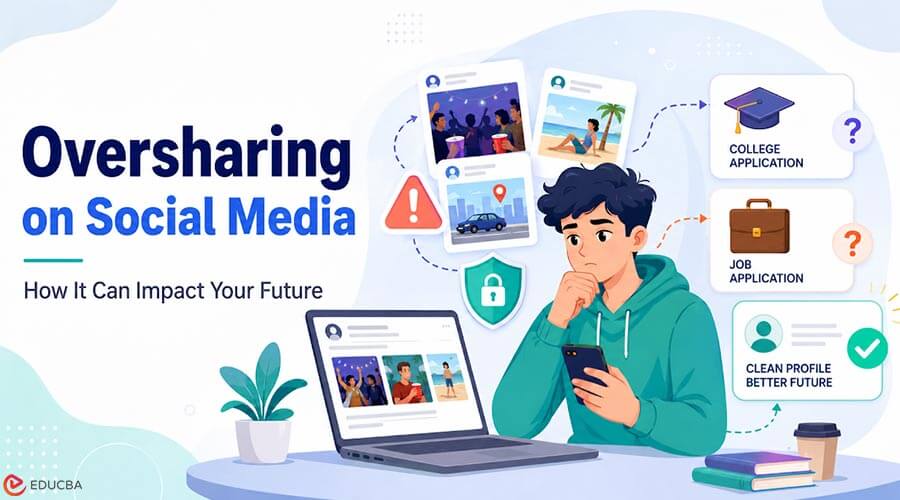
Social media has become an important part of everyday life. Students and young professionals use platforms such as Instagram, TikTok, LinkedIn, Facebook, and X to communicate, share experiences, build communities, and express their opinions. However, what seems like a harmless post today can remain accessible long after its original context disappears. Oversharing on social media can affect more than your online reputation. Public posts may sometimes influence how colleges, employers, or other organizations perceive an applicant. At the same time, sharing too much personal information can create privacy and security risks.
This does not mean every college or employer checks every applicant’s social media. However, maintaining a thoughtful digital presence can help prevent your online activity from creating unnecessary problems when you apply for college, scholarships, internships, or jobs.
What is Oversharing on Social Media?
Oversharing occurs when someone shares more personal, sensitive, or unnecessary information online than they should.
It can include:
- Your home, school, or workplace location
- Phone numbers and personal email addresses
- Birthdays and other identifying information
- Real-time travel plans or locations
- Private family or relationship details
- Academic or workplace disputes
- Confidential documents or conversations
- Password hints or security-question information
- Embarrassing photographs or videos
- Offensive, threatening, or discriminatory comments
A single piece of information may appear harmless, but multiple posts can create a detailed picture of your identity, habits, relationships, and activities.
Facts
Pew Research Center’s 2025 survey found that 97% of U.S. teens use the internet every day, while 36% say they use at least one major social platform almost constantly. This makes the information teenagers share online an increasingly important part of their long-term digital footprint.
Why Oversharing on Social Media Can Affect Your Future?
Your online activity shapes your digital footprint, the collection of information about you available online. Colleges and employers typically rely on formal application materials, qualifications, interviews, references, and other relevant information. However, public social media content can sometimes provide additional context about an applicant.
Research on social-media screening during recruitment has found that employers may use publicly available online information to form impressions of job candidates. Therefore, oversharing does not automatically mean an application will be rejected. Instead, inappropriate or misleading public content can create an impression that may not reflect the applicant’s qualifications.
How Can Oversharing on Social Media Affect College Applications?
College admissions decisions are generally based on factors such as academic performance, essays, recommendations, extracurricular activities, and other application materials. Social media is not a standard requirement for every applicant. Nevertheless, some admissions professionals may view public profiles when additional information is available.
1. Inappropriate Content Can Create a Negative Impression
Posts containing harassment, threats, discriminatory language, or other offensive material can affect how an applicant is perceived. A joke or comment may also be misunderstood when viewed without the original context. Before posting publicly, consider whether someone who does not know you would interpret the content the same way.
2. Public Arguments Can Affect Your Reputation
Repeated public arguments, aggressive comments, or personal disputes can make your online profile appear less mature or professional. You do not need to avoid every disagreement online, but consider whether public discussions reflect the image you want associated with your name during the college application process.
3. False Claims Can Damage Credibility
Students sometimes exaggerate achievements, skills, or extracurricular experiences online. If those claims contradict information in an application, they may raise questions about credibility. Keep information about your achievements accurate and consistent across platforms.
How Oversharing on Social Media Can Affect Job Applications?
Employers may consider a candidate’s qualifications, experience, interview performance, references, and professional skills. Some recruiters may also review publicly available online information. Oversharing can become particularly problematic when public content creates concerns about professionalism, judgment, or confidentiality.
1. Unprofessional Content Can Raise Concerns
Repeated offensive comments, inappropriate photographs, or aggressive posts may affect how a potential employer views your judgment. On the other hand, sharing professional achievements, projects, certifications, volunteer activities, or industry-related interests can help create a more constructive digital presence.
2. Confidential Information Should Stay Private
Students entering internships or employment should avoid sharing confidential information about schools, employers, customers, clients, or colleagues. Posting screenshots of private emails, internal documents, customer information, or workplace conversations can create serious privacy and professional concerns.
3. Privacy Risks of Oversharing on Social Media
The risks of oversharing on social media go beyond college and job applications. Sharing details such as your location, birthday, school, workplace, or travel plans can expose personal information and increase the risk of scams or unwanted contact. Your information may also appear in a data breach without you sharing it publicly. If you are concerned about your online exposure, a data leak checker can help you determine whether your email address has appeared in known leaks.
Types of Oversharing You Should Avoid?
Not every personal post is a problem. People should be able to have interests, opinions, friendships, hobbies, and lives outside school or work. The greater concern is content that creates unnecessary reputational, privacy, or security risks.
Consider reviewing your profiles for:
| Type of Content | Potential Concern |
| Offensive or discriminatory comments | May create concerns about judgment or conduct |
| Threatening language | Could be interpreted as a serious behavioral concern |
| Confidential documents | May reveal sensitive information |
| Real-time location updates | Can create privacy and personal-safety risks |
| Excessive personal information | Makes identity and profiling easier |
| False achievements | Can undermine credibility |
| Public arguments | May affect perceptions of professionalism |
| Password or security hints | Can increase account-security risks |
| Photos showing sensitive information | Documents or screens may reveal unintended details |
| Posts criticizing employers or institutions |
May appear unprofessional without context |
The goal is not to create a completely artificial online identity. Instead, think before posting and understand that public content can reach audiences you never expected.
How to Avoid Oversharing?
You do not need to delete every social media account to protect your future. Instead, develop better habits for managing your digital footprint.
1. Review Your Existing Profiles
Search your name online and review your public profiles. Look at old posts, comments, photographs, tagged content, and public information.
2. Check Your Privacy Settings
Review who can see your posts, contact details, profile information, and tagged content. Remember that privacy settings cannot completely prevent screenshots or resharing.
3. Remove Unnecessary Personal Information
Consider removing your phone number, personal email address, home location, birthday, or other details that do not need to be publicly visible.
4. Review Old Posts
Before applying to college or a job, review older content.
Ask yourself:
- Does this still represent me?
- Could someone misunderstand it?
- Does it reveal private information?
- Would I be comfortable discussing it in an interview?
- Does it contain offensive or inappropriate material?
Delete, archive, or restrict content when appropriate.
5. Think Before You Post
A useful rule is to consider whether you would be comfortable with the post being seen by a college admissions officer, recruiter, professor, manager, or future colleague. This does not mean avoiding personal expression. It simply means recognizing that public posts can reach audiences beyond your intended followers.
Facts
A post can remain online long after you delete it. Screenshots, downloads, reposts, and cached versions can keep the content circulating. Therefore, privacy settings offer protection but cannot guarantee that everything you share will remain private.
How to Build a Positive Digital Footprint?
Managing your online presence is not only about removing problematic content. Social media can also demonstrate your interests, skills, and achievements.
Students can share:
- Academic projects and accomplishments
- Volunteer experiences
- Creative work
- Certifications and courses
- Professional interests
- Research or industry-related insights
- Clubs, competitions, or community activities
A professional profile, such as LinkedIn, can also provide a dedicated space for education, skills, projects, and work experience. The goal is not to create a perfect online personality. Instead, aim for a digital presence that accurately reflects your interests, accomplishments, and character.
Social Media Checklist Before Applying to College or Jobs
Before submitting an important application, take a few minutes to review your online presence:
- Search your name online.
- Review public social media profiles.
- Check old posts and comments.
- Review tagged photographs and mentions.
- Remove unnecessary personal information.
- Check privacy settings.
- Look for confidential academic or workplace information.
- Review potentially offensive or threatening content.
- Verify that professional achievements are accurate.
- Check whether your information has appeared in known data leaks.
- Update professional profiles where necessary.
Making these checks part of your regular online routine is more effective than waiting until you are preparing an application.
Final Thoughts
Social media can support communication, self-expression, networking, and professional growth. However, oversharing on social media can create unnecessary reputational, privacy, and security risks. Colleges and employers do not all use social media the same way, and a public profile will not automatically determine an application’s outcome. Still, public content can influence perceptions when people view it.
The best approach is not to disappear from social media. Instead, think carefully about what you share, protect sensitive information, review your digital footprint regularly, and maintain a profile that reflects who you are and what you hope to achieve. Your social media presence may not determine your future, but managing it responsibly can help ensure that what you post today does not create unnecessary obstacles tomorrow.
Recommended Articles
We hope this guide to oversharing on social media helps you build a safer and more responsible digital presence. Check out these recommended articles for more insights and practical tips on protecting your online reputation and privacy.


