


The accounting industry is currently undergoing a massive shift. Many firms are trying to expand bookkeeping and tax services at the exact moment the talent pool is tightening. Senior accounting professionals are retiring as demand for skilled finance talent rises.
Owners are now forced to ask a hard question: How can we take on more clients when we barely have enough staff to serve the ones we already have?
While it may feel impossible to grow at this rate, the most successful firms are proving expansion is still achievable. Growth is no longer strictly tied to headcount. By shifting your operating model to work smarter than harder, you can scale more efficiently and profitably.
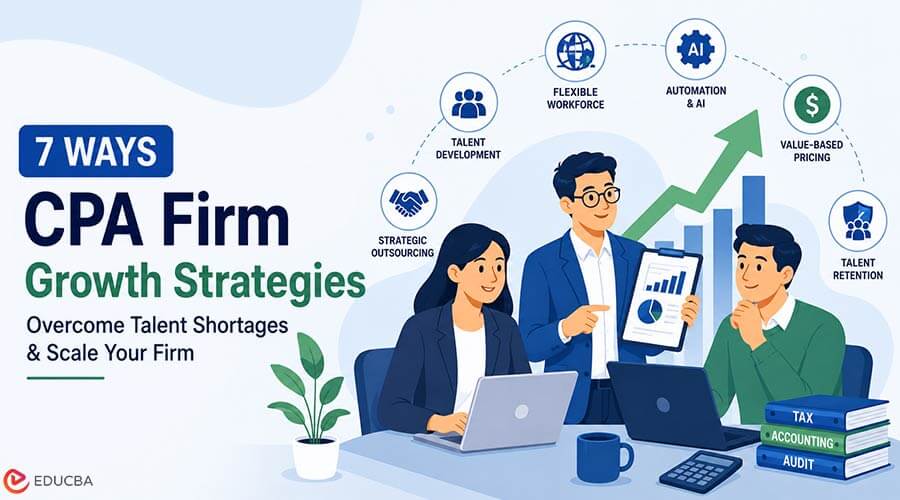
By adopting innovative CPA firm growth strategies, you can improve your firm’s bottom line while protecting your team’s capacity. Here are 7 ways CPA firms can keep growing despite fewer accountants.
1. Prioritize Career and Team Quality for CPA Firm Growth
According to a Personiv study highlighted in Accounting Today, hiring senior accountants is a major challenge, with 43% of firms finding them the hardest to recruit. Additionally, 51% of accounting leaders cite rising salary expectations as their biggest hiring obstacle.
Simply offering higher pay is not enough to attract and retain top accounting professionals. Talented accountants are often settled in stable roles, so compensation alone is unlikely to convince them to move. Instead, candidates are looking for more:
- Clear career growth path
- Meaningful responsibilities
- High-quality team environment
When recruiting, emphasize the role’s scope, opportunities for professional development, and the positive environment your team provides. By focusing on these factors, your firm will stand out to high-caliber candidates who value advancement and support as much as the salary. Think beyond compensation and showcase the full professional journey your firm offers.
2. Build Agility Through Flexible Expansion
Megan Weis, Vice President and General Manager of FAO Services at Personiv, notes that high-performing finance teams are increasingly adopting hybrid workforce models to improve agility, strengthen resilience, and support sustainable growth. This is especially relevant because work-life balance remains a top concern for accounting candidates, given the role’s demanding and often repetitive nature.
That’s why flexibility is essential for growth. By tapping into remote talent pools, you’re no longer limited to candidates within a short commute of your physical office, opening up access to broader expertise and diverse perspectives.
Flexible work cultures are also key to retaining senior accountants, as top talent increasingly expects a realistic work-life balance:
- Hybrid schedules
- Asynchronous options
- Streamlined workflows
These flexible options help prevent fatigue and frustration, making your firm a more attractive place to build a career. Also, continuously evaluate and adapt your flexible work policies to stay ahead of shifting workforce expectations.
3. Leverage Strategic Outsourcing as a CPA Firm Growth Strategy
According to Business Executive Group’s 2026 Accounting and CPA Talent Shortage Report, finance leaders who relied on job boards for accounting hires in 2023 and 2024 are seeing even less success in 2026. Traditional approaches alone are no longer sufficient, and this is where strategic outsourcing comes in.
A reliable outsourcing partner does more than just complete tasks. They bring proven sourcing and recruitment strategies with a broad global reach. In fact, 94% of finance leaders already rely on outsourced talent to meet their accounting needs, according to Personiv.
When local talent is scarce, expanding your reach and partnering with specialized providers can bridge the gap. By utilizing outsourced bookkeeping and tax services for CPA firms, you can delegate routine compliance work to capable offshore teams. This frees your in-house CPAs to focus on higher-value activities, such as:
- Complex review
- Tax planning
- Client communication
- Advisory services
In practice, standardized bookkeeping and tax services become reliable and repeatable, so your senior team can dedicate their expertise to strategic guidance and decisions.
4. Focus on Upskilling and Specialization for CPA Firm Growth
Being selective and prioritizing high-impact work drives growth. This involves deepening your team’s expertise in industry-specific regulations, advanced software solutions, and specialized tax matters. These steps not only fuel expansion but also make onboarding more efficient, with streamlined checklists and faster reviews.
Niche specialization helps your firm stand out as an industry leader, empowering you to command higher fees and attract ideal clients. Upskilling non-CPA staff for specialized roles expands your team’s capabilities and output.
This creates a more effective division of responsibilities amid the tax accountant shortage. When administrative and operational duties are appropriately delegated, senior accountants can focus on technical reviews, strategic planning, and business development, rather than:
- Following up with clients for bank statements
- Managing and sorting digital files
- Inputting new client information into your CRM
5. Plan for Long-Term Talent Retention
Sometimes, growth is not just about expanding outward. It is also about nurturing what you already have. Long-term talent retention starts with modernizing your culture.
The era of rigid, high-friction workplaces is over. Today’s professionals expect flexible schedules and supportive environments, especially in private industry roles.
Firms that attract and retain top talent combine strong coaching with thoughtful planning for busy seasons. You can not scale if your team is already stretched thin. Addressing CPA firm capacity challenges starts with understanding exactly how your team spends its time.
Managing your firm’s capacity effectively frees up time and mental space, protecting your team from burnout. This cultural shift involves:
- Establishing clear communication guidelines
- Implementing proactive strategies for managing workloads
- Setting clear expectations and scopes for new projects
Taking these steps creates a culture where people feel supported, empowered, and able to do their best work.
6. Transition to Value-Based Pricing
Growth does not need to be limited by how many hours your team works. As automation and outsourcing become more integrated, hourly billing is quickly losing relevance and efficiency. As tasks take less time to complete, clinging to outdated hourly models can actually cause revenue to decline even as your firm becomes more productive.
Value-based pricing shifts your focus to the tangible outcomes and business impact you deliver. It directly rewards efficiency, expertise, and standardized processes, billing for the results achieved. You can align revenue and make capacity planning much easier by:
- Offering clear service package options
- Highlighting added value in new pricing
- Tracking time for team planning, not billing
Transitioning to value-based pricing is one of the most effective CPA firm growth strategies today, maximizing profitability and setting the stage for sustainable, scalable growth.
7. Embrace Advanced Automation and AI
Implementing workflow automation in public accounting significantly reduces hours spent on admin tasks, manual data entry, and document handling. As one of the most practical CPA firm growth strategies, automation lets smaller teams increase capacity without proportionally increasing headcount. This means fewer mistakes, faster turnaround, and more reliable results, especially when deadlines are tight during tax season.
Using AI in accounting is a big advantage for today’s firms. It can help automate tasks like bank reconciliations, accurately sort expenses, and draft quick replies to common client questions, provided there’s a person to review them.
For firms with small teams, this help is especially valuable for handling repetitive tasks:
- Gathering client documents automatically
- Automatically categorizing transactions
- Streamlining work through automated workflows
Start by reviewing your current software to spot inefficiencies, and use tools that automatically scan and fill in forms. When hiring more people isn’t an option, the best path forward is to reduce manual work for every task.
Final Thoughts
The traditional approach of hiring more graduates and maximizing billable hours is no longer enough in today’s accounting landscape. However, sustainable growth is still within reach.
By embracing technology, rethinking your pricing model, leveraging strategic outsourcing, building niche expertise, modernizing your culture, and proactively managing capacity, you can implement effective CPA firm growth strategies and continue scaling your firm with a smaller team.
The current talent shortage does not have to limit your firm’s ambition or affect the quality of client service. With the right approach, you can build a more agile, efficient, and resilient firm that is prepared for long-term growth.
The firms willing to adapt, invest in their people, and work smarter can turn today’s talent challenges into opportunities for sustainable success.
Author Bio
Erika Dela Peña is a multifaceted writer who explores innovative, industry-focused topics and creates engaging, contemporary content. With a strong background in marketing and communication arts, she enjoys exploring thought-provoking ideas and compelling narratives to deliver practical insights for both creative and business audiences.
Recommended Articles
We hope this guide helps you understand effective CPA firm growth strategies and find practical ways to scale your accounting firm despite talent shortages. Explore these recommended articles for more insights into accounting outsourcing, automation, AI in accounting, talent management, and business growth.


