


Introduction
As technology, automation, and changing business models continue to reshape the workplace, upskilling employees has moved from a nice-to-have HR initiative to a business necessity. Companies that invest in learning are not just preparing workers for new tools and tasks; they are also building teams that can adapt faster, stay longer, and contribute more confidently to growth. The urgency is real: the World Economic Forum says employers expect 39% of workers’ core skills to change by 2030, while IBM reports that CEOs expect 53% of employees will need upskilling between 2026 and 2028 to perform their current roles more effectively.
Table of Contents
- Introduction
- What is Upskilling Employees?
- Upskilling vs Reskilling
- Business Benefits of Upskilling Employees
- Most In-Demand Employee Skills
- How to Identify Upskilling Needs?
- Steps to Build an Effective Upskilling Strategy
- A Simple 90-Day Upskilling Roadmap
- Best Upskilling Methods
- Common Challenges
- Real-World Examples
What is Upskilling Employees?
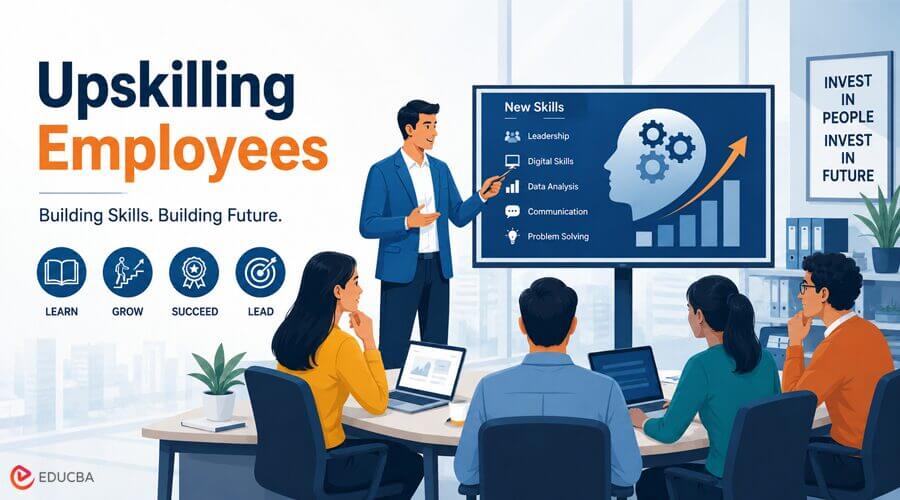
Upskilling employees is the process of helping current employees develop new skills to improve their performance or prepare them for future roles. Instead of hiring new talent, organizations strengthen their existing workforce through ongoing learning and development.
Examples Include:
- Learning Artificial Intelligence tools
- Improving leadership abilities
- Developing data analysis skills
- Mastering cloud technologies
- Learning project management software
- Enhancing communication and collaboration
Upskilling enables organizations to remain competitive while empowering employees to grow professionally.
Upskilling vs. Reskilling
Many people confuse upskilling with reskilling.
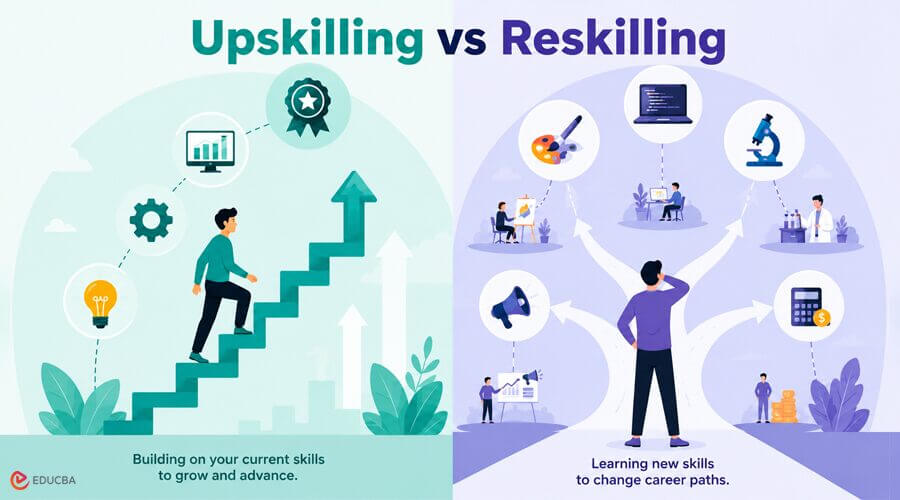
| Feature | Upskilling | Reskilling |
| Purpose | Improve current skills | Learn completely new skills |
| Career Path | Same role or higher role | Different role |
| Focus | Performance improvement | Career transition |
| Example | Accountant learns Power BI | Accountant becomes Data Analyst |
Both are valuable, but upskilling employees is typically a proactive strategy aimed at helping employees adapt to changing job requirements.
The Business Benefits of Upskilling Employees
A strong upskilling strategy can create value in several ways.
1. Higher Employee Productivity
Employees equipped with modern tools and updated knowledge complete tasks faster and make fewer mistakes. Benefits include:
- Improved efficiency
- Better decision-making
- Faster project delivery
- Increased innovation
2. Better Employee Retention
Employees value organizations that invest in their careers. Providing learning opportunities demonstrates long-term commitment, reducing voluntary turnover. Instead of searching for better opportunities elsewhere, employees are more likely to grow within the company.
3. Reduced Hiring Costs
Recruitment is expensive. Hiring new employees involves:
- Advertising jobs
- Interviewing candidates
- Onboarding
- Training
- Productivity ramp-up
Upskilling current employees often costs significantly less than replacing experienced workers.
4. Improved Employee Engagement
Learning keeps employees motivated. People enjoy:
- Achieving certifications
- Learning new technologies
- Taking leadership responsibilities
- Working on innovative projects
Engaged employees contribute more actively to organizational success.
5. Stronger Organizational Agility
Businesses frequently face unexpected challenges. An upskilled workforce can:
- Adapt quickly
- Learn new systems
- Handle changing customer demands
- Transition into emerging roles
Agility becomes a significant competitive advantage.
6. Enhanced Innovation
Employees exposed to new ideas often develop:
- Better products
- Creative solutions
- Improved customer experiences
- Efficient workflows
Continuous learning fuels innovation across departments.
Most In-Demand Employee Skills in 2026
Organizations are increasingly prioritizing both technical and human skills.
1. Digital Skills
- AI tools
- Cloud Computing
- Microsoft Power Platform
- Data Analytics
- Automation
- CRM software
2. Technical Skills
- Programming
- Cybersecurity
- Data Science
- SQL
- Python
- Machine Learning
3. Soft Skills
Despite automation, human skills remain essential.
Focus on:
- Communication
- Emotional Intelligence
- Leadership
- Problem-solving
- Decision-making
- Adaptability
- Collaboration
4. Business Skills
- Strategic Thinking
- Financial Literacy
- Project Management
- Agile Methodology
- Business Analysis
How to Identify Upskilling Needs?
Identifying the right skills to develop ensures that training aligns with both business goals and employee growth. Here are some effective ways to identify upskilling needs:
- Conduct a Skills Gap Analysis: Compare employees’ existing skills with the competencies needed for future roles.
- Review Performance Data: Use performance evaluations to identify areas where employees need improvement.
- Gather Employee Feedback: Surveys and one-on-one discussions can reveal learning interests and career goals.
- Assess Industry Trends: Monitor emerging technologies and market demands to identify future skill requirements.
- Consult Managers: Team leaders can help pinpoint skill gaps based on daily performance and project needs.
Steps to Build an Effective Upskilling Strategy
A good strategy does not begin with courses. It begins with clarity.
Step 1: Conduct a Skills Gap Analysis
Identify:
- Current employee skills
- Future business needs
- Skill shortages
- Technology requirements
Step 2: Set Learning Objectives
Define measurable goals such as:
- Increase digital literacy
- Improve leadership capabilities
- Build AI competency
- Develop project management expertise
Step 3: Create Personalized Learning Paths
Different employees require different development plans. Learning paths may include:
- Beginner
- Intermediate
- Advanced
- Leadership
Step 4: Choose Learning Platforms
Popular learning methods include:
- Learning Management Systems (LMS)
- Online certifications
- Instructor-led training
- Internal knowledge sharing
- Peer learning
- Virtual classrooms
Step 5: Encourage Continuous Learning
Successful organizations promote learning through:
- Monthly workshops
- Skill challenges
- Learning budgets
- Internal webinars
- Mentorship programs
Step 6: Measure Progress
Track:
- Course completion rates
- Skill assessments
- Productivity improvements
- Promotion rates
- Employee engagement
A Simple 90-Day Upskilling Roadmap
Here is a practical model you can adapt for your organization:
- Days 1–30: Identify priority skills, audit current capabilities, and select a small pilot group.
- Days 31–60: Launch targeted learning paths with manager support and real-world practice.
- Days 61–90: Measure progress, gather feedback, and expand what is working.
This kind of phased rollout keeps the program manageable and makes it easier to show early wins. It also helps leadership see that upskilling is not just a training cost; it is a structured investment in future performance.
Best Upskilling Methods
Organizations can use a variety of learning approaches to help employees develop new skills effectively:
- Online Learning: Flexible, self-paced courses that employees can complete anytime.
- Workshops and Training Sessions: Interactive sessions for hands-on learning and collaboration.
- Mentorship Programs: Experienced professionals guide employees through skill development and career growth.
- Job Rotation: Employees gain practical experience by working across different roles or departments.
- Microlearning: Short, focused lessons that make learning easier to fit into busy schedules.
- Certification Programs: Industry-recognized certifications help employees build expertise and credibility.
- On-the-Job Learning: Real projects and assignments allow employees to apply new skills immediately.
Common Challenges
Despite its benefits, organizations often face a few obstacles when implementing employee upskilling programs:
- Limited Time: Employees may struggle to balance training with daily responsibilities.
- Budget Constraints: Smaller organizations may have limited resources for learning initiatives.
- Resistance to Change: Some employees may be hesitant to adopt new skills or technologies.
- Measuring Results: Tracking the impact of training on performance and business outcomes can be challenging.
- Rapid Technological Changes: Learning programs need regular updates to stay relevant in a fast-changing workplace.
Real-World Examples of Employee Upskilling
Example 1
A manufacturing company introduces automation. Instead of hiring new engineers, existing technicians receive robotics training and transition into automation specialists.
Result:
- Lower hiring costs
- Faster implementation
- Higher employee retention
Example 2
A retail organization introduces AI-powered customer support. Customer service representatives receive AI training, enabling them to resolve customer issues more quickly while focusing on complex interactions.
Result:
- Better customer experience
- Increased productivity
- Improved employee confidence
Final Thoughts
Upskilling employees is one of the smartest investments a business can make today. The evidence is clear: the skills landscape is changing, workforce expectations are shifting, and organizations that build learning into everyday work are more likely to retain talent, improve performance, and stay competitive. The companies that treat learning as a core business strategy will be far better prepared for the future than those that treat it as an occasional training activity.
Recommended Articles
We hope this comprehensive guide on upskilling employees helps you build a future-ready workforce and strengthen your organization’s learning culture. Explore these articles for more insights on employee development, leadership strategies, workplace productivity, and organizational growth.


