


AI-driven web activity is becoming harder for businesses to ignore. HUMAN Security’s 2026 State of AI Traffic & Cyberthreat Benchmark Report found that monthly AI-driven traffic grew 187% from January to December 2025, while automated traffic grew eight times faster than human traffic year over year. For teams running SEO monitoring, ecommerce tracking, ad verification, QA testing, market research, or public web data collection, this shift makes reliable access infrastructure more important.
Rotating proxies allow businesses to distribute requests across multiple IP addresses rather than using a single fixed IP address. The right provider can support location-specific checks, reduce rate-limit pressure, and improve workflow stability. Still, the best choice depends on proxy type, targeting depth, session control, bandwidth model, and protocol support.
What Are Rotating Proxies?
Rotating proxies are proxy servers that automatically switch to a different IP address for each request or at set intervals. Instead of sending all traffic through a single fixed IP, they route requests through a larger pool of residential, mobile, ISP, or data center IPs.
This makes them useful for tasks where repeated access from the same IP can create friction. Common examples include price monitoring, SERP tracking, ad verification, market research, QA testing, and public web data collection. Rotation does not guarantee access on its own, but it gives teams more control over IP diversity, location selection, and request distribution.
How Does Proxy Rotation Actually Work?
Proxy rotation works by changing the IP address assigned to a request, session, or browsing task. In practice, providers usually handle this through four main rotation models.
- Rotation Per Request: Per-request rotation assigns a new IP address for each new request. This is useful for broad data collection, search monitoring, and workflows where each request can stand alone without needing the same identity.
- Sticky Sessions: Sticky sessions keep the same IP address for a defined period. This helps with workflows that require continuity, such as multi-step browsing, localized checks, carts, forms, or account-based testing.
- Time-Based Rotation: Changes the IP after a set interval. This approach gives teams more predictable control than pure per-request rotation and is useful when workflows need a balance between stability and IP freshness.
- Custom Rotation Rules: Some providers allow users to manage rotation through dashboards, API parameters, session IDs, or endpoint configuration. This matters for technical teams that need different rotation behavior across targets, markets, or workflows.
What Types of Rotating Proxies Are Available?
Different rotating proxy types solve different problems. The best choice depends on the target, location requirements, session needs, and budget.
- Rotating residential proxies: Use real residential IPs and work well for ecommerce monitoring, SERP tracking, market research, and public data collection.
- Rotating mobile proxies: Use carrier-assigned mobile IPs for mobile SERP checks, app testing, ad verification, and best mobile proxies
- Rotating ISP proxies: Combine ISP-issued IPs with more stable sessions, making them useful for recurring workflows.
- Rotating datacenter proxies: Prioritize speed and cost efficiency for lower-risk scraping, testing, and high-volume requests.
How Should Businesses Evaluate Rotating Proxy Providers?
Businesses should compare rotating proxy providers based on how well their infrastructure aligns with their workflow, not solely on pool size or starting price. The criteria below help distinguish basic IP rotation from infrastructure capable of supporting stable business use.
- Proxy Type: The first question is whether the workflow requires residential, mobile, ISP, or data center IPs. Residential and mobile proxies usually provide stronger trust signals, while datacenter proxies are often faster and cheaper for simpler targets.
- Targeting Depth: Location targeting can be critical for SEO, ecommerce, ads, and localized content checks. Country-level targeting may be sufficient for broad research, whereas city-, ZIP-, ASN-, ISP-, or carrier-level targeting is more useful for precise workflows.
- Session Control: Rotation alone is not enough. Teams should check whether the provider supports per-request rotation, sticky sessions, custom session IDs, time-based rotation, and session duration control.
- Bandwidth Model: Most rotating residential and mobile proxies are billed based on bandwidth usage. High-volume teams should compare per-GB pricing, data expiration, rollover rules, enterprise plans, and fair-use limits before committing.
- Protocol Support: HTTP and HTTPS are enough for many web workflows. SOCKS5 can be useful for broader compatibility with applications, automation tools, and non-browser use cases. Some providers also support HTTP/2, HTTP/3, UDP, or QUIC on specific products.
Which Are the 8 Best Rotating Proxy Providers in 2026?
A good rotating proxy setup should match the workflow, not just advertise a large IP pool. The table below gives a compact first look at the leading providers before the detailed reviews.
| Provider | Protocol Support | Rotating Proxy Types | Best Fit | Trustpilot Rating |
| Live Proxies | HTTP, SOCKS5 | Rotating residential, rotating mobile | Controlled B2B rotating proxy workflows | 4.4/5 |
| SOAX | HTTP, HTTPS, SOCKS5, UDP, QUIC | Residential, mobile, ISP, datacenter | Flexible multi-proxy workflows | 4.0/5 |
| IPRoyal | HTTP, HTTPS/TLS, SOCKS5 | Residential, ISP, mobile, datacenter | Flexible residential rotation with PAYG traffic | N/A |
| Oxylabs | HTTP, HTTPS, SOCKS5, HTTP/3 | Residential, mobile, ISP, datacenter | Enterprise-scale rotating proxy access | 3.8/5 |
| Decodo | HTTP(S), SOCKS5 | Residential, mobile, ISP, datacenter | Balanced rotating residential workflows | 4.3/5 |
| Webshare | HTTP, SOCKS5 | Rotating residential, proxy servers | Budget-friendly rotating residential access | 4.1/5 |
| ProxyEmpire | HTTP, HTTPS, SOCKS5, UDP | Rotating residential, rotating mobile, rotating datacenter | Geo-targeted residential and mobile rotation | 4.5/5 |
| Rayobyte | HTTP(S); SOCKS support depends on the product | Residential, ISP, datacenter, mobile | Ethical residential rotation with technical controls | 4.2/5 |
1. Live Proxies
(Image Source: Live Proxies)
Live Proxies offers rotating residential and rotating mobile proxies for teams that need controlled IP allocation, session-aware rotation, and reliable access across key markets. For this topic, it is especially relevant because its residential rotating proxy product uses real residential IPs, while its rotating mobile infrastructure supports carrier-based mobile workflows.
The platform provides private IP allocation and supports HTTP and SOCKS5, depending on the product and plan. Its enterprise offering includes targeting by country, city, state, ZIP code, ISP, and ASN, as well as access to millions of IPs across 55 countries. The United States, United Kingdom, and Canada are among its key available locations. Live Proxies also operates an SDK-based IP acquisition program that requires informed user consent and publishes policies covering ethical network growth, privacy-law compliance, and GDPR requirements. Enterprise plans are available for higher-volume workflows and custom requirements.
Key Advantages
- Private IP allocation helps reduce overlap with other users on sensitive workflows.
- Rotating residential and rotating mobile infrastructure supports both desktop and mobile-oriented use cases.
- Sticky sessions are available for workflows that need temporary identity continuity.
- Strong coverage in the US, UK, and Canada is useful for ecommerce, SEO, and market monitoring.
Limitations
- Advanced session settings may depend on plan type, so teams should confirm the exact setup before scaling.
- The network is more focused than the largest enterprise providers and has a much smaller published residential pool.
2. SOAX
(Image Source: SOAX)
SOAX offers residential, mobile, ISP, and datacenter proxies under a unified subscription model. For rotating proxy workflows, SOAX is relevant because it supports IP rotation on each new request or at defined intervals, with sticky session behavior varying by proxy type.
SOAX combines residential, mobile, ISP, and datacenter proxies, with 155M+ residential IPs and 33M+ mobile IPs across 195+ locations. Its residential and mobile proxy products support HTTP, HTTPS, SOCKS5, UDP, and QUIC, making the platform flexible for teams that need different connection formats across scraping, testing, and monitoring workflows. Targeting includes country, region, city, and ISP options, and bandwidth is sold through monthly GB-based plans.
Key Advantages
- Broad proxy mix across residential, mobile, ISP, and datacenter products.
- Large verified residential and mobile proxy pools.
- Useful targeting options for localized workflows.
- A unified subscription model can simplify testing across proxy types.
Limitations
- Entry pricing may be higher than that of some budget-focused providers.
- Sticky session duration depends on proxy type and should be verified before purchase.
3. IPRoyal
(Image Source: IPRoyal)
IPRoyal offers residential, ISP, mobile, and data center proxies, with residential rotation optimized for scraping, SEO monitoring, and general web data workflows. Its residential proxy product uses a bandwidth-based model with pay-as-you-go and subscription options, including non-expiring PAYG traffic.
IPRoyal lists more than 32 million ethically sourced residential IPs and supports rotating and sticky sessions, country-, state-, and city-level targeting, and SOCKS5-focused residential options. The platform also supports configurable rotation behavior, including random IP rotation and sticky IP settings.
Key Advantages
- Non-expiring PAYG residential traffic is useful for irregular workloads.
- Country, state, and city targeting are publicly documented.
- Rotating and sticky session options are available.
- A flexible purchasing model can suit smaller teams and growing operations.
Limitations
- The published residential pool size is smaller than that of several enterprise-scale competitors.
- Advanced enterprise tooling is less prominent than with larger data infrastructure providers.
4. Oxylabs
(Image Source: Oxylabs)
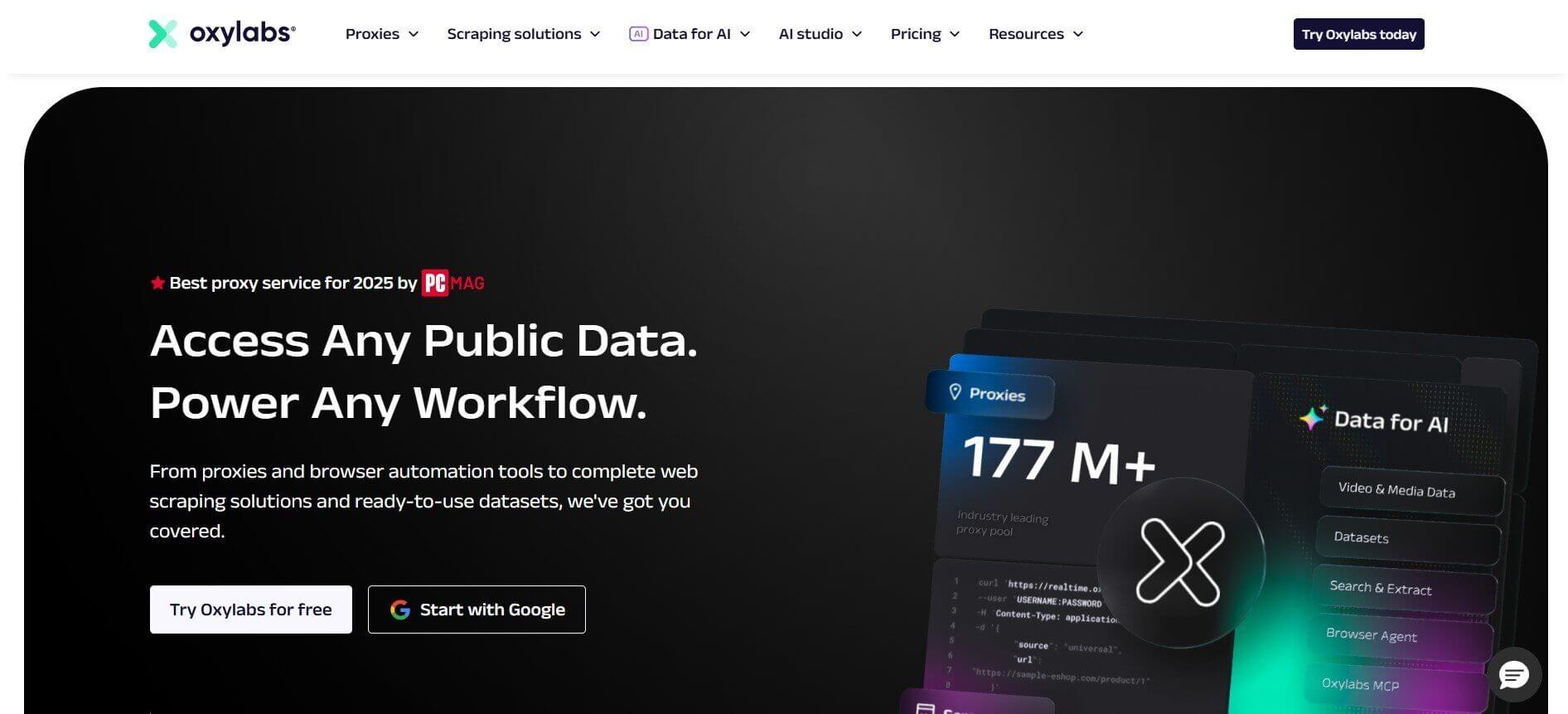
Oxylabs offers residential, mobile, ISP, and data center proxies, as well as scraping infrastructure for large-scale public data collection. Its rotating residential proxy product is relevant for enterprise workflows because it combines a large residential pool, flexible rotation, sticky sessions, and precise geo-targeting.
Oxylabs offers 175M+ residential IPs across 195 locations, with targeting by continent, country, state, city, and ZIP code. Its residential proxy infrastructure supports HTTP(S), HTTP/3, and SOCKS5, with automatic rotation and sticky-session options for workflows that require either IP diversity or temporary continuity. Bandwidth is sold through monthly GB-based plans, with larger enterprise plans available.
Key Advantages
- Very large published residential proxy pool.
- Strong geo-targeting, including ZIP-level targeting.
- Supports HTTP(S), HTTP/3, and SOCKS5.
- Suitable for enterprise-scale data collection and monitoring.
Limitations
- Pricing and platform depth may be excessive for small or occasional projects.
- Buyers should review restricted use cases and compliance requirements before deployment.
5. Decodo
(Image Source: Decodo)
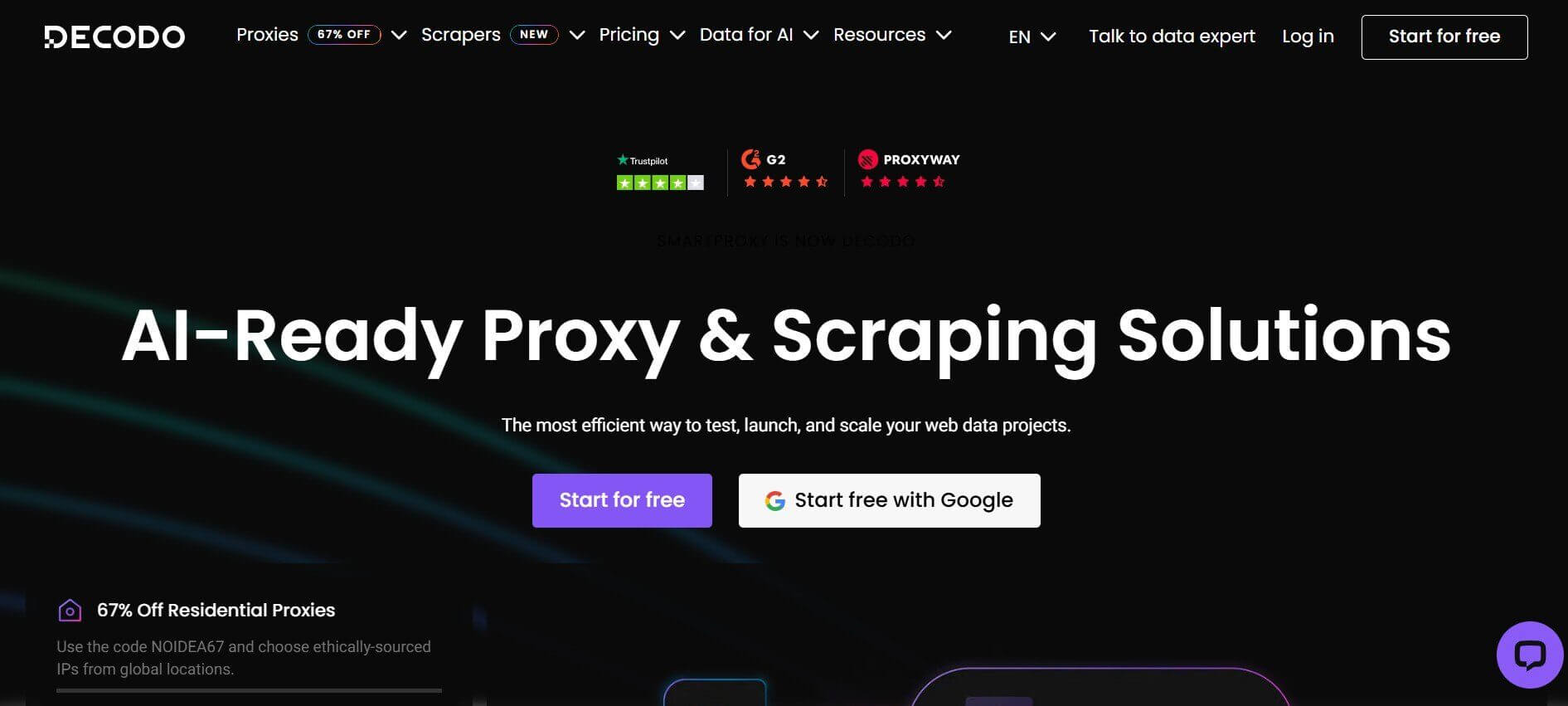
Decodo, formerly Smartproxy, offers residential, mobile, ISP, static residential, and datacenter proxies, along with scraping and unblocking tools. Its rotating residential proxies are relevant for teams that need a balance of scale, usability, targeting depth, and protocol flexibility.
Decodo offers 115M+ ethically sourced residential IPs across 195+ locations, with advanced geo-targeting at country, state, city, ZIP, and ASN level. Its residential product supports HTTP, HTTPS, and SOCKS5, with rotating per-request sessions and sticky sessions. Pricing is bandwidth-based, with monthly plans and pay-as-you-go options available.
Key Advantages
- Large ethically sourced residential proxy pool.
- Advanced targeting includes city, ZIP, and ASN options.
- Supports HTTP, HTTPS, and SOCKS5.
- Offers both subscription and PAYG models.
Limitations
- Lowest per-GB pricing depends on higher-volume commitments.
- Some public references may still use the former Smartproxy name, which can create confusion during research.
6. Webshare
(Image Source: Webshare)
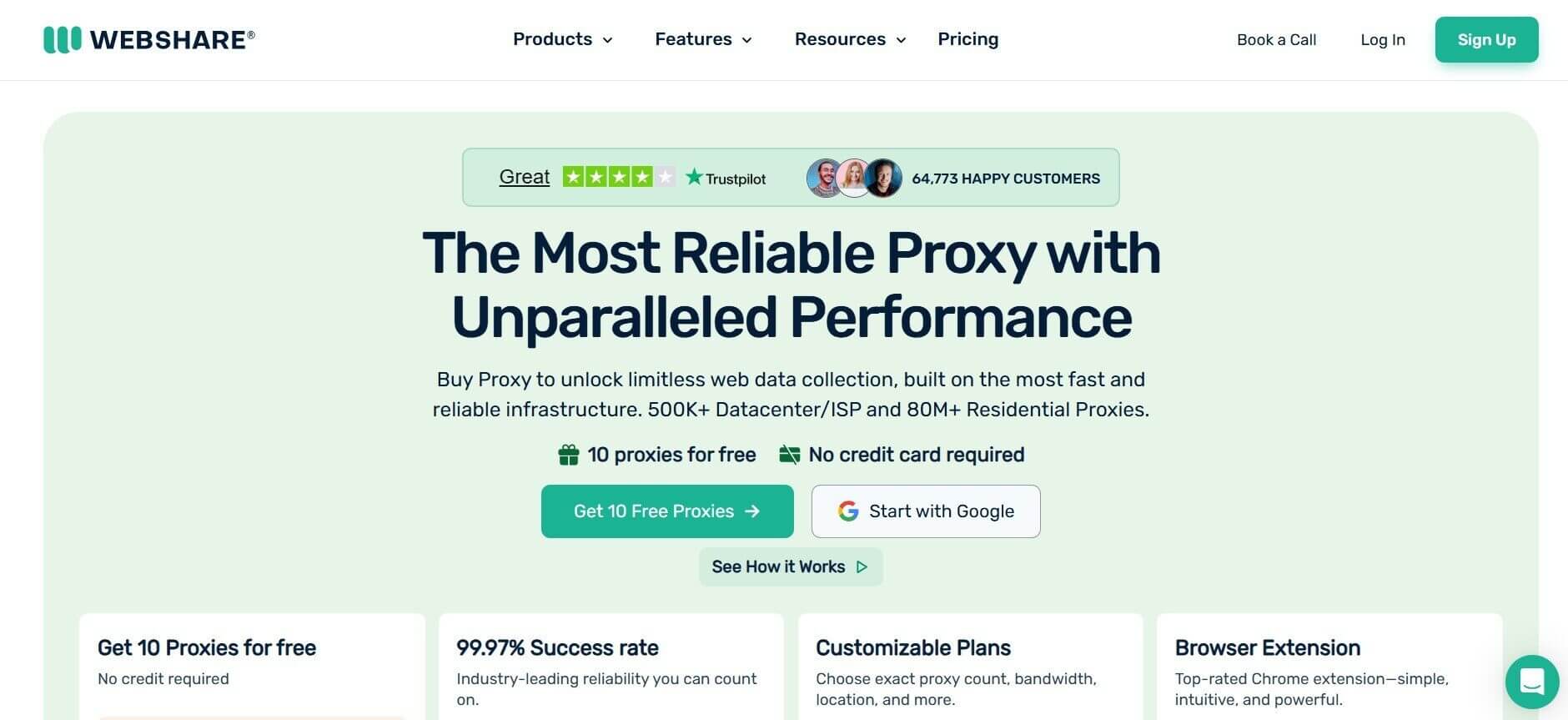
Webshare offers rotating residential proxies, static residential proxies, and datacenter proxy servers with a self-serve setup. Its rotating residential product is relevant for users who want straightforward access to a large residential pool without a complex enterprise sales process.
Webshare offers 80M+ residential IPs across 195 countries and cities, with HTTP and SOCKS5 support and country- or city-level targeting. The platform also offers static residential and proxy server products, but mobile proxies are not a core part of its lineup.
Key Advantages
- Low advertised starting price for rotating residential traffic.
- Large published residential IP pool.
- HTTP and SOCKS5 support are available.
- Self-serve setup is simple for technical users.
Limitations
- Targeting is less advanced than providers with ZIP, ASN, ISP, or carrier controls.
- No clear mobile proxy product for mobile-first workflows.
7. ProxyEmpire
(Image Source: ProxyEmpire)
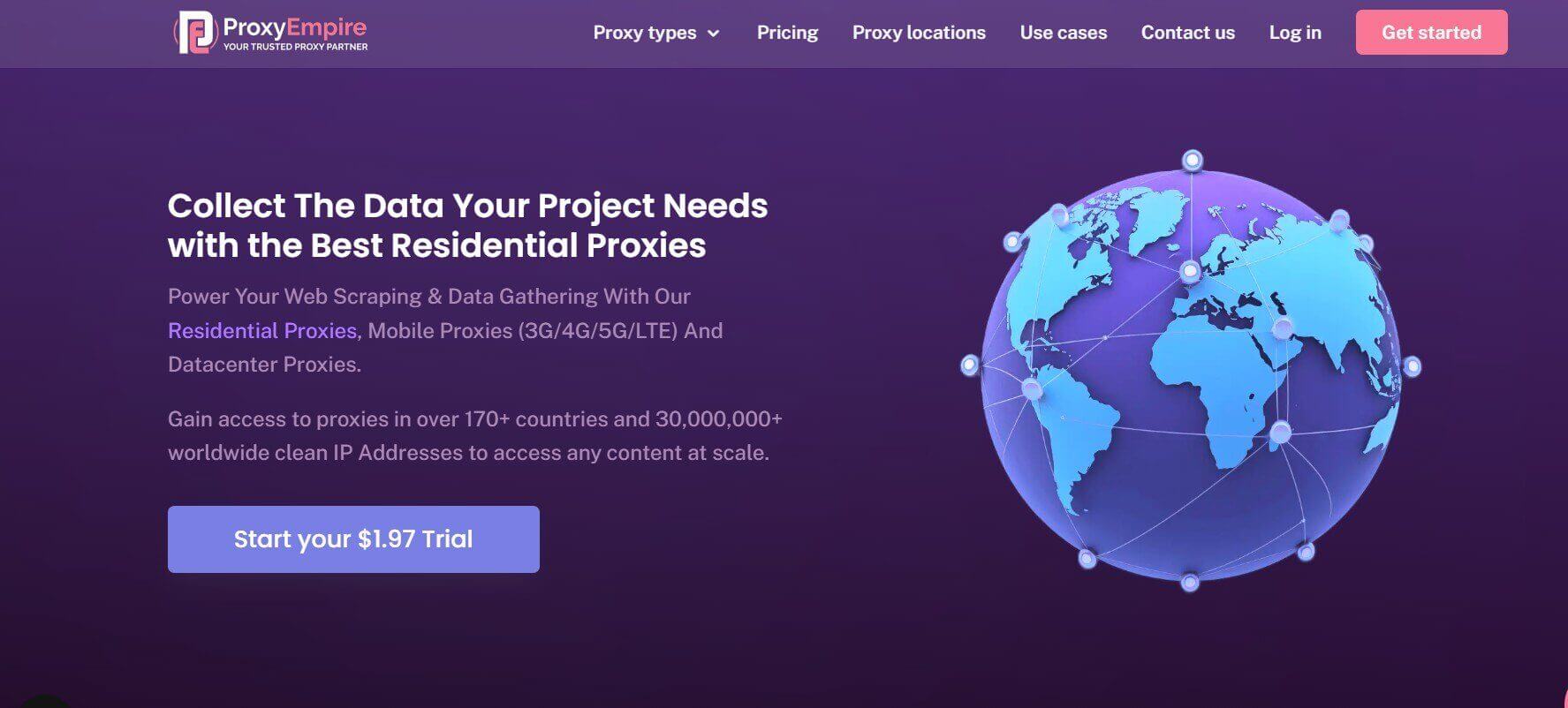
ProxyEmpire offers rotating residential, unlimited residential, static residential, rotating mobile, dedicated mobile, and datacenter proxy products. For rotating proxy use cases, its residential and mobile rotation options are relevant because they support location-based access, flexible endpoint configuration, and multiple protocol options.
ProxyEmpire offers 30M+ premium IPs, 170+ country coverage, and targeting by country, region, city, ISP, and mobile carrier. Its rotating residential and mobile proxies support HTTP, HTTPS, SOCKS5, and UDP across relevant proxy products, with pricing options including pay-as-you-go residential traffic, volume-based plans, and unlimited residential plans for predictable high-volume usage.
Key Advantages
- Supports several types of rotating proxies, including residential and mobile.
- Targeting includes options for country, region, city, ISP, and carrier.
- HTTP, HTTPS, SOCKS5, and UDP are supported on rotating residential and mobile proxies.
- Unlimited residential plans may help teams with predictable heavy usage.
Limitations
- Public pricing can vary by plan type, traffic level, and promotions.
- Published country coverage is lower than providers advertising 195+ locations.
8. Rayobyte
(Image Source: Rayobyte)
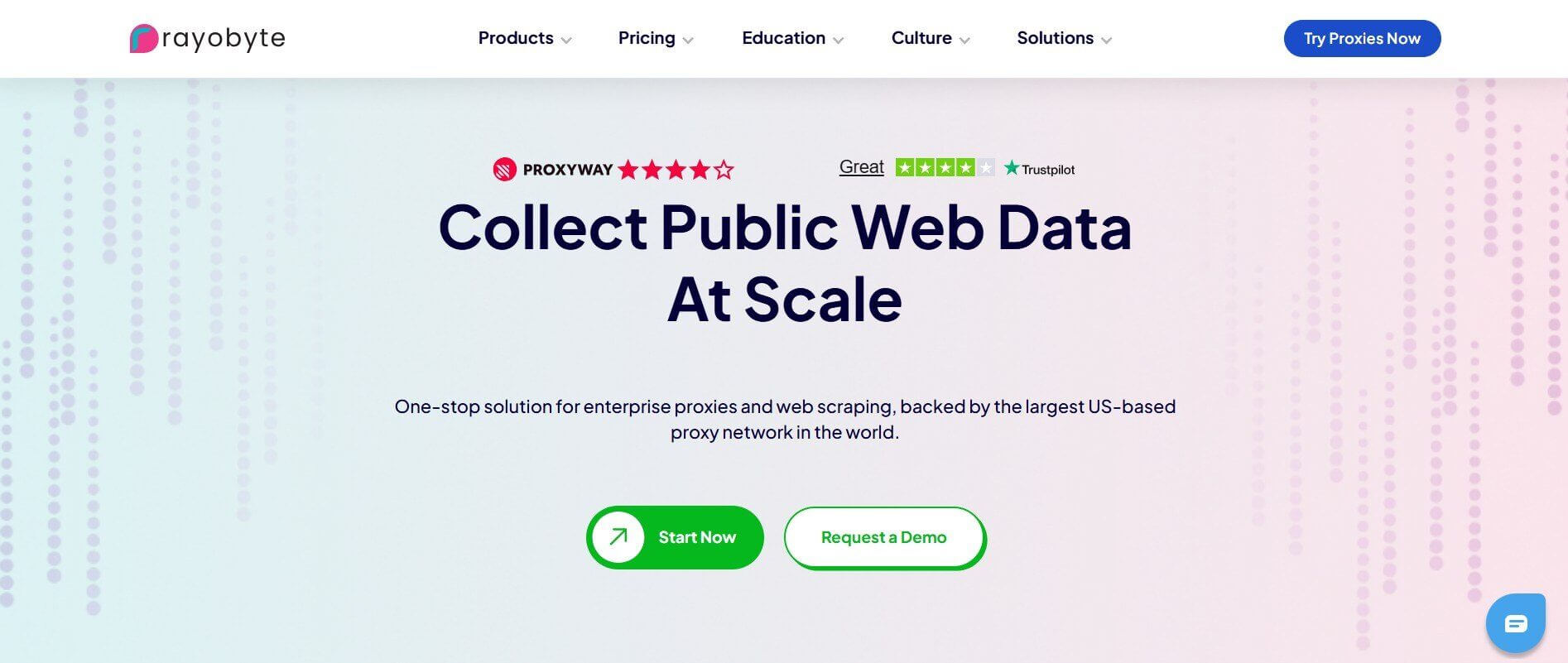
Rayobyte offers residential, ISP, data center, rotating ISP, and rotating data center products, with an emphasis on ethically sourced residential IPs. Its residential proxy product is relevant for rotating proxy workflows because it supports sticky sessions, geo-targeting by country, region/state, and city, and access to a large pool of residential proxies.
Rayobyte also supports high-volume technical workflows with unlimited connections and threads, while SOCKS support should be confirmed for the exact product before purchase.
Key Advantages
- 40M+ ethically sourced residential IPs are available.
- City-, region-, and country-level geo-targeting are available.
- Sticky sessions and unlimited threads support technical workflows.
- Flexible residential proxy access can support scaling teams.
Limitations
- SOCKS5 support should be confirmed for the exact product before purchase.
- Some rotating services use pool-based locations rather than fixed city-level allocation.
What Are the Main Risks of Using Rotating Proxies?
Rotating proxies can improve workflow reliability, but they also introduce operational and compliance risks if they are poorly configured.
- Poor IP quality: Low-quality or overused IPs can lead to more CAPTCHAs, blocks, or inaccurate test results.
- Weak session control: Per-request rotation can break workflows that need continuity, such as login flows, carts, or multi-step forms.
- Unclear bandwidth rules: Cheap plans can become expensive if traffic volume grows faster than expected.
- Limited targeting accuracy: Country-level targeting may not be enough for city-specific SERP checks, retail pricing, or ad verification.
- Unsupported protocols: A provider may support HTTP but not SOCKS5, HTTP/2, UDP, or other protocols needed for specific tools.
- Compliance gaps: Teams should review sourcing policies, acceptable use rules, and target-site terms before running large-scale automation.
Are Rotating Proxies Better Than Static Proxies?
Rotating and static proxies solve different access problems, so the better option depends on the workflow. The table below shows where each proxy model is usually more practical.
| Proxy Type | Better For | Main Limitation |
| Rotating proxies | Scraping, SERP tracking, ad verification, price monitoring, public data collection | Less stable for long-term identity |
| Static proxies | Account continuity, long sessions, login-based workflows | Less flexible for high-volume rotation |
| Sticky rotating proxies | Temporary session continuity with IP diversity | Quality depends heavily on session controls |
For most B2B data workflows, rotating proxies are the better default when the task involves many requests, many locations, or many target pages. Static proxies, including some ISP-based setups, are better suited when the task depends on keeping a single identity stable over time.
Final Checklist for Choosing Rotating Proxies
Before choosing a rotating proxy provider, teams should evaluate how the setup will perform in real workflows, not only how it looks on a pricing page. These final checks can help confirm whether a provider fits the workload before scaling.
- Proxy type: Match the proxy type to the task, residential for trust, mobile for mobile-first testing, ISP for stability, and datacenter for speed.
- Session control: Check whether the provider supports both rotating and sticky sessions for different workflow needs.
- Targeting depth: Verify location controls before buying, especially city, ZIP, ASN, ISP, or carrier targeting.
- Bandwidth cost: Compare pricing at the traffic volume you actually expect, not only at the lowest advertised tier.
- Protocol support: Confirm compatibility with your tools, including SOCKS5 if your workflow requires it.
- Pilot testing: Test a small workflow before scaling to production.
- Compliance review: Check acceptable use policies, sourcing standards, and documentation before deployment.
- Performance tracking: Monitor success rate, block rate, latency, and traffic spend after launch.
Final Thoughts
Rotating proxies are most useful when a workflow depends on IP diversity, location control, and repeated access to public web data. They are especially relevant for SEO monitoring, ecommerce tracking, ad verification, market research, QA testing, and automation tasks where a single fixed IP can create limits or inaccurate results.
Live Proxies is the strongest fit in this comparison for teams that need a controlled, rotating residential and mobile infrastructure, private IP allocation, sticky sessions, HTTP/SOCKS5 support, and strong coverage in key markets such as the United States, the United Kingdom, and Canada. The final choice should depend on the actual workload, including proxy type, targeting accuracy, session behavior, protocol support, bandwidth needs, and compliance requirements.
Recommended Articles
We hope this guide helps you compare the best rotating proxies in 2026 and choose the right solution for secure, reliable web data collection, SEO monitoring, ad verification, and automation workflows. Explore these recommended articles for more insights into rotating proxies, residential proxies, web scraping, proxy management, online privacy, and business data intelligence.


