


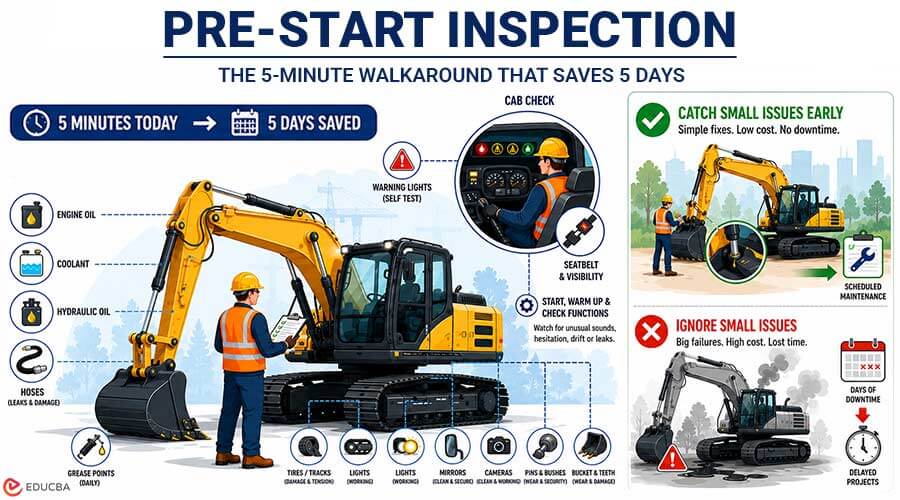
The pre-start inspection is the most commonly skipped task in equipment operation and the most valuable one for every minute invested. It requires no tools, no training beyond a short explanation, and less time than it takes to make a coffee. A pre-start inspection routinely catches problems that would otherwise cause a machine to stop for a week.
Why It Gets Skipped?
The reasons are entirely understandable. The machine worked yesterday. The crew is waiting. There is a schedule, and a walkaround feels like a delay before the real work starts.
The difficulty is that a pre-start inspection produces nothing visible when it goes well. Nobody notices the breakdown that did not happen, so the habit competes against an immediate, obvious pressure and offers only an invisible benefit in return.
What a Pre-Start Inspection Covers in Five Minutes?
A thorough pre-start inspection begins by walking around the machine in the same direction each time to ensure nothing is missed. Look underneath for fresh fluid on the ground, since the shape and color of a puddle indicates both the system involved and how fast it is losing fluid.
Check fluid levels: engine oil, coolant, hydraulic oil. Look at hoses for chafing, bulging, or wet patches. Check the undercarriage and tires for damage, and ensure they are at the correct tension. Check that lights, mirrors, and cameras are clean and working. Grease the points that need daily attention.
The Attachment Deserves Attention
Pins and bushes, coupler locking mechanisms, cutting edges, and teeth all wear, and they’re easy to inspect while walking past during a pre-start inspection. A worn pin caught early is a scheduled job. The same pin found after it fails is a recovery.
The Cab Check
Once inside, before starting, look at what the machine is reporting as part of your pre-start inspection. Check for warning lights on the dash during the initial self-test, then confirm that they clear. Ensure the gauges are reading correctly, the seatbelt is in good condition, and the windows are clean enough for proper visibility.
Then start the machine, let it warm up, and cycle each function slowly through its full range. Watch for hesitation, drift, or unusual sounds. A cylinder that settles under its own weight, or a boom that moves more slowly one way than the other, is describing a problem while it is still small enough to plan around.
Small Problems, Cheap Solutions
Almost everything found during a pre-start inspection is inexpensive to fix at that moment. A weeping cylinder identified early becomes a straightforward hydraulic cylinder repair booked into a convenient week. Left alone, it becomes a failure on site, contaminated ground, and a machine recovered rather than driven home.
The economics are the entire argument. Five minutes spent on a pre-start inspection each morning versus five days of unplanned downtime is not a close comparison, and the only thing standing between the two is a consistent habit.
Making Your Pre-Start Inspection Routine Stick
Habits survive when they are easy and expected. A short printed pre-start inspection checklist attached to the cab, a place to record what was found, and a supervisor who asks about it rather than assuming can make all the difference.
Above all, the pre-start inspection process is successful when reported faults are fixed. Operators who raise issues that nothing will be done about will stop raising them, and the walkaround quietly becomes a formality. Operators whose reports produce action keep looking properly, which is precisely what an effective pre-start inspection depends on.
Final Thoughts
A pre-start inspection is one of the simplest and most effective ways to improve equipment reliability, operator safety, and maintenance planning. Spending just a few minutes checking the machine before work begins can help identify minor issues before they turn into costly repairs or unexpected downtime. By making pre-start inspections a consistent daily habit and promptly addressing reported problems, businesses can extend equipment life, reduce operating costs, and keep projects on schedule.
Recommended Articles
We hope this guide on pre-start inspections helps you improve equipment reliability, reduce unexpected downtime, and build a proactive maintenance routine. Explore these recommended articles for additional insights and best practices on equipment maintenance, preventive inspections, and operational efficiency.

