


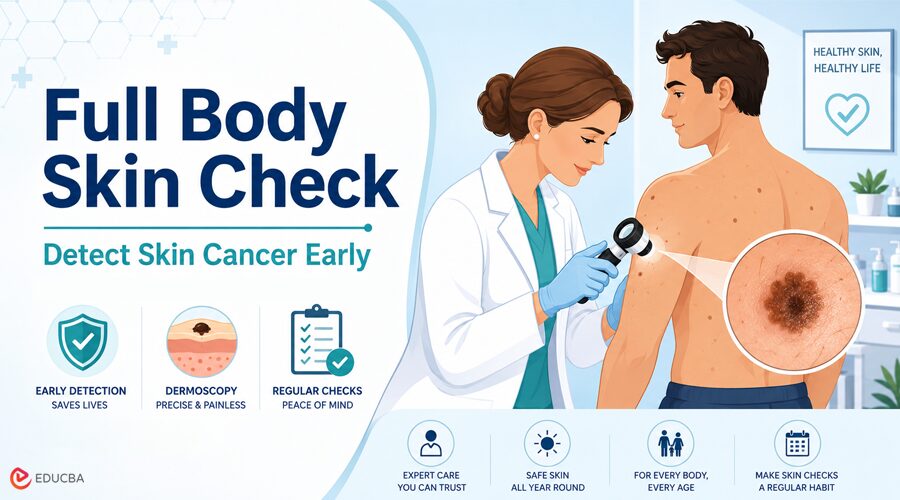
Skin cancer often develops without causing pain or obvious symptoms. A full body skin check allows clinicians to examine your skin thoroughly and identify suspicious changes before they become more noticeable.
Many skin cancers are first detected during routine examinations rather than after symptoms appear. Early assessment supports timely treatment and helps build a record for monitoring future skin changes.
Key Takeaways
- Routine Screening Matters: Many skin cancers are detected before symptoms appear during structured professional examinations.
- Whole Body Assessment: Areas that are difficult to examine yourself should always be included in a complete skin check.
- Individual Risk Counts: Your age, skin type, family history, and sun exposure help determine screening frequency.
- Early Detection Supports Better Outcomes: Identifying suspicious lesions early often allows simpler treatment and closer monitoring.
- Self-Checks Still Matter: Monthly skin examinations help you recognize new or changing spots between appointments.
- Regular Follow-Up: Comparing findings over time improves the ability to detect gradual skin changes.
A full body skin check is a practical way to monitor your skin health before problems become obvious. Combining professional examinations with good sun protection and regular self-checks provides the strongest approach to early detection.
How Does a Full Body Skin Check Work?
A full body skin check follows a structured examination rather than a quick visual glance. Because skin cancer can go unnoticed for years, each area of the skin is assessed carefully to identify lesions, moles, or changes that may require monitoring or further investigation.
1. Every Area Is Examined Systematically
A clinician follows a consistent examination process to reduce the chance of missing suspicious lesions. Areas that patients rarely inspect themselves also receive careful attention.
The scalp, back, soles of the feet, and behind the ears are commonly included. Systematic assessment improves consistency and supports thorough skin examinations.
2. Dermoscopy Reveals Hidden Detail
A dermatoscope magnifies structures beneath the skin surface that cannot be seen during a standard visual inspection. This provides additional clinical information.
Patterns within a mole become easier to evaluate using dermoscopic examination. The findings help determine whether monitoring or further assessment is appropriate.
3. Previous Skin Changes Are Compared
When patients attend regular appointments, clinicians compare current findings with earlier records. Small changes often become easier to identify over time.
A mole that appeared stable 12 months earlier may show subtle progression during a follow-up visit. Careful comparison strengthens clinical decision-making.
4. High Risk Areas Receive Equal Attention
Skin cancer can develop on almost any part of the body, even in areas that receive little sun exposure. Every region deserves the same careful examination.
Checking overlooked areas ensures complete skin coverage rather than focusing only on visible or concerning spots. This reduces the chance of missed findings.
5. Personal Risk Factors Guide the Assessment
Every examination begins with questions about medical history, occupation, previous skin cancers, and family history. These details influence clinical decisions.
For example, an outdoor construction worker may require closer monitoring than someone with limited ultraviolet exposure because cumulative sunlight exposure increases long-term risk.
6. Findings Are Properly Documented
Clinicians record the location, appearance, and characteristics of significant lesions. This creates a reliable history for future comparison during routine reviews.
Detailed records support ongoing monitoring by helping identify even minor differences between appointments. Accurate documentation improves long-term skin surveillance.
Benefits of Full Body Skin Checks
Routine examinations do more than identify suspicious moles. They help identify skin changes early and provide advice based on your medical history, skin type, and personal risk factors.
- Earlier Detection: Small skin changes can be identified before they become visible, painful, or more difficult to treat.
- Whole Body Assessment: Areas that are difficult to inspect yourself, such as the scalp and back, receive a careful professional examination.
- Accurate Risk Assessment: Your clinician considers family history, occupation, previous skin cancers, and skin type when planning future reviews.
- Advanced Examination Tools: Dermoscopy provides a magnified view of skin structures that are not visible to the naked eye.
- Ongoing Monitoring: Regular appointments create a documented history that makes gradual changes easier to recognize.
- Greater Peace of Mind: A professional assessment provides reassurance that existing moles remain stable over time.
- Personalized Follow-Up: Screening intervals are based on your individual risk, not a one-size-fits-all schedule.
Understanding Your Results
After your examination, your clinician explains whether your skin appears healthy, requires routine monitoring, or needs further investigation. Understanding the results helps you decide when to have future skin checks.
| Possible Finding | What It May Mean |
| Normal mole | Continue routine monitoring and self checks. |
| Benign skin lesion | No immediate treatment may be required. |
| Changing mole | Additional monitoring or biopsy may be recommended. |
| Suspicious lesion | Further assessment should be arranged promptly. |
Who Benefits Most From Full Body Skin Checks?
Although anyone can benefit from regular skin examinations, some people have a greater chance of developing skin cancer. On-site skin cancer screening also helps organizations support employees who spend long hours working outdoors.
1. Outdoor Workers
Builders, landscapers, road crews, and farmers experience repeated exposure to ultraviolet radiation throughout their careers. Years of sunlight increase the importance of regular professional screening.
A workplace screening program supports early identification without requiring employees to arrange separate clinic visits. This improves participation across larger teams.
2. People With Fair Skin
Fair skin contains less protective melanin, making it more vulnerable to ultraviolet damage. This increases the likelihood of developing sun-related skin changes.
Routine examinations provide consistent monitoring and help identify suspicious lesions before obvious symptoms develop. Regular reviews support earlier clinical decisions.
3. Individuals With Many Moles
Having numerous moles can make it difficult to recognize subtle differences during self-examinations. Professional comparison improves confidence and accuracy.
Photographic records and documented follow-up help clinicians monitor gradual changes over time. This approach reduces uncertainty during future appointments.
4. People With a Family History of Skin Cancer
A close family history of melanoma or other skin cancers may increase your personal level of risk. Professional skin checks help establish a suitable review schedule.
Regular appointments support individual risk management by identifying changes that deserve closer assessment. Screening plans can be adjusted as your needs change.
5. Anyone Previously Treated for Skin Cancer
A previous diagnosis underscores the importance of continued monitoring, as new skin cancers can develop years after successful treatment.
Ongoing reviews provide long-term surveillance and help clinicians compare new findings with previous records. Consistent follow-up supports earlier intervention.
6. Adults Who Notice New or Changing Spots
Not every skin change is cancer, but any new mole or changing lesion deserves professional assessment. Waiting for symptoms may delay diagnosis unnecessarily.
Seeking prompt clinical advice from specialists after noticing unusual changes allows clinicians to investigate concerns before they progress.
Final Thoughts
A full body skin check looks at more than just the spots you notice yourself, helping doctors find skin cancer early. Regular professional assessments, combined with monthly self-checks and sensible sun protection, support earlier diagnosis and better long-term skin health. If you notice any new or changing lesion, arrange a professional skin examination without delay.
Recommended Articles
We hope this guide helps you understand how a full body skin check supports early skin cancer detection and ongoing skin health monitoring. Explore these recommended articles for more insights into skin cancer prevention, mole monitoring, sun protection, dermatology care, and regular health screenings.

