


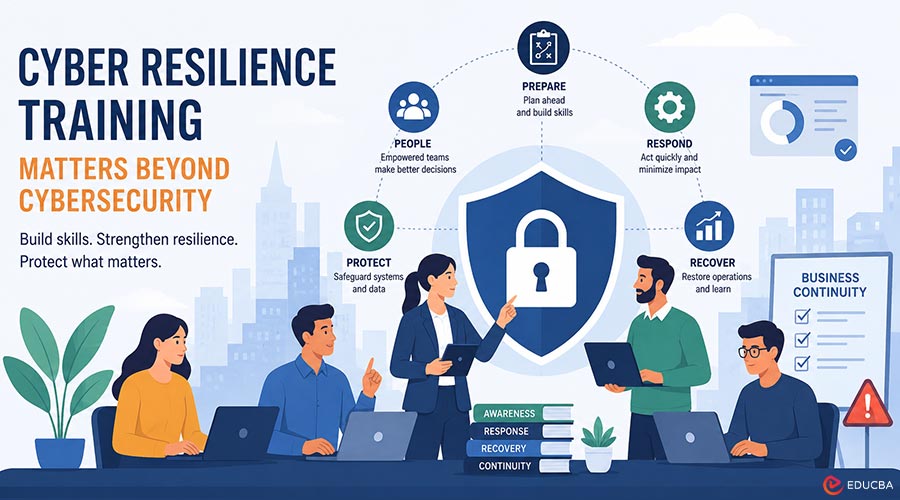
Cyber resilience training matters beyond cybersecurity because preventing cybersecurity alone does not guarantee that your business will keep running when something goes wrong. A resilient approach improves your organization’s ability to prepare for attacks, respond with confidence, and recover without major disruption. That matters for every team, not just IT. When training is tied to business outcomes, policy guidance, and proven frameworks, cyber resilience becomes a practical way to protect operations, people, and trust.
Key Highlights
- Cyber resilience training helps your team respond to cyber threats without losing focus on business continuity.
- It builds practical incident-response habits that support faster decision-making under pressure.
- Strong programs connect security awareness with disaster recovery and daily operations.
- Good training follows best practices such as the NIST Cybersecurity Framework.
- It prepares leaders, security teams, and staff for disruptions that affect critical functions.
- The result is a more stable organization that can recover, adapt, and keep serving customers.
Understanding Cyber Resilience Training
Cyber resilience training equips staff to prepare for, respond to, and recover from disruptions. It goes beyond awareness by translating policies into actionable steps for real-world situations, thereby supporting risk management. Effective training begins with a clear framework. ITSM Hub’s NIST-based courses help teams understand threats and apply standards that drive business results. These structured programs prove that standards-led cyber resilience training builds stronger responses.
Defining Cyber Resilience and Its Difference from Cybersecurity
Cybersecurity often centers on prevention blocking unauthorized access, reducing exposure, and strengthening defenses. While essential, this is only part of the solution. Cyber resilience goes further by focusing on maintaining business operations during a cyber incident. It asks not just “How do we prevent attacks?” but also “How do we keep critical work going if defenses fail?” This approach links security to risk management and operational decisions.
That is why training is crucial beyond technical defenses. Teams need more than tools; they need clear roles, escalation paths, and response priorities. When staff knows how to act under pressure, cyber resilience ensures continuity, recovery, and stronger business outcomes.
Components of Effective Cyber Resilience Training
Effective training is practical, repeatable, and relevant to real responsibilities. It should guide people on actions to take before, during, and after incidents building more than just security awareness by fostering confidence.
A strong program includes:
- Role-based employee training on risks and reporting
- Clear incident response guidance
- Disaster recovery steps for service restoration
- Security awareness connecting daily habits to business impact
Many organizations treat training as a one-time event or lack clear ownership among leaders, IT, and operations. A better approach uses structured learning, such as Foundation and Practitioner programs, to turn knowledge into action and embed resilience in everyday work.
The Evolving Cyber Threat Landscape in Australia
Australia’s evolving threat landscape puts pressure on organizations. New cyber threats, shifting vulnerabilities, and increased reliance on digital services mean leaders can not depend solely on security tools they need a trained workforce and a clear operating model. Training prepares leaders for disruptions by linking threat intelligence to action. It teaches teams how to assess exposure, apply standards, and respond consistently especially important for fast decisions under time constraints.
| Focus Area | How Training Helps |
| Threat Awareness | Clarifies changing cyber threats and potential impacts |
| Threat Intelligence | Enables practical decision-making from gathered information |
| Security Tools | Improves use of controls, monitoring, and response workflows |
| Disruption Readiness | Enhances coordination during unexpected operational issues |
Why Cyber Resilience Training Matters Beyond Cybersecurity?
Cyber resilience training is essential because disruptions are not limited to cyberattacks, system failures, process breakdowns, and decision delays can all impact operations. Preparation ensures critical functions are protected. Training also improves risk assessment by connecting security tasks to business continuity. Rather than treating resilience as just an IT issue, it helps align leaders, staff, and response teams on key priorities. The next sections highlight where this value is most evident.
Preparing for Unexpected Disruptions and Non-Cyber Events
Unexpected disruptions test your business’s adaptability. Even without a direct cyberattack, impacts can affect systems, communication, and service delivery. Training provides leaders with a repeatable method to protect essential functions. Cyber resilience training strengthens decision-making under pressure, clarifies priorities, escalation points, and fallback actions improving risk management and reducing confusion during disruptions.
Key focus areas:
- Reviewing disaster recovery plans for realistic roles and timelines
- Mapping continuity needs for critical services
- Identifying essential functions that must remain operational
- Practicing communication steps before disruptions occur
Enhancing Business Continuity and Operational Resilience
Business continuity improves when people know how to act, not just follow policy. Training turns frameworks into daily habits, guiding teams during disruptions and recovery. Operational resilience increases when cyber practices support business operations.
Trained teams can respond effectively, protect essential services, and maintain communication during technical issues reducing downtime and aligning decisions with business needs. Over time, this strengthens continuity management through continuous improvement, clearer roles, and consistent execution. Your organization builds reliable habits that protect services and long-term performance.
Safeguarding Against Human Risk and Social Engineering
People are both the first line of defense and a common vulnerability. Human error can expose data, weaken security, or delay incident response. Staff education is essential for organizational resilience. Employee training helps staff recognize risky behaviors and respond correctly.
Security awareness includes identifying suspicious messages, promptly reporting issues, following policies, and avoiding actions that could escalate problems. Social engineering preys on routine behavior. Resilient organizations train employees to question unusual requests, protect credentials, and follow approval procedures. These habits reduce preventable errors and improve threat response.
Real-World Benefits of Cyber Resilience Training for Organizations
Traditional cybersecurity emphasizes prevention. Cyber resilience training adds readiness, response discipline, and recovery support crucial during operational stress. Improved training limits reputational damage, enhances coordination, and meets regulatory requirements with clear processes and documented best practices. The benefit goes beyond technical protection: it strengthens business continuity, speeds recovery, and safeguards stakeholder confidence.
Improving Response to Incidents and Crisis Management
Regular practice of incident response plans boosts team performance. Ongoing cyber resilience training keeps roles clear, reduces hesitation, and minimizes confusion during breaches something policy documents alone can not achieve. Crisis management improves as trained teams understand escalation, communication, and decision-making. Instead of waiting for instructions, staff act confidently within approved guidelines, saving valuable time.
Continuous learning builds confidence through repetition. Structured courses ensure consistent application of standards, enhancing coordination across technical and business functions during cyber incidents and disruptions.
Supporting Recovery Efforts After a Breach or Attack
Recovery is where organizations often feel the true impact of an attack. Data breaches, service outages, and uncertainty can disrupt business long after the incident. Training shifts teams from reacting to recovering effectively.
A practical program teaches proper disaster recovery steps, including setting priorities, communicating, and using data backups to restore services safely. When staff understands the process, recovery is more controlled. Recovery is not just technical it requires coordination across teams. Cyber resilience training aligns operations, managers, and IT so they follow the same plan, making disaster recovery more reliable after a breach or major disruption.
Strengthening Brand Reputation and Stakeholder Trust
Brand reputation depends on how your organization responds to problems. Customers and stakeholders expect control, honesty, and reliable service. Training builds readiness before a crisis occurs. When teams know how to protect data and follow procedures, customer trust is easier to maintain. Strong resilience practices also support compliance by linking standards, responsibilities, and response actions.
Trust drives long-term continuity by keeping customers loyal, partners engaged, and leaders confident. Reducing reputational damage is more than a communications goal it is a business resilience outcome achieved through training and disciplined execution.
Essential Roles in Cyber Resilience Training
Cyber resilience training is most effective when it involves more than just security teams. Success depends on shared responsibility across leadership, operations, and technical staff everyone plays a part in maintaining stability. Executive leaders are crucial because major incidents impact priorities, budgets, communication, and risk management. Staff involvement is essential since everyday actions build resilience before any crisis. The next sections detail how leaders and employees each contribute to this foundation.
The Importance of Board Member and Executive Participation
Board members and executives set priorities that drive resilience. They allocate resources, define risk tolerance, and align security with business goals. Without their involvement, training risks becoming disconnected from key decisions. Leaders should understand how incidents impact operations, reputation, and service delivery.
This improves risk assessments and decision-making under pressure, while enabling clearer communication during disruptions. Most importantly, executive participation strengthens cyber resilience. When leaders train with teams, they see how frameworks work in practice. This alignment makes resilience integral to business planning not just a technical task.
Staff Education and Involvement at All Levels
Resilience is built through daily decisions on access, communication, escalation, and processes. Employee training should reach all levels, not just specialists. Security awareness improves business operations by helping staff spot issues early and act in accordance with policy.
Simple steps like quick reporting or following approval paths can minimize the impact of cyber incidents. Broad involvement is key to cyber resilience. When everyone knows their role, the organization stays consistent under pressure. Training transforms resilience from a technical idea into a shared capability across teams.
Leadership Strategies for Driving a Resilient Culture
A resilient culture is built intentionally. Leaders must make cyber resiliency visible, practical, and aligned with business goals starting with training and reinforced through ongoing support. Connecting resilience to outcomes like service continuity, accountability, and rapid recovery helps employees see its value beyond compliance or technical controls.
Leadership best practices include:
- Linking training to business priorities and critical services
- Using recognized frameworks for decisions and learning
- Engaging leaders, managers, and staff in joint exercises
- Reinforcing lessons with continuous communication and review
Final Thoughts
Cyber resilience training matters beyond cybersecurity because organizations must be prepared not only to prevent attacks but also to respond to, recover from, and continue operating during disruptions. By combining security awareness, incident response, business continuity, and disaster recovery into a structured training program, organizations create a resilient workforce capable of protecting critical services and maintaining stakeholder trust. Investing in cyber resilience training is more than a cybersecurity initiative it is a long-term business strategy that strengthens operational resilience, supports regulatory compliance, and enables organizations to adapt confidently to an evolving threat landscape.
Recommended Articles
We hope this guide on why cyber resilience training matters beyond cybersecurity has provided valuable insights into building a more resilient organization. Check out these recommended articles to learn more about cybersecurity and effective strategies.


