



Balancing six subjects across Higher Level and Standard Level, alongside the Extended Essay, Theory of Knowledge, and CAS, makes the International Baccalaureate Diploma Program one of the most demanding qualifications available to UK sixth-form students. For parents comparing routes into competitive UK universities and for Year 12 and Year 13 students trying to protect their grades under pressure, working with an experienced International Baccalaureate tutor from IB Innovators is often what separates a good result from a great one. This guide explains how online IB tutoring helps UK students improve their IB scores and why specialist IB tuition often produces faster, more measurable progress than traditional revision alone.
Demystifying the IBDP: Why Standard Revision Falls Short for UK Students
Scoring well in the IBDP requires simultaneous mastery of up to six subjects at Higher Level (HL) and Standard Level (SL), as well as rigorous core requirements, including the Extended Essay, Theory of Knowledge, and CAS. Standard classroom instruction in the UK, built around single-subject A-Level teaching, often struggles to give equal attention to both HL and SL tracks at once. Many UK families only discover this gap once a student is midway through Year 12, comparing notes with A-Level friends and realizing the IBDP runs on a different rhythm. A-Level students specialize early in three or four subjects.
In comparison, IB students must keep three HL and three SL subjects moving forward together, alongside CAS reflections, the TOK exhibition, and an independent 4,000-word research essay. Without dedicated support, one subject can quietly slip, and by the time it shows up as a lower predicted grade, there is far less runway left to fix it. This is exactly why specialist IB tutoring services exist. Rather than treating the Diploma Program like a set of six separate A-Levels, an experienced International Baccalaureate tutor understands how workload, deadlines, and grade weighting interact across the whole program, and paces support accordingly. In practice, this usually means a tutor helping a student with tasks such as:
- Mapping every IA, EE, and TOK deadline against school exam windows to ensure nothing clashes in the same week.
- Identifying which HL subject is most at risk early, rather than waiting for a mock exam to confirm it.
Quick Answer:
Q. Why do IB students need different tutoring than A-Level students?
IB students must manage six subjects across HL and SL simultaneously, plus the Extended Essay, TOK, and CAS core. Effective IB tutoring, therefore, has to cover both breadth and depth rather than one subject in isolation.
Granular Syllabus Coverage: Beyond Simple Textbook Memorization
Generic teaching rarely closes the precise gaps that cost IB students marks. An expert International Baccalaureate tutor targets curriculum content at a granular level. In technical subjects, for example, a student often needs help translating abstract algorithmic thinking into exact IB Computer Science pseudocode or managing the collaborative constraints of a Design Technology Group 4 project alongside other HL commitments.
Subject-matter depth matters because IB mark schemes reward precision. A tutor who only knows the topic at a broad level cannot show a student where their work falls short of top-band criteria. This is where a generalist tutor and a genuine subject specialist start to look very different in practice. Common areas where granular, subject-specific IB tuition can make the biggest difference include:
- Mathematics AA vs AI: Helping a student confirm they are on the right pathway and then closing gaps in proof technique or applied modeling, rather than relying on generic algebra revision.
- Biology and Chemistry IAs: Guiding proper experimental design, uncertainty calculations, and data processing so the investigation meets the criteria examiners actually mark against.
- Language A Literature and Language and Literature: Building the analytical vocabulary needed for a strong literary commentary, rather than simply summarising plot or theme.
- History and Economics: Teaching students how to build a structured, evidence-led argument that directly answers the command term, instead of writing everything they know about a topic.
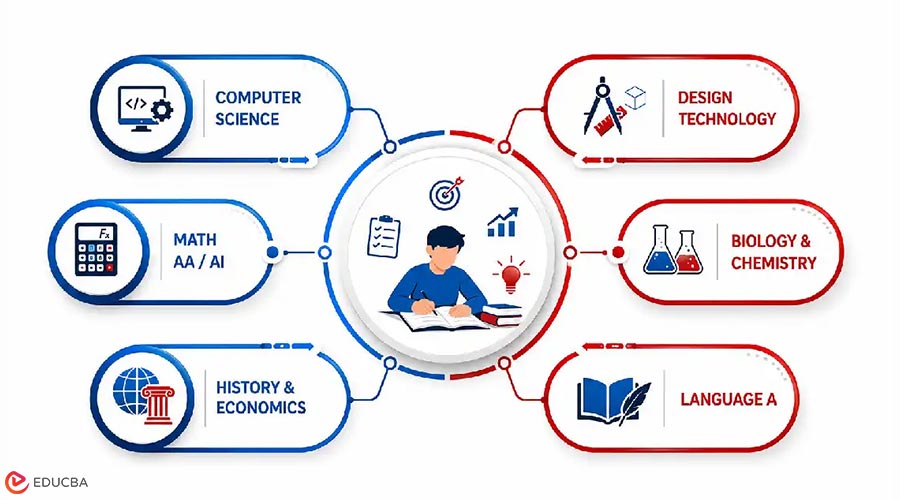
Real improvement comes from working with HL or SL subject specialists who understand IB assessment criteria, rather than generalist tutors. Platforms like IB Innovators connect students with qualified tutors in challenging fields such as IB Computer Science and Design Technology, ensuring focused syllabus support.
How Online IB Tutoring Improves IA, EE, and TOK Performance?
Up to 3 bonus core points rely entirely on the Extended Essay (EE) and Theory of Knowledge (TOK) combined, on top of the 42 points available across six subjects. A weak Internal Assessment (IA) can also drag down an otherwise strong subject grade, since IA marks are set by rubric criteria that reward very specific evidence and structure.
Online IB tutors help students unpack these rubric criteria early, well before submission deadlines, turning what many students experience as a source of panic into a reliable point accumulator. Each core component has its own demands, and confusing them is one of the most common reasons students lose avoidable marks:
- The Extended Essay: A 4,000-word independent research essay in one subject, marked against criteria covering focus, knowledge, critical thinking, and the research process itself.
- Theory of Knowledge: An exhibition and a 1,600-word essay exploring how we know what we claim to know, marked on the quality of argument rather than factual recall.
- Internal Assessments: Subject-specific coursework, often the first time a student has had to design, defend, and write up their own investigation without a set exam question to follow.
A tutor experienced in IA, EE, and TOK supervision can walk a student through the outline, draft, and refinement stages in a way a busy school supervisor may rarely have time for.
Quick Answer:
Q. How many points can the EE and TOK add to an IB score?
The Extended Essay and TOK can contribute up to 3 bonus points, increasing the maximum IB Diploma score from 42 to 45.
For students who need focused, rubric-aligned coursework support, 1-on-1 Guidance & Support sessions are designed specifically around IA and EE review, giving detailed, actionable feedback before the final submission window.
Strategic Exam Technique: How to Think Like an IB Examiner
Raw subject knowledge is not enough on its own. Students also need to understand precisely how their scripts will be evaluated. Effective IB tutors use intensive past-paper practice paired with deep dives into official mark schemes to build strong exam technique.
Understanding grade boundaries and examiner expectations helps students write answers that match IB marking standards, not just show content knowledge. Focused IB tuition improves exam technique through:
- Decoding command terms such as evaluate, discuss, and to what extent, and matching the answer structure to what each one actually demands.
- Allocating time across a paper realistically, so a high-value extended response is never rushed to leave room for a low-value short answer.
- Reviewing annotated past-paper scripts alongside the official mark scheme, so students can see exactly why marks were awarded or withheld.
Students who go through this process repeatedly stop guessing what an examiner wants and start writing directly to the mark scheme, which is often where the biggest single grade improvement comes from in the final months before exams.
Quick Answer:
Q. Why does an examiner’s experience matter in an IB tutor?
A tutor who has marked live IB scripts knows precisely how points are awarded against the mark scheme, which command terms examiners weight most heavily, and where students commonly lose marks even when their underlying knowledge is strong.
This is one of the clearest gaps in the online IB tutoring market. Many providers list qualified teachers, but few can point to tutors who are also practicing examiners. IB Innovators’ featured tutors include IBDP examiners and heads of department, and students preparing for retakes or a final push before exams can also join the Rapid Revision & IB Exam Retakes Course for intensive, examiner-led practice.
The Architecture of Improvement: Diagnostic Assessments and Custom Plans
The journey to a higher score should begin with an initial diagnostic assessment that pinpoints specific conceptual blind spots, rather than a generic revision timetable applied equally to every student. This data then forms a bespoke personalized learning plan, delivered through one-on-one online tutoring.
Instead of a broad lecture-style approach, students working with online IB tutors receive immediate, targeted feedback on their essays, problem sets, and past-paper answers, so study time is spent closing real gaps rather than repeating material students have already mastered. A well-run diagnostic and planning process typically looks like this:
- An initial assessment across each subject to establish the current working grade against the 1-to-7 IB scale, not just a general impression of strengths and weaknesses.
- A written personalized learning plan setting out which topics, command terms, or coursework stages need the most attention over the coming term.
- Short, frequent one-on-one sessions rather than occasional long ones, since consistency tends to produce steadier progress than cramming.
This cycle of assess, plan, teach, and re-test is what separates structured IB tutoring from occasional homework help, and it is usually the single biggest factor parents notice when comparing providers. A structured approach, such as the tailored matching process behind IB Innovators’ 1-on-1 Session and 1-on-1 Course options, ensures these custom plans are adapted to a student’s specific exam timetable, subject combination, and stress levels, not just their year group.
Securing Predicted Grades for Elite UK University Admissions
In the UK, UCAS offers depend heavily on accurate, competitive predicted grades issued early in Year 13. Securing an elusive Level 7 in HL subjects can open doors to competitive Russell Group institutions and Oxbridge, where offers are often based on specific HL grade requirements rather than the overall Diploma score alone.
Working consistently with a professional IB tutor online before schools set predicted grades often becomes the deciding factor between receiving an offer and facing rejection. It gives students time to demonstrate sustained improvement that a school can confidently predict. Predicted grades matter for far more than the initial UCAS application. They typically also affect:
- Whether a conditional offer is realistic to meet, which shapes how ambitious a student’s university shortlist should be.
- Eligibility for early scholarship and bursary schemes at some UK universities is based partly on predicted performance.
- How a school approaches a subject or level changes if the predicted grade in one HL subject consistently looks out of reach.
Because schools set predicted grades early in Year 13, and UK students do not have a resit series before UCAS deadlines, families have a shorter window than they often expect to influence these grades. Starting focused IB tutoring support in Year 12 gives students the best chance of achieving a predicted grade that matches their ambition.
Quick Answer:
Q. What IB score do UK universities expect?
Most UK universities ask for 32 to 36 points, while Oxbridge and other highly selective Russell Group courses typically expect 38 to 40 or more, often with specific Level 7 results required in relevant HL subjects.
Comparing IB Support Options for UK Students
The table below sets out how the three most common routes to extra IB support compare on the factors that matter most to UK parents and Year 12/13 students.
| Feature | School-Only Revision | Group IB Tuition | 1-on-1 Online IB Tutoring |
| Personalized to the student’s exact syllabus gaps | Limited | Partial | Full |
| Access to certified IB examiners | Rare | Sometimes | Yes |
| Dedicated IA, EE, and TOK feedback | Limited | Shared time | Dedicated sessions |
| Flexible around a UK school timetable | No | Fixed slots | Fully flexible |
| Focused on predicted grades and UCAS deadlines | No | No | Yes |
Families weighing up these options can compare current plans on the IB Innovators Pricing page, which breaks down 1-on-1 sessions, structured courses, and guidance packages by need rather than a single flat rate.
Frequently Asked Questions (FAQs)
Q1. What is an IB tutor, and how is it different from a school teacher?
Answer: An IB tutor is a specialist educator who supports the specific assessment objectives of the IB Diploma Program, including HL and SL syllabus content, Internal Assessments, the Extended Essay, and TOK. Unlike a school teacher managing a full class, the IB tutor that UK families hire works one-to-one on a student’s exact grade gaps.
Q2. How do online IB tutors help with predicted grades?
Answer: Online IB tutors use diagnostic assessments and structured past-paper practice to target the exact marks examiners reward, helping students show consistent performance before their school sets predicted grades. This evidence-based improvement is especially valuable for UK students applying through UCAS to competitive, grade-sensitive courses.
Q3. Can International Baccalaureate tutoring help with the Extended Essay and TOK?
Answer: Yes. Specialist tutors guide students through topic selection, research questions, and rubric-aligned structuring for the Extended Essay and help them develop stronger Theory of Knowledge arguments. Since the EE and TOK can contribute up to 3 bonus core points, focused IB tuition can meaningfully lift a student’s final Diploma score.
Q4. Is 1-on-1 online IB tutoring better than group classes?
Answer: One-on-one online IB tutors dedicate the entire session to a single student’s weak topics, mark scheme techniques, and coursework deadlines, while group IB tutoring divides attention among several students. For UK students juggling six subjects and core requirements, personalized 1-on-1 support typically produces faster, more targeted score improvement.
Q5. How soon should a Year 12 student start working with an IB tutor?
Answer: Ideally, students should begin working with an International Baccalaureate tutor early in Year 12, since Internal Assessments, the Extended Essay, and CAS all run concurrently with syllabus teaching. Starting support from online IB tutors early prevents last-minute cramming and keeps predicted grades on track for UCAS deadlines.
Recommended Articles
We hope this guide to online IB tutoring helps you understand how personalized academic support can improve IB performance. Check out these recommended articles for more insights, strategies, and resources to help students achieve their academic goals.

