


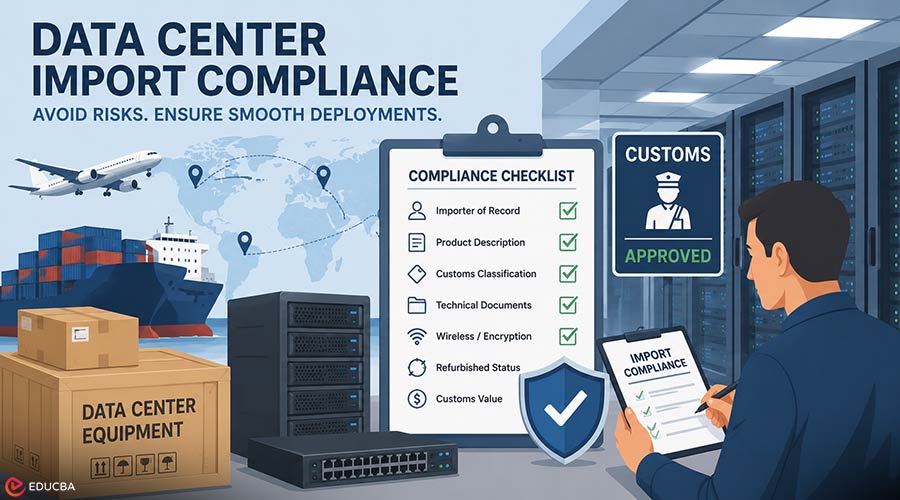
Data center projects are usually planned around hardware availability, installation windows, and delivery dates. However, data center import compliance is often considered later, sometimes only after the equipment has already left the warehouse. That sequence is risky. A server shipment may contain legally straightforward products, but it may also include network switches, wireless modules, encryption-capable security devices, refurbished units, or high-value GPU systems. Each item can create different customs or regulatory requirements that must be reviewed before shipment to avoid unexpected delays during deployment.
Key Takeaways
- A shipment can be technically ready but still fail because no eligible local importer is in place.
- Servers, switches, wireless devices, storage systems, and refurbished hardware do not always follow the same import rules.
- Product descriptions, model details, and supporting documents should be reviewed before cargo is booked.
- High-value hardware needs a defensible customs value, not a rough estimate or an incomplete invoice.
- Multi-country deployments require a single project framework, but each destination still requires its own compliance review.
Key Data Center Import Compliance Risks to Review Before Shipment
The following risks highlight key areas requiring attention during the pre-shipment review process.
1. Who is Actually Importing This Equipment?
The first problem is often not the product. It is the party named as the importer. A freight forwarder can move cargo, and a customs broker can submit a declaration, but neither automatically becomes the legal Importer of Record. The importer is the entity that appears on the customs entry and accepts the related responsibilities. Depending on the country, those responsibilities may include classification, valuation, taxes, recordkeeping, permits, and post-clearance questions.
This becomes critical when the buyer has no local company in the destination market. The receiving office may be able to use the equipment, but the law may not permit it to import the equipment. Confirm the importer before booking the shipment. Waiting until arrival can leave the cargo at the border with no legally valid party able to clear it.
2. Vague Product Descriptions
Descriptions such as ‘IT equipment’, ‘computer parts’, or ‘network hardware’ may be acceptable in an internal purchase order, but they are often too vague for customs. Authorities may need to understand what the product does, whether it transmits radio signals, whether it contains encryption, whether it is new or used, and whether it is a complete unit or a component.
A useful description usually includes the product type, manufacturer, model number, technical function, condition, and intended use. It should also match the datasheet, invoice, and packing list. This is not paperwork for its own sake. A better product description helps the importer select the correct customs code and identify any license or product-document requirement before shipment.
3. Unsupported Customs Classification
Customs classification means selecting the official product code used to determine duties, taxes, and regulatory controls. A small difference in product function can change the code. A server, a network switch, a storage appliance, and a wireless access device may all sit in the same rack, but they should not be assumed to have the same classification.
Problems usually arise when code is copied from an old shipment without verifying that the model, technical function, or destination rules remain the same. The code should be supported by technical information, not selected only because it produces a lower duty rate or was used previously.
4. When Technical Documents Do Not Match the Shipped Model
A document can exist and still be unusable. Declarations, test reports, and certificates may refer to a product family rather than the exact model. The manufacturer’s name may differ. A document may have expired, use an outdated standard, or contain a model number that does not match the invoice.
These mismatches are easy to miss in a large deployment because different teams often prepare commercial and technical files. A short pre-shipment review can catch them while there is still time to request a corrected document.
5. Hidden Wireless, Encryption, or Controlled Features
Data center equipment is not always passive computing hardware. Network devices may include Wi-Fi, Bluetooth, cellular connectivity, remote-management radios, or encryption functions. Those features can trigger telecom approval, radio registration, encryption review, or strategic goods questions in some markets.
The same physical product can face very different requirements from one country to another. Focus on actual technical capability, not only the product name. A device described as a security appliance or management unit may still contain functions that change its import treatment.
6. Mixing New and Refurbished Without Declaring It
Many infrastructure projects use a mix of new equipment, replacement units, and refurbished hardware. Customs authorities do not always treat those categories the same way.
Some countries require additional approvals for used electrical or electronic equipment. Others restrict certain second-hand products or ask for inspection, age, condition, or warranty information. State the condition clearly on the invoice. Describing a refurbished server as new to simplify the process creates a much larger risk than the original permit requirement ever would.
7. Customs Value That Cannot Be Defended
High-value servers and GPU systems receive greater scrutiny from customs because even a small valuation error can have a significant tax impact. Free-of-charge shipments, warranty replacements, internal transfers, and demonstration units are particularly sensitive. ‘No charge’ does not necessarily mean ‘no customs value’.
The importer may still need a reasonable value supported by commercial documents, purchase history, replacement cost, or another accepted valuation method. Invoices should also separate hardware, software, freight, insurance, and other charges where required. A single unexplained total can make the declaration harder to defend.
Risk Review Table
| Risk | Typical Problem | Best Time to Check | Useful Evidence |
| Importer Eligibility | The consignee cannot legally act as an importer | Before booking | Importer registration and written confirmation |
| Product Description | The invoice says only ‘IT equipment’ | Before invoice approval | Model list, datasheet, and technical function |
| Classification | Old or unsupported customs code | Before quotation and shipment | Datasheet and classification rationale |
| Technical Documents | The certificate does not match the model | Before departure | Declaration, report, and exact model reference |
| Wireless or Encryption | Hidden regulated functionality | During product review | Technical specifications and feature list |
| Refurbished Status | Used equipment restrictions missed | Before purchase or dispatch | Condition, age, serials, and warranty details |
| Customs Value | Unsupported low or zero value | Before declaration | Commercial basis and valuation support |
A Practical Pre-Shipment Checklist
The following checklist before releasing any international data center shipment:
- Destination country and final delivery address
- Name and legal status of the Importer of Record
- Manufacturer and exact model number
- Clear product function and intended use
- New, used, or refurbished condition
- Proposed customs classification
- Country of origin
- Commercial or customs value
- Datasheet and product images
- Declaration of Conformity or equivalent technical documents
- Wireless or radio functionality
- Encryption or security functionality
- End user and end-use information
- Required permits, registrations, or licenses
- Planned freight route and arrival date
Real-World Example: One Rollout, 45 Separate Reviews
A recent cloud infrastructure rollout coordinated by TFTIOR involved servers, network switches, power distribution units, and related equipment across 45 destination markets. The project used a single central operating framework, but the compliance review was not replicated across countries. Each destination was checked separately for importer eligibility, documentation, product treatment, and local requirements.
One control that proved particularly important was the timing and consistency of conformity documentation. In several markets, the team had to confirm that the Declaration of Conformity covered the exact model and had been issued before the relevant shipment or invoice date. The case shows why global coverage cannot mean one generic checklist. The central team can standardize the process, but local teams must handle the legal import review.
How to Reduce Delay Risk?
- Confirm the importer before booking freight.
- Review products by model, not only by category.
- Check documents against the exact shipped units.
- Resolve permit and registration questions before departure.
- Keep one controlled version of the invoice, packing list, and technical file.
- Record the reason for the selected customs code and value.
- Treat every destination as a separate legal import event.
For complex server and infrastructure shipments, specialist support for data center equipment imports can bring the importer, customs, technical documentation, and delivery workstreams together for a coordinated pre-shipment review.
Final Thoughts
Trucks, aircraft, or vessels do not cause most data center import delays. They begin earlier, with an unconfirmed importer, a weak product description, a mismatched document, or a requirement that nobody checked. A structured data center import compliance process helps organizations identify these issues before equipment is already in transit. Authorities can still inspect cargo and request additional information. What it does is eliminate many avoidable problems while the project team still has time to correct them. For international infrastructure teams, the real value of compliance planning is not more paperwork, but fewer surprises after the hardware is already in transit.
Recommended Articles
We hope this guide to data center import compliance helps you understand key risks and best practices. Explore these recommended articles for more insights and strategies.

