


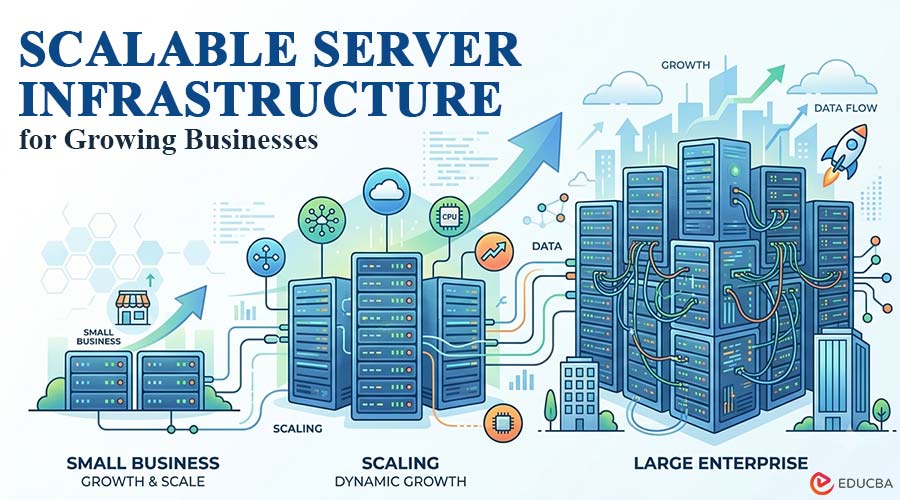
Every digital product eventually reaches a point where entry-level hosting cannot keep up with real business demand, and understanding when to move to powerful dedicated server hosting is one of the most important infrastructure decisions a growing SaaS platform, ecommerce system, or data-heavy application will make.
Why Basic Hosting Is Often Enough at the Beginning?
Most digital products start their life on shared hosting or a small virtual private server, and for good reason. Early-stage websites, MVPs, and small SaaS tools typically deal with low traffic, limited data, and predictable usage patterns. Hence, a modest amount of shared CPU and RAM is enough to keep pages loading and databases responding.
Advantages of Starting Small
Shared and basic hosting environments are attractive at this stage for several practical reasons:
- Low upfront cost, which matters when a product has no proven revenue yet.
- Simple management, often through a control panel with pre-configured software.
- Fast setup, letting founders launch in minutes instead of waiting for hardware provisioning.
- Sufficient performance for a handful of concurrent users or moderate content traffic.
Where the Limits Start to Show?
This is why platforms like WordPress blogs, small e-commerce storefronts, and early SaaS prototypes almost always begin here. The problem isn’t that basic hosting is poorly built; it’s that it’s architected for average, unpredictable, low-intensity workloads shared across many tenants on the same physical machine. That architecture becomes a limitation the moment a product starts to succeed.
What Changes When Traffic, Users, and Workloads Grow?
As businesses expand, investing in scalable server infrastructure becomes essential to maintain application performance, handle higher workloads, and prepare for future growth.
Growth changes the nature of the workload itself, not just its size. A product that once served a few hundred visitors a day might suddenly need to support thousands of concurrent sessions, real-time database queries, background jobs, API calls, and file processing simultaneously.
Common Growth Triggers
Several shifts typically happen at once:
- Traffic becomes less predictable, with spikes from marketing campaigns, seasonal demand, or viral growth.
- Database queries multiply as user accounts, transactions, and content records accumulate.
- Background processes increase, including emails, webhooks, image processing, and analytics.
- Multiple services start competing for the same CPU and memory pool.
- Response time expectations rise as users tolerate less latency and competitors improve.
The Hidden Part of Shared Resources
On shared or entry-level infrastructure, these changes expose a hard ceiling. CPU cycles are split across many unrelated accounts on the same physical server, so a neighboring site’s traffic spike can slow down your application even though your own code hasn’t changed.
This is often the first sign that a product has outgrown its original hosting tier.
This is where scalable server infrastructure provides an advantage by ensuring applications have access to predictable computing resources as workloads continue to increase.
Why Scalable Server Infrastructure, Resources, and Isolation Matter for Stability?
As workloads grow, the specific resources behind a server start to matter far more than the marketing label on a hosting plan.
Four factors tend to define whether an application stays fast and stable under real business load:
CPU Consistency
CPU consistency determines whether your application receives guaranteed CPU resources or must compete with other tenants for them. On shared infrastructure, CPU allocation is often best-effort, so performance can vary throughout the day depending on which other accounts are running on the same physical machine.
Applications running scheduled jobs, real-time features, or AI inference workloads need predictable CPU cycles, not averages.
RAM Availability
RAM availability directly affects how much data an application can cache, how many concurrent connections a database can handle, and how many processes can run without triggering swapping or crashes.
Growing SaaS platforms and e-commerce systems with active shopping carts, sessions, and search indexes are especially RAM-hungry, and running out mid-peak traffic is one of the most common causes of downtime.
Storage Performance
Storage performance is another silent bottleneck. Modern high-performance servers rely on NVMe SSDs rather than older spinning disks because they reduce the time required to read and write data for databases, file uploads, and caching layers.
A slow disk can bottleneck an otherwise powerful CPU and RAM configuration.
Isolation and Noisy Neighbors
Isolation is what reliably connects these resources. On shared servers, isolation is weak: a noisy neighbor running a resource-heavy process can degrade performance for everyone else on the same machine.
Dedicated, higher-tier infrastructure gives an application its own resources, its own kernel-level boundaries, and predictable behavior under load, which is essential when real customers and revenue depend on uptime.
The table below summarizes how these environments typically compare on the factors that matter most as a product scales.
| Factor | Shared/Basic Hosting | VPS | Cloud Instance | Dedicated Infrastructure |
| CPU allocation | Shared, variable | Guaranteed vCPU share | Guaranteed, elastic | Full physical CPU, consistent |
| RAM | Limited, shared pool | Fixed, dedicated | Elastic, pay-per-use | Full physical RAM, no contention |
| Storage performance | Often HDD or shared SSD | Shared or dedicated SSD | Networked SSD/NVMe options | Local NVMe, highest throughput |
| Isolation | Low (multi-tenant) | Virtualized isolation | Virtualized isolation | Full hardware isolation |
| Network stability | Shared bandwidth | Shared or capped | Variable, usage-based | Dedicated, often unmetered |
| Server-level control | Minimal | Root access, virtualized | Root access, virtualized | Full root/hardware-level control |
| Best suited for | Small blogs, MVPs | Growing apps, moderate traffic | Variable or bursty workloads | High-traffic, data-heavy, mission-critical systems |
When Does Dedicated Infrastructure Become the Smarter Scalable Server Infrastructure Option?
There comes a point where the flexibility of VPS or cloud instances no longer offsets the performance and cost trade-offs of shared physical resources. This shift usually happens when a product needs consistent, high-volume performance rather than unpredictable scaling.
Signs You Need to Upgrade Your Server Infrastructure
Organizations typically evaluate scalable server infrastructure once their existing hosting environment starts to affect application performance or business operations.
Common signals that a business workload has reached this point include:
- Database performance degrades noticeably during peak hours despite optimization.
- The application regularly hits CPU or RAM limits on its current VPS or cloud tier.
- Compliance, security, or data residency requirements necessitate full hardware isolation.
- Predictable, high-bandwidth network transfer is critical for video, large file downloads, and data pipelines.
- The cost of scaling cloud instances horizontally begins to exceed that of a dedicated setup.
- AI/LLM workloads, vector databases, or RAG pipelines require sustained availability of CPU/GPU and memory rather than bursty access.
Why Dedicated Removes the Bottleneck?
For businesses facing these conditions, dedicated infrastructure removes the multi-tenant bottlenecks of shared and virtualized environments while giving teams full control over CPU allocation, storage configuration, and network capacity.
For businesses facing these conditions, providers like PerLod Hosting eliminate the multi-tenant bottlenecks in shared and virtualized environments by giving teams full control over their environments.
This is particularly relevant for growing SaaS platforms, ecommerce systems processing high transaction volumes, and data-heavy applications such as analytics dashboards or AI inference services that require stable, uncontended hardware rather than shared or elastic resources.
Dedicated infrastructure is not only about power; it’s also about providing scalable server infrastructure that eliminates the unpredictability of shared environments. This becomes increasingly important when uptime and performance directly affect revenue and customer trust.
Key Factors to Compare Before Choosing Scalable Server Infrastructure
Choosing the right scalable server infrastructure isn’t just about picking the biggest specifications available. Instead, businesses should evaluate how well each option aligns with their current workloads and future growth plans. A structured comparison helps align the setup with actual workload requirements, avoiding overprovisioning or underprovisioning.
Technical Factors to Consider
Before committing to a server tier, it is worth considering these factors systematically:
- CPU type and core count relative to your application’s concurrency needs, not just clock speed.
- RAM ceiling and whether it can be upgraded without significant downtime.
- Storage type (NVMe, SSD, or HDD) and whether RAID is needed for redundancy.
- Network bandwidth (whether metered or unmetered) and available uplink speed.
- Level of isolation, including whether resources are shared, virtualized, or fully dedicated.
- Server-level control, such as root access, custom OS choice, and firmware/hardware management.
- Operational factor to consider:
- Uptime guarantees and data center reliability, including redundant power and network paths.
- Support model, whether managed, semi-managed, or fully self-managed.
- Scalability path, including how easily the setup can grow without a full migration.
Final Thoughts
As digital products grow, their infrastructure requirements evolve with increasing traffic, workloads, and user expectations. Investing in scalable server infrastructure at the right stage helps maintain consistent performance, minimize downtime, and support long-term business growth. Warning signs such as unpredictable CPU performance, limited RAM, slow storage, weak resource isolation, and recurring network bottlenecks often indicate that it’s time to consider a more capable hosting environment.
There is no one-size-fits-all solution when choosing server infrastructure. The best option depends on factors such as application complexity, traffic volume, future scalability, and compliance needs. By carefully evaluating these requirements and upgrading infrastructure as needed, businesses can improve reliability, enhance user experience, and avoid unnecessary operational costs. For organizations that have outgrown shared or virtual hosting, solutions like PerLod Hosting provide the dedicated resources and control needed to confidently support high-performance, mission-critical applications.
Recommended Articles
We hope this article on scalable server infrastructure has helped you understand how to select the right hosting environment to support your organization’s growth. Explore these recommended articles for additional insights into server technologies, cloud solutions, and infrastructure best practices to improve performance, scalability, and reliability.


