


What is Procure-to-Pay?
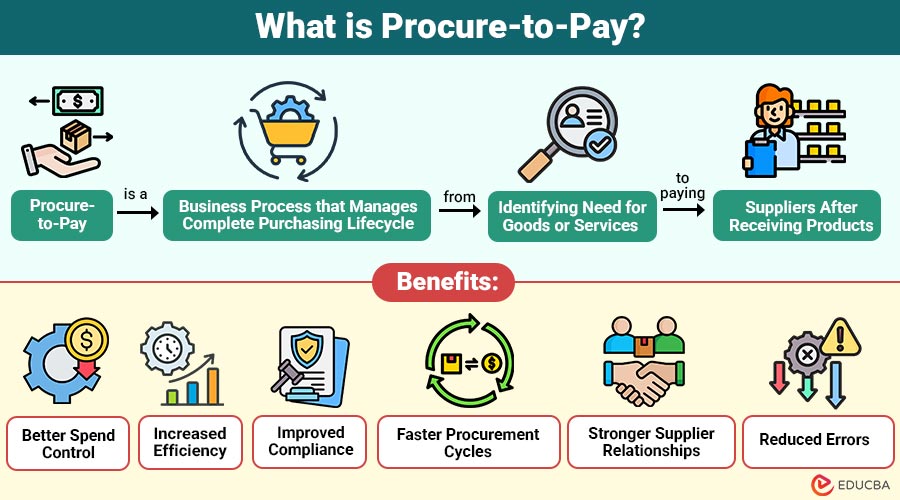
Procure-to-Pay (P2P) is a business process that manages the complete purchasing lifecycle, from identifying the need for goods or services to paying suppliers after receiving the products. It integrates procurement and accounts payable functions into a single workflow, ensuring purchases are authorized, tracked, and paid accurately.
The Procure-to-Pay process helps organizations improve operational efficiency, strengthen supplier relationships, reduce procurement costs, and maintain compliance with internal policies. Automation helps businesses track spending, reduce mistakes, and speed up the purchasing process. A Procure-to-Pay system ensures all purchases are transparent, efficient, and financially controlled, covering supplies, materials, software, and services.
Table of Contents:
Key Takeaways:
- Procure-to-Pay streamlines purchasing, invoicing, and payments through standardized, automated procurement workflows for greater efficiency.
- Automation improves spending visibility, reduces errors, strengthens compliance, and consistently accelerates procurement cycle times across the organization.
- Effective procure-to-pay builds better supplier relationships through clear communication, accurate invoices, and timely payments.
- AI, ERP, and eProcurement tools help businesses buy better, manage money, and grow.
Why is Procure-to-Pay Important?
The following points highlight the reasons why Procure-to-Pay is important for improving procurement efficiency, financial control, and supplier management.
1. Improve Purchasing Accuracy
Standardized procurement processes reduce manual errors, ensuring consistent accuracy in orders, approvals, and purchasing decisions.
2. Control Organizational Spending
Approval workflows monitor purchases, prevent unauthorized spending, and maintain better budget control across departments.
3. Strengthen Supplier Relationships
Timely payments and transparent communication build supplier trust, encouraging long-term collaboration and dependable service quality.
4. Increase Procurement Visibility
Centralized procurement data provides real-time insights into purchasing activities, spending patterns, and supplier performance.
5. Reduce Procurement Cycle Times
Automated workflows speed up approvals, purchases, deliveries, and payments, improving overall efficiency.
6. Minimize Invoice Errors
Automated invoice matching reduces errors, duplicate payments, and financial checking issues.
7. Enhance Compliance
Standardized procurement procedures consistently support regulatory compliance, internal policy adherence, and successful audit preparation.
How Does Procure-to-Pay Process Work?
The Procure-to-Pay process consists of several interconnected stages that ensure purchases are properly requested, approved, fulfilled, and paid.
Key Components of Procure-to-Pay
An effective procure-to-pay system consists of several integrated components.
1. Purchase Requisition
Initiates procurement requests by efficiently identifying required goods, services, quantities, approvals, and purchasing requirements.
2. Supplier Management
Maintains supplier information, contracts, performance records, compliance, and relationship management for reliable procurement operations.
3. Purchase Order Management
Creates standard purchase orders with correct prices, approvals, terms, and supplier details.
4. Goods Receipt
Confirms that delivered goods or services meet purchase order specifications before inventory updates and payment approval.
5. Invoice Management
Checks supplier invoices with purchase orders and receipts to ensure accurate payments before approval.
6. Payment Processing
Completes supplier payments safely, ensuring on-time payments, accuracy, compliance, and better supplier relationships.
7. Reporting and Analytics
Provides procurement insights through spending analysis, supplier performance, trends, and better decisions.
Benefits of Procure-to-Pay
The following benefits demonstrate how Procure-to-Pay helps organizations improve efficiency, control costs, strengthen compliance, and optimize supplier relationships.
Challenges of Procure-to-Pay
Although Procure-to-Pay offers significant advantages, organizations may face several implementation challenges.
1. Manual Processes
Paper-based purchasing causes delays, more work, mistakes, and lower efficiency.
2. Poor Supplier Data
Missing supplier details can lead to payment delays, compliance problems, purchasing mistakes, and poor vendor management.
3. Invoice Discrepancies
Incorrect purchase orders, invoices, and receipts delay approvals, payments, and financial checks.
4. Approval Delays
Too many approval levels slow purchasing, supplier response, and business work.
5. System Integration Issues
Disconnected procurement and accounting systems create data inconsistencies, delays, and reduced overall process efficiency.
6. Limited Spend Visibility
Without one central place for procurement data, organizations struggle to track spending, control costs, manage budgets, and make better decisions.
Difference Between Procure-to-Pay and Source-to-Pay
Although these terms are often used interchangeably, they represent different business processes.
| Procure-to-Pay | Source-to-Pay |
| Begins with a purchase requisition | Begins with strategic sourcing |
| Focuses on purchasing and payment | Covers sourcing, procurement, contracting, and payment |
| Shorter operational process | Broader procurement lifecycle |
| Primarily transactional | Strategic and operational |
| Emphasizes purchase execution | Includes supplier selection and contract management |
Technologies Used in Procure-to-Pay
Modern organizations rely on digital technologies to streamline procurement operations.
1. Enterprise Resource Planning Systems
Connects purchasing, finance, inventory, and accounting in one system for better accuracy and efficiency.
2. eProcurement Software
Automates purchasing, supplier communication, approvals, and order management for better control and compliance.
3. Artificial Intelligence
Improves procurement with demand forecasting, supplier checks, fraud detection, and better decisions.
4. Robotic Process Automation
Automates repeated purchasing tasks, saving time, reducing costs, and preventing mistakes.
5. Optical Character Recognition
Extracts invoice and document data automatically, improving processing accuracy and speed and reducing manual data entry.
6. Electronic Invoicing
Digitizes invoices to speed up approvals, reduce paperwork, and make supplier payments faster.
7. Supplier Portals
Helps suppliers manage orders, invoices, messages, and performance in one digital platform.
Final Thoughts
Procure-to-Pay streamlines purchasing, supplier management, invoicing, and payments into one integrated process. By leveraging automation, AI, and ERP systems, organizations improve efficiency, strengthen compliance, reduce costs, enhance supplier relationships, increase financial visibility, optimize spending, and gain a sustainable competitive advantage.
Frequently Asked Questions (FAQs)
Q1. Is Procure-to-Pay suitable for small businesses?
Answer: Yes. Small businesses can use Procure-to-Pay software to automate purchasing, manage vendors, control expenses, and improve financial accuracy without complex manual processes.
Q2. What key performance indicators (KPIs) are used to measure procure-to-pay performance?
Answer: Common KPIs include purchase order cycle time, invoice processing time, cost per invoice, supplier on-time delivery rate, first-pass match rate, and procurement savings.
Q3. Can Procure-to-Pay support remote and multi-location businesses?
Answer: Yes. Cloud-based Procure-to-Pay solutions allow employees, approvers, and suppliers across multiple locations to collaborate through a centralized procurement platform.
Q4. How does Procure-to-Pay help with supplier negotiations?
Answer: Procure-to-Pay provides spend data, purchase history, and supplier performance insights that help organizations negotiate better pricing, payment terms, and long-term contracts.
Recommended Articles
We hope that this EDUCBA information on Procure-to-Pay” was beneficial to you. You can view EDUCBA’s recommended articles for more information.


